How to Boost Sales of a Game That's Already Out
How to boost Steam sales after launch: discount rules, update visibility rounds and creator campaigns, with real results from released indie games.
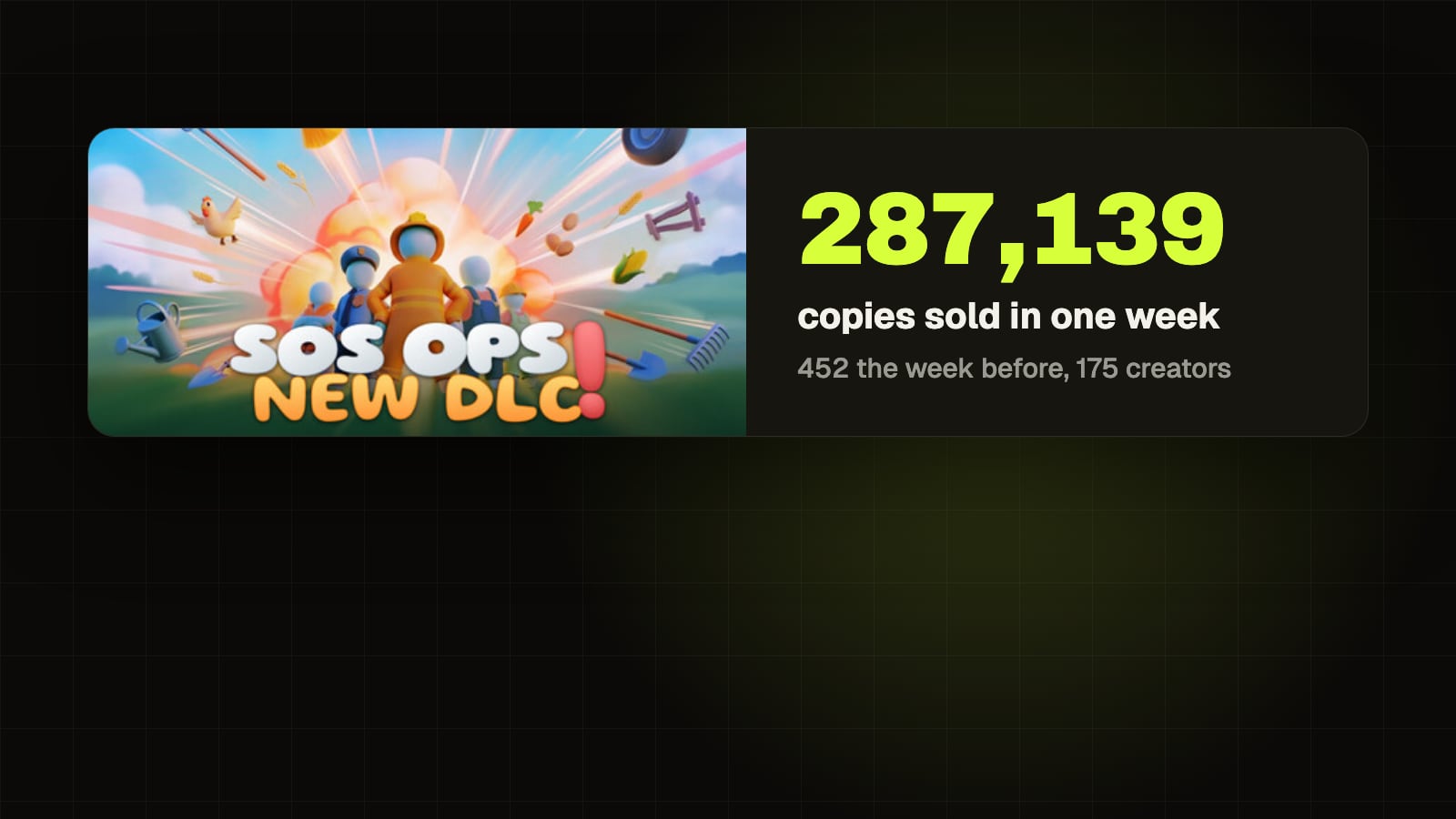
Short answer: Steam gives every released game two levers: discounts of 20% or more, which notify everyone who wishlisted it, and update visibility rounds, which put the game on the front page for people who own it or wishlisted it. Both only reach people who already know the game. Creator videos on the same days reach everyone else. That combination took SOS OPS! from about 65 copies a day to 287,139 copies in one week, almost three years after launch.
Most released indie games don't have a quality problem. They have a reach problem. The reviews are good, the people who found the game like it, and then store traffic slowly dries up. The Dung Ho! case page describes it well: the game was "already out, already reviewed, and already good", and nothing was putting it in front of new people.
Lever 1: discounts
A discount is the obvious move, and Steam has clear rules for it (Steamworks discounting docs):
| Rule | Detail |
|---|---|
| Size | 10% minimum, 95% maximum |
| Length | 1 to 14 days |
| Cooldown | 30 days between the end of one discount and the start of the next |
| Seasonal sales | Exempt from that 30 day discount cooldown, but not from the 30 days after release or after a price increase |
| After a price increase | No discount for 30 days |
The rule that matters most for marketing: a discount of 20% or more that covers your cheapest package and lasts longer than 8 hours notifies everyone with the game on their wishlist (Steamworks wishlist docs).
The limit is in the same sentence. A notification only reaches wishlists you already have. As the Pixel Combat case puts it: "A deep discount only converts people who already see the store page."
Lever 2: update visibility rounds
When you ship a major update, Steam lets you feature the game on the front page for people who have it in their library or on their wishlist (update visibility rounds):
- Every product starts with five rounds, shared between Early Access and full release.
- A round runs up to 30 days or until it reaches 1 million homepage impressions, whichever comes first.
- It needs a community announcement posted in the last 30 days.
- Rounds typically don't show during major seasonal sales, but those days still count toward the 30.
Five rounds is not many. Save them for updates with something worth showing: new content, a new mode, a DLC.
Lever 3: creators on the same days
The two Steam levers talk to people who already know the game. Creator videos are how new players find out the sale or the update exists, and they work best when they land in the same days. Three released games that did this:
| Game | Tied to | Campaign | Result |
|---|---|---|---|
| SOS OPS! | New DLC plus a 90% discount | 175 creators, 336 videos, 11.45M views, $1.23 effective CPM | 287,139 copies that week (452 the week before) and 207,294 DLC units |
| Pixel Combat: Zombie Shooter | An 81% off sale | 25 creators, 69 videos in 16 days | +11% lifetime Steam sales and 2,200 wishlists |
| Dung Ho! | Nothing, a plain push for reach | 37 creators, 54 videos | 516,721 views in 27 hours |
SOS OPS! shows what happens when everything lines up. The case page credits four things: the 90% discount as an entry ticket, a co-op game that pulls friends in, the DLC carrying the revenue (about seven DLC units for every ten copies) and German speaking creators driving a big share of early reach. The game hit its all time concurrent player peak, 8,562, almost three years after launch.
Pixel Combat is the smaller, more typical result: a deep sale plus 69 dedicated videos added 11% to the game's lifetime Steam sales in 16 days.
Does this work for DLC and expansions?
Yes, and it is often easier, because an expansion gives creators something new to show. Heavy Cargo's Heavy South expansion had 35 creators post 52 videos in eight hours on a single afternoon, for 2,729,394 views at an effective CPM of $0.88. Oversized loads on cliff roads turned out to be very watchable.
A simple calendar for a released game
- Ship an update or a DLC and post a community announcement for it.
- Start an update visibility round off that announcement, outside a seasonal sale.
- Run a discount of 20% or more in the same window, so wishlisters get notified.
- Time a creator campaign to the first days of the discount, with the sale or the update as the call to action.
- Read the results in Steamworks, as described in how to measure wishlists from a creator campaign, and plan the next one after the 30 day cooldown.
If your game hasn't launched yet, start with how to market your Steam launch week.
FAQ
How deep should a post-launch discount be?
At least 20%, so Steam notifies your wishlisters. Beyond that it depends on the game's age and price. The two sale campaigns above used 81% and 90%.
Is it too late to market a game that came out years ago?
No. SOS OPS! launched in November 2023 and set its all time player peak almost three years later.
Can I run a creator campaign without a discount?
Yes. Dung Ho! ran a plain reach campaign, 516,721 views in 27 hours. A discount or an update just gives viewers a reason to buy today.
How much does a post-launch creator campaign cost?
Campaigns on Trapster start at $3,000. How CPM pricing works is covered in how much game influencer marketing costs.
Give your sale an audience
Planning a sale, an update or a DLC? Send us your Steam page and the date, and we'll put creators on the same days. See Trapster for studios or book a call.
Sources: Steamworks documentation on discounts, wishlists and update visibility rounds. Campaign figures come from Trapster case studies.
Get a wishlist forecast for your game
Send us your Steam page. We estimate views, creators and cost per wishlist before you spend anything.
Keep reading
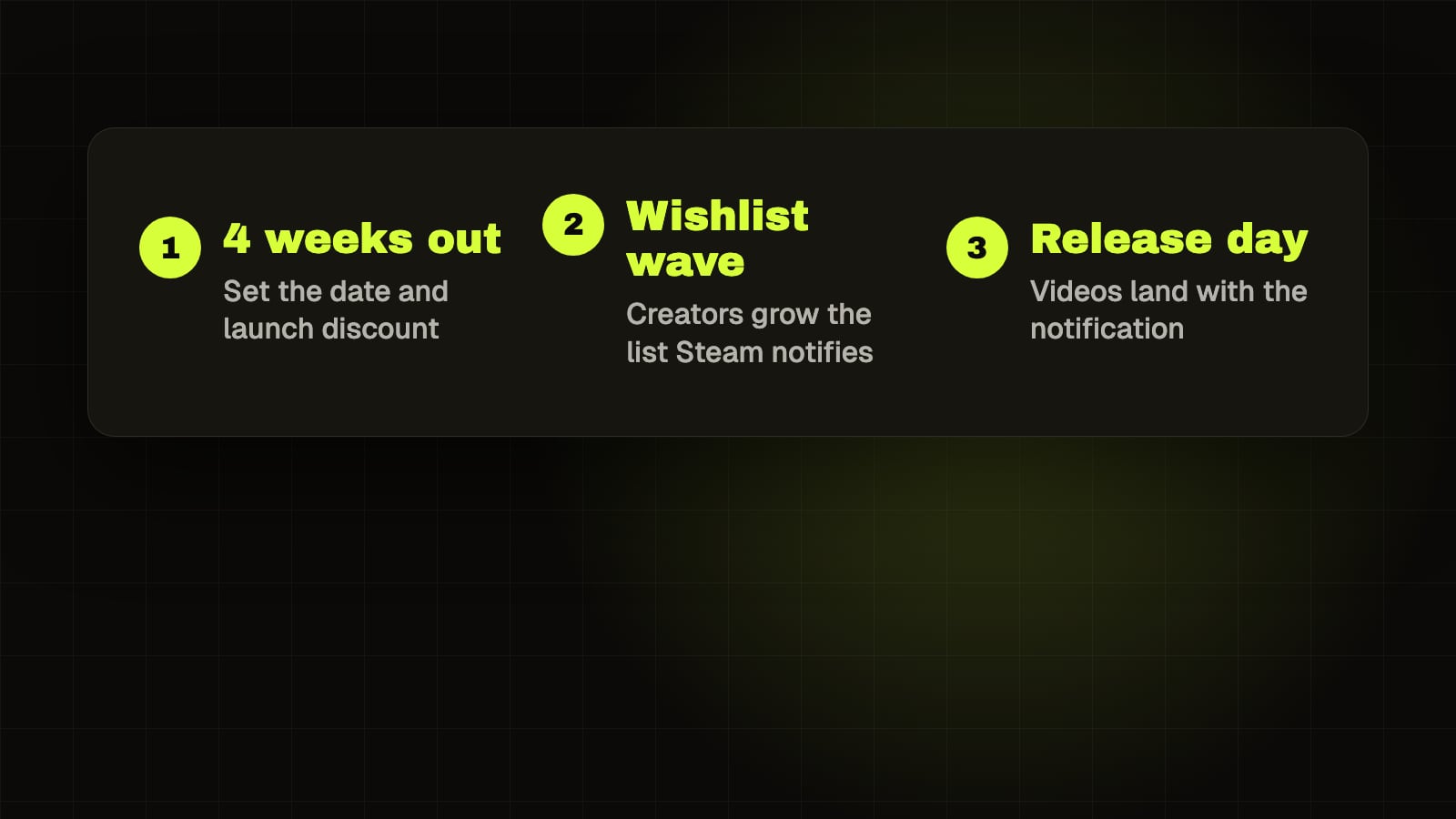
How to Market Your Game's Steam Launch Week
A launch week plan for Steam: what Steam does on release day…
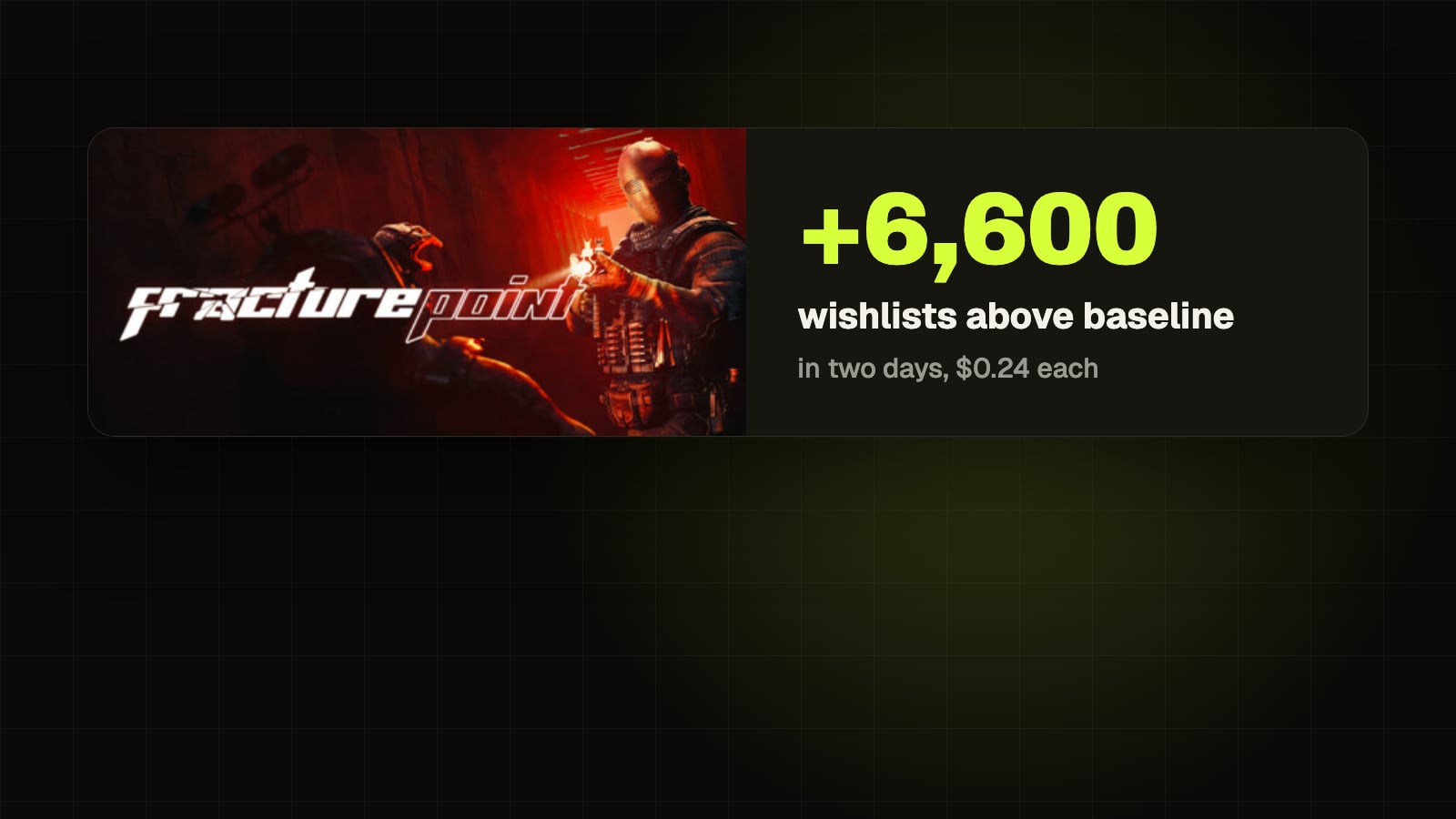
How to Measure Wishlists From a Creator Campaign
How to measure Steam wishlists from a creator campaign: baseline, net adds…
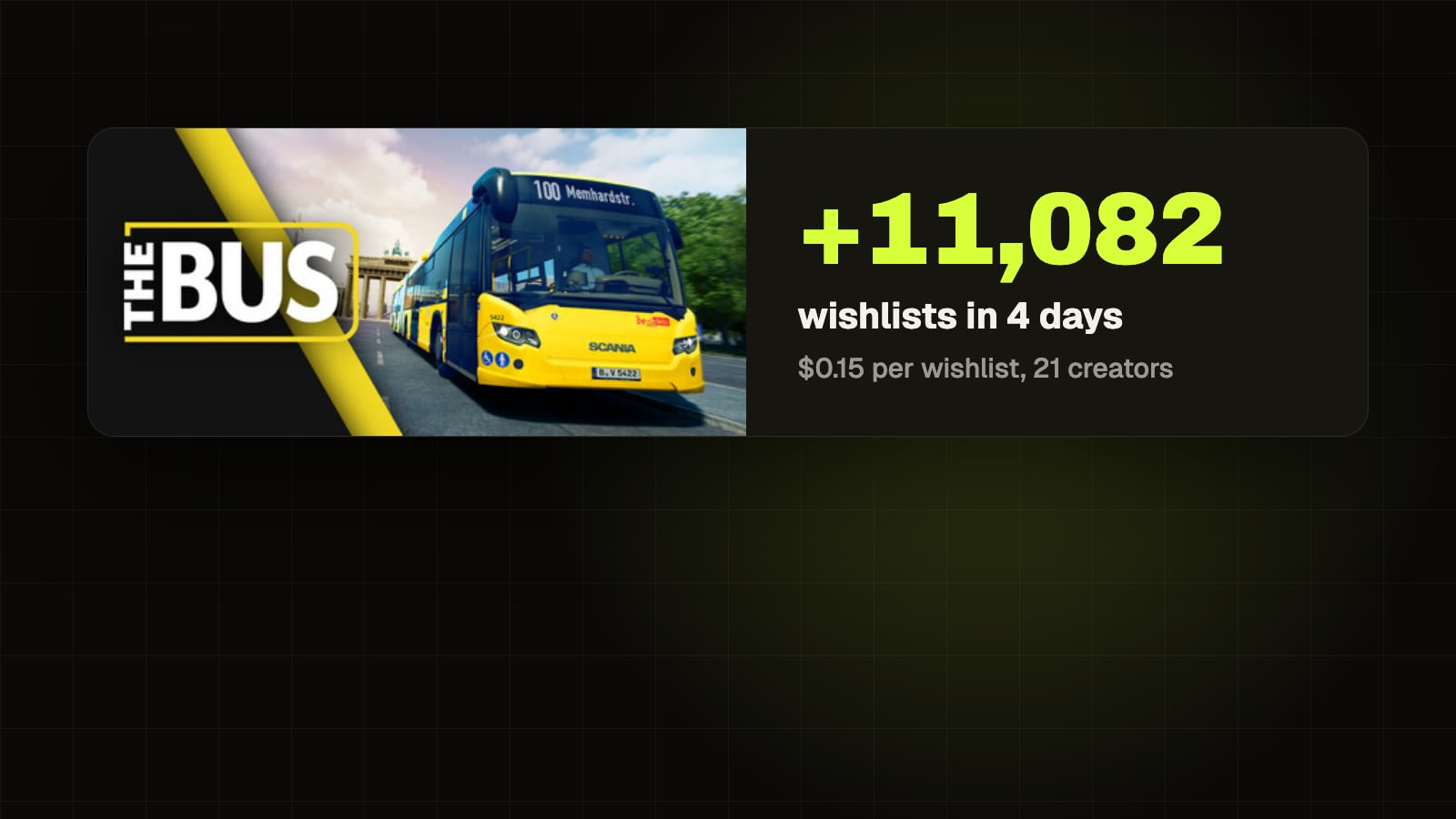
How to Market a Simulator Game
How to market a simulator game: find the watchable moment, keep the…