How to Market Your Game's Steam Launch Week
A launch week plan for Steam: what Steam does on release day, how to set the launch discount, and when creator videos should go live.
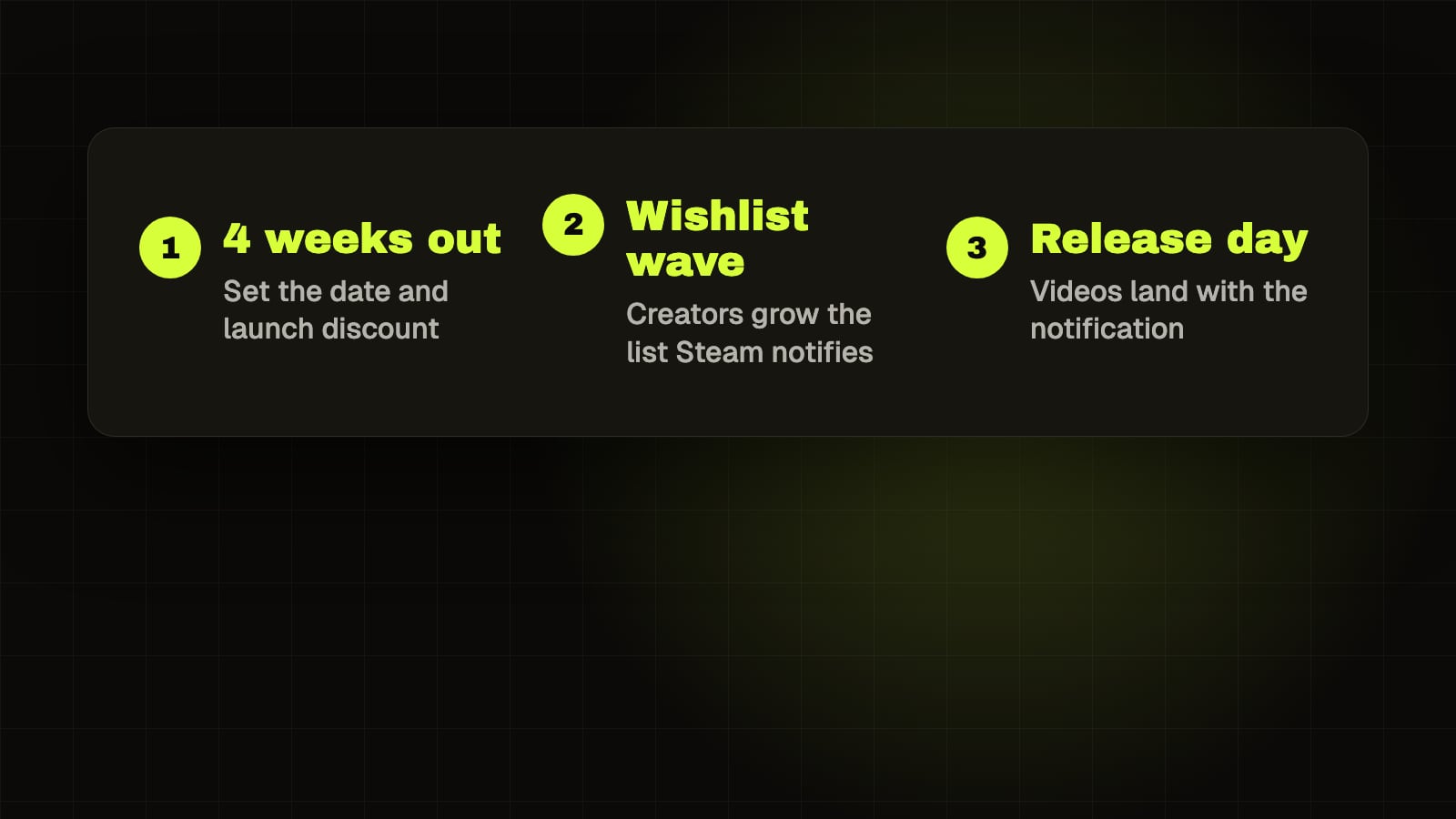
Short answer: on release day Steam emails or pushes a notification to everyone who has your game on their wishlist. That message is the biggest piece of free traffic your game will ever get, and launch week is about putting as much as possible into the same few days: creator videos timed to go live on release day, a launch discount set up in advance, and a store page ready for the first reviews. Start four weeks out, because Steam only lets you set up a launch discount before the release date.
Most launch plans are really pre-launch plans. Studios spend months collecting wishlists and then treat release day as the finish line. It is the opposite. Release day is when every one of those wishlists turns into a notification, and what happens in the following seven days decides how many of them turn into players.
What does Steam do for you on release day?
Three things happen automatically when the game goes live:
- Wishlisters get notified. Anyone with the game on their wishlist at that moment gets an email and/or a mobile push notification. The same happens again if you move from Early Access to full release (Steamworks docs).
- Your launch discount starts, if you set one up.
- The game gets its launch visibility in New Releases and the New Releases queue (how Steam visibility works).
The notification only reaches people who already wishlisted the game. Everyone else has to find it some other way in the same week, and that is the part you can plan.
How should you set the launch discount?
The launch discount has its own rules, different from regular discounts (Steamworks discounting docs):
| Rule | What it means for you |
|---|---|
| Steam suggests 10% to 15%, maximum 40% | A small discount is enough to reward people who waited |
| Runs for 7 to 14 days | Covers launch week and, if you want, the week after |
| Can only be set up before the release date | Do it when you set the date, not on launch morning |
| Starts a 30 day cooldown on other discounts | No regular discount for a month after it ends |
| 30 day release cooldown | No seasonal sale in the first 30 days after release either |
One detail worth knowing: a bigger launch discount does not buy you a second email. Steam doesn't send another notification to anyone who was already notified about the game in the last two weeks (Steamworks docs). Your wishlisters hear about the launch either way.
When should creators post?
In two waves.
Wave 1, two to six weeks before release: wishlists. This is the wave that grows the list Steam will notify on release day. Forensics: Crime Scene Detective ran a three day campaign before its July release, while its page sat in the low thousands, and added 7,000 wishlists at $0.23 each. Catch Meow If You Can ran a two day campaign in September, ahead of a 29 October release, and Steamworks showed 11,961 net wishlists for 8 to 24 September.
Wave 2, release day: players. Creators get the game early and publish when it goes live, so their videos land in the same hours as the wishlist notification. Huntin' Buddies did exactly this: posting was scheduled to land on the release date instead of being spread across the month. 31 creators posted 44 videos in the launch window, on top of roughly 17,000 wishlists banked before launch, and the game finished launch week with 42 Steam reviews, 88% positive.
Speed helps here. On more than half of Trapster campaigns the first video is live within 3 hours of launch, and on two thirds within 24 hours.
Why do the first reviews matter so much?
A player who lands on your page from a creator video looks at two things before buying: the price and the reviews. A page with no reviews on day three asks every visitor to take a risk. Launch week traffic brings in the first players who leave them, so a launch with creator videos tends to build its review count faster than one that relies on the notification alone.
Plan for it: answer every early review and every question in the Steam discussions during launch week. New visitors read those threads too.
A four week launch plan
- Four weeks before. Set the release date and the launch discount in Steamworks. Book the release day creator campaign.
- Three to two weeks before. Run the wishlist wave. Remind your own followers of the date in every post.
- The week before. Get keys to creators with a publishing time set for launch. Check the store page against the checklist in how to get more Steam wishlists.
- Release day and the six days after. Creators publish, you reshare the best videos, you answer reviews and discussions, and you track wishlists and sales daily (how to measure wishlists from a creator campaign).
If your game has a demo, the Steam Next Fest guide covers how to use it before launch.
What happens after launch week?
The launch discount ends, the cooldown starts and launch visibility fades. That is normal. A released game still has tools: discounts after the cooldown, update visibility rounds and creator campaigns on top of both. We cover them in how to boost sales of a game that's already out.
FAQ
Should I launch with a discount?
Steam suggests 10% to 15% and caps launch discounts at 40%. It rewards people who waited, but it also starts a 30 day cooldown before your next regular discount, so decide it together with your first sale date.
When should creator videos go live for a launch?
In two waves: two to six weeks before release to grow wishlists, and on release day to turn the notification week into players and reviews.
Can creators record before the release?
Yes. Give them keys early with a publishing time set for launch, and the videos go live with the game.
What is the minimum budget for a creator campaign on Trapster?
$3,000 per campaign. A two wave plan means two campaigns, one for each wave.
Plan your launch with us
Send us your Steam page and release date, and we'll suggest a two wave plan with expected views, creators and wishlists. Every studio gets an account manager who helps with the timing and the brief. See how Trapster works for studios or book a call.
Sources: Steamworks documentation on wishlists, discounts and visibility. Campaign figures come from Trapster case studies. Cost per wishlist is the creator budget divided by wishlists added, platform fee excluded.
Get a wishlist forecast for your game
Send us your Steam page. We estimate views, creators and cost per wishlist before you spend anything.
Keep reading
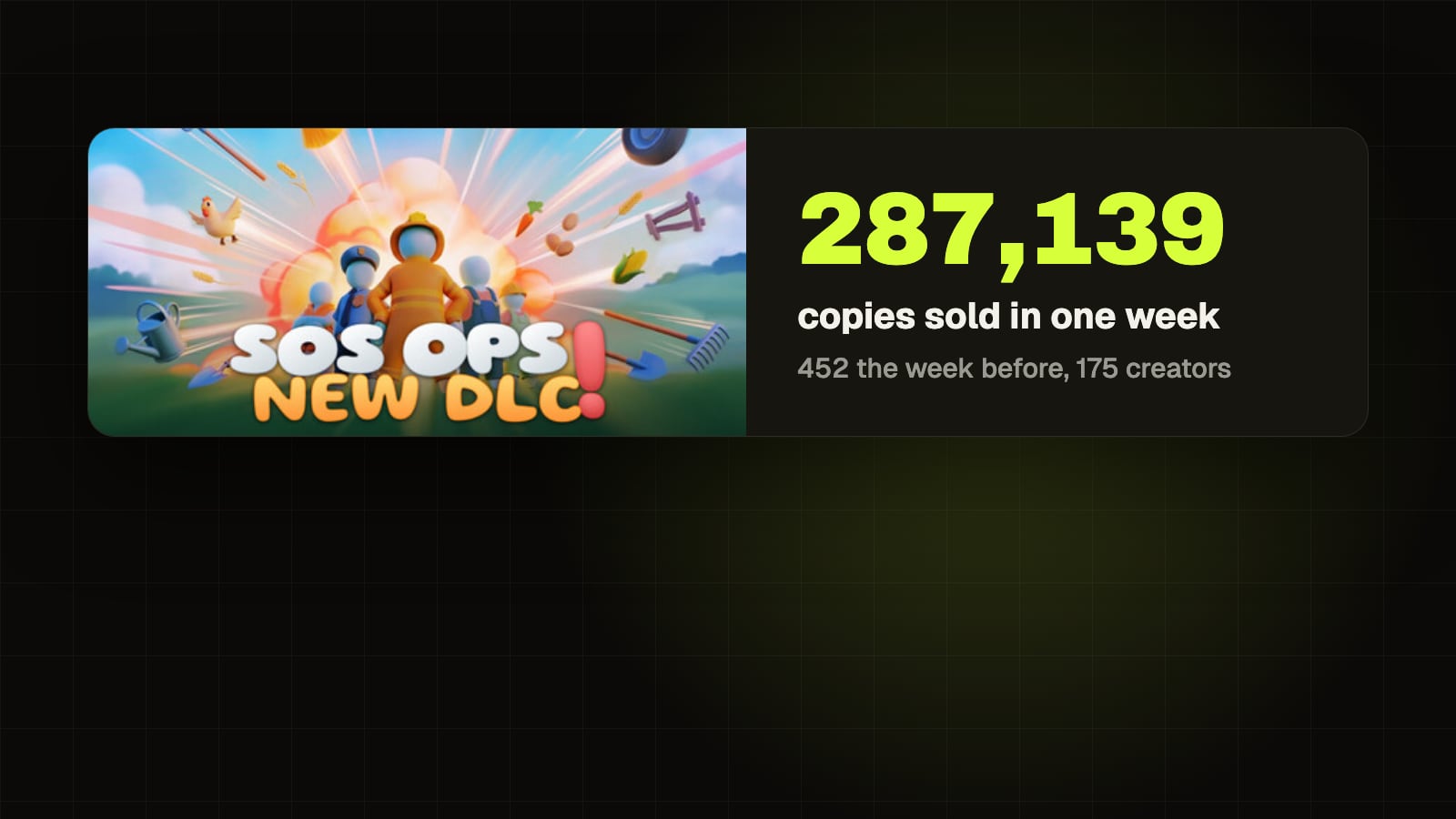
How to Boost Sales of a Game That's Already Out
How to boost Steam sales after launch: discount rules, update visibility rounds…
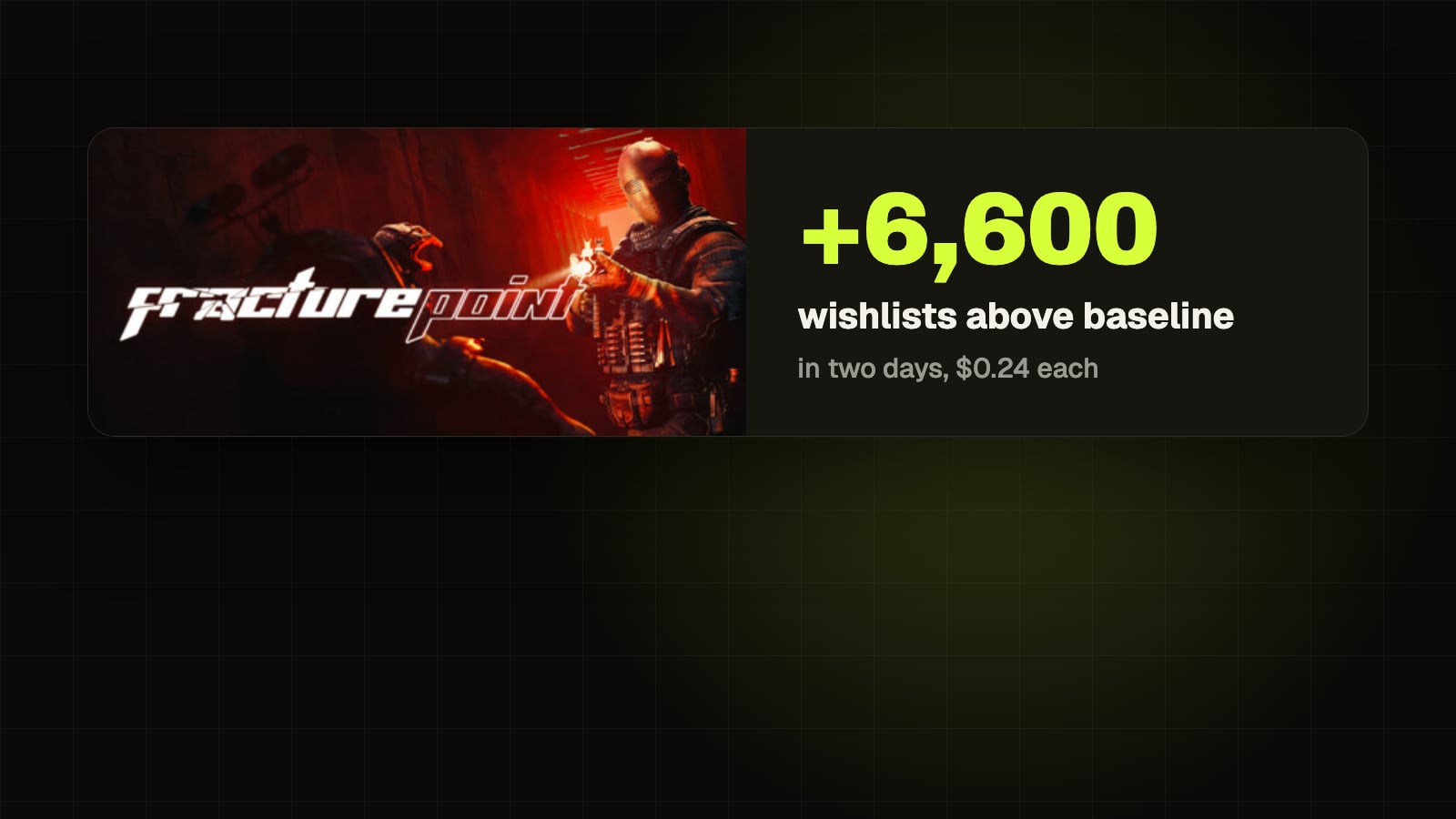
How to Measure Wishlists From a Creator Campaign
How to measure Steam wishlists from a creator campaign: baseline, net adds…
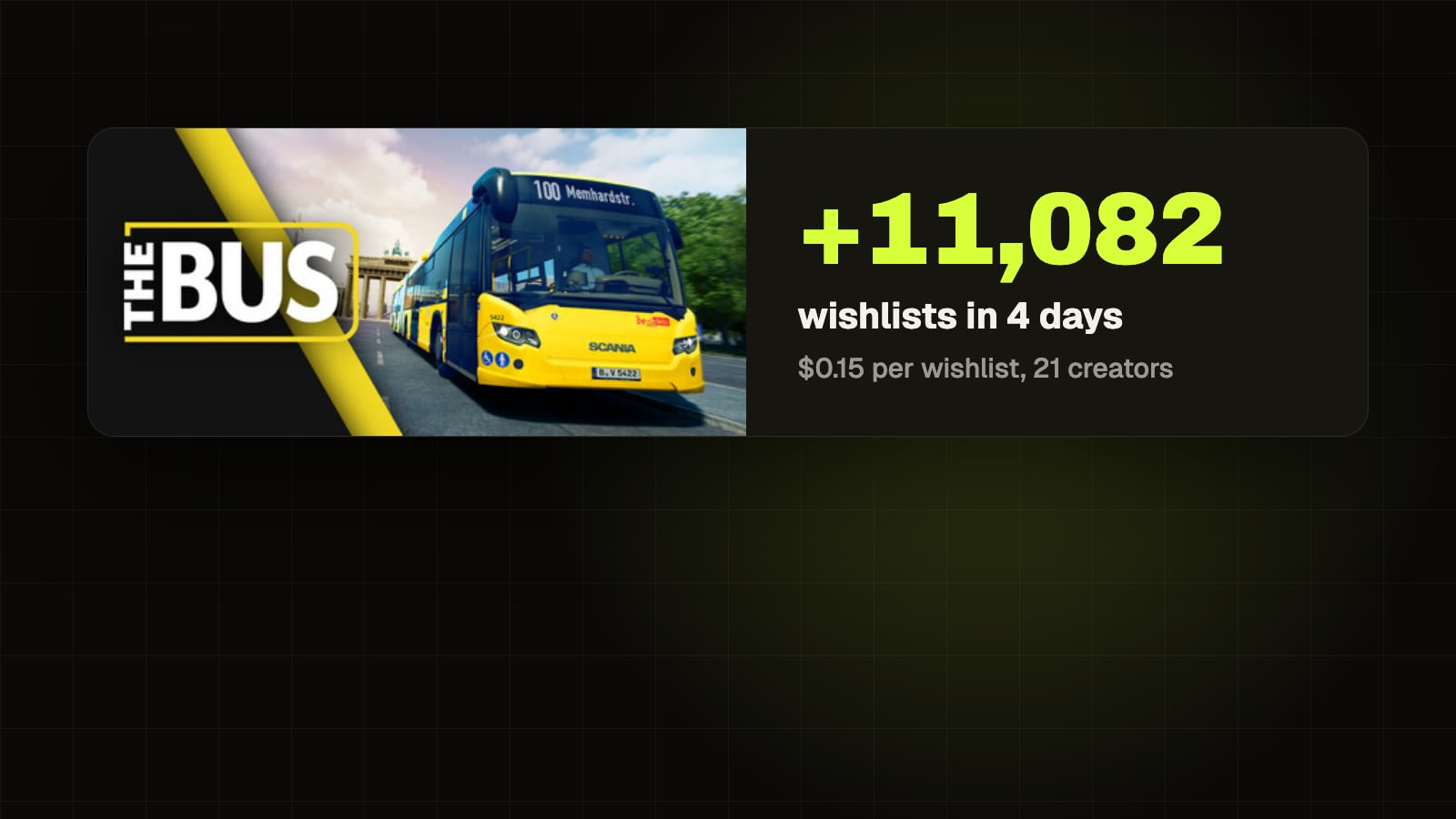
How to Market a Simulator Game
How to market a simulator game: find the watchable moment, keep the…