How Much Does Game Influencer Marketing Cost? CPM Explained
Flat fee vs pay per view, how CPM and effective CPM work, and real cost per wishlist from indie game campaigns, from $0.10 to $1.22.
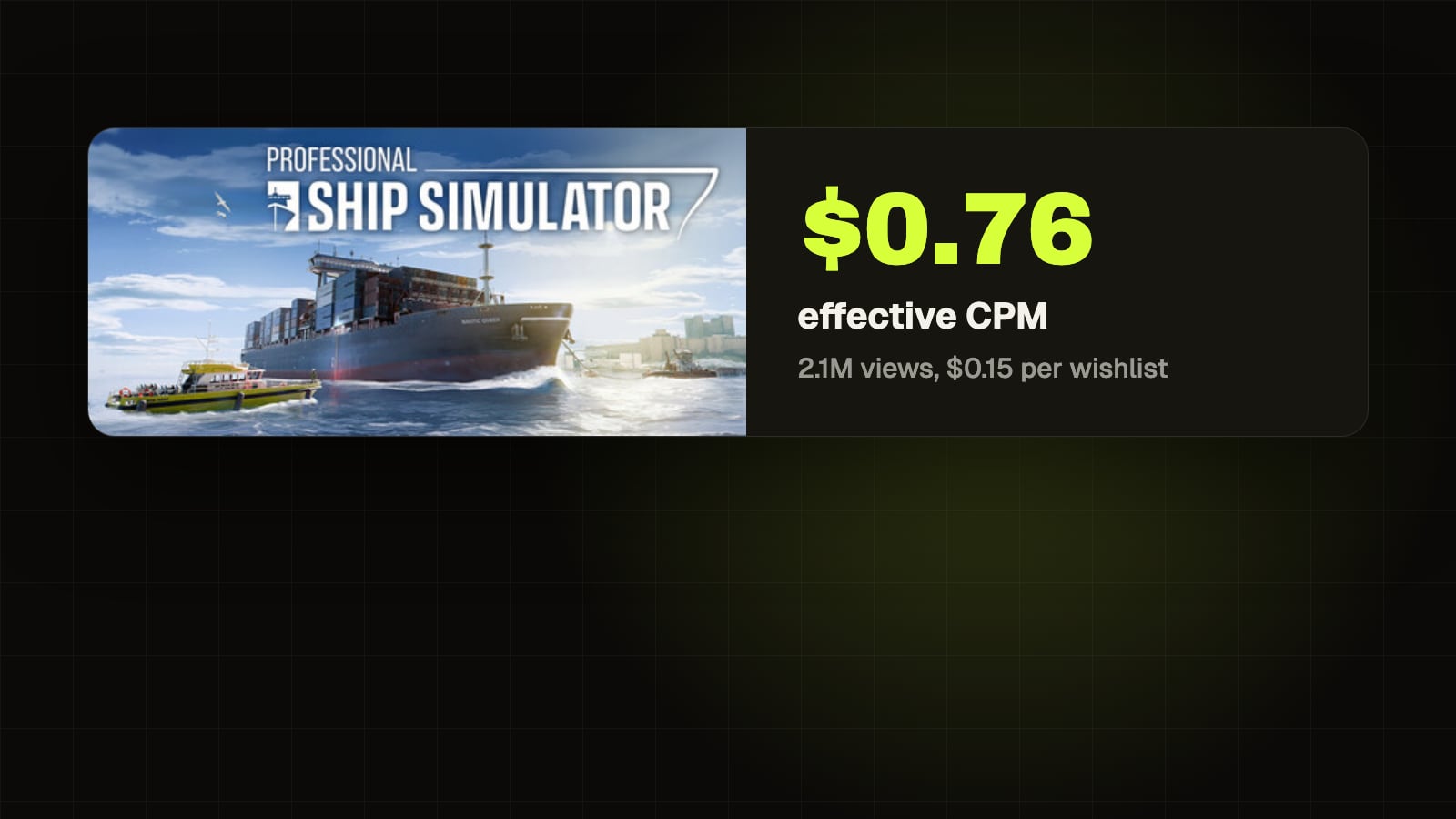
Short answer: creator marketing for games is priced three ways: free keys, a flat fee per video, or pay per view at a CPM (the price per 1,000 views). With pay per view the number to compare is not the CPM you set but the effective CPM you end up paying, and better still the cost per wishlist. On recent Trapster campaigns effective CPM ranged from $0.76 to $4.48 and cost per wishlist from $0.10 to $1.22.
"How much does it cost?" is the first thing every studio asks us. The honest answer depends on how you pay, because a flat fee for one big YouTuber and a pay-per-view campaign with 50 TikTok creators are priced in completely different ways.
The three pricing models
Free keys. You send keys and hope creators cover the game. It costs almost nothing in money and a lot in time, and you control nothing: who posts, when, or whether anyone does.
Flat fee per video. A fixed price for a video or an integration, whatever it gets. Common with big creators. Easy to plan, but the risk sits with you. If the video does half its usual numbers, you still pay in full.
Pay per view. You pay for the views the content actually gets, priced as a CPM. The risk moves to the creator side: a video that flops costs little, a video that takes off is where the money goes.
What CPM means
CPM is cost per mille, the price of 1,000 views.
Cost = (Views ÷ 1,000) × CPM
At a $5 CPM, a video with 200,000 views costs $1,000.
The CPM you set is also a signal to creators. A higher rate makes the campaign more attractive, so more and stronger creators join. A lower rate stretches the budget but can leave you with a thinner roster. On Trapster you can also set tiered CPM, a higher rate for audiences in your main markets and lower rates for the rest.
Set CPM vs effective CPM
The CPM you set is a ceiling. The effective CPM is what you actually paid per 1,000 views across the whole campaign:
Effective CPM = Total creator spend ÷ Total views × 1,000
That is the number to compare between campaigns and against ads. Here is how it came out on campaigns with public case studies:
| Game | Views | Effective CPM |
|---|---|---|
| Professional Ship Simulator | 2.1M | $0.76 |
| Very Safe Dino Park | 1.6M | $1.02 |
| Clay Clinic | 2.5M | $1.09 |
| Galactic Vault | 357K | $4.48 |
Very Safe Dino Park ran at a flat $5 CPM and finished at about a fifth of it. Galactic Vault is the honest counterexample: 30 creators, a wide spread of solid videos, but no clip broke out, so views per dollar stayed closer to the nominal rate.
The number that matters more: cost per wishlist
Views only matter if they turn into players. Cost per wishlist is what you paid creators divided by the wishlists the campaign added. It is the fairest way to compare creator marketing with paid ads, a festival booth or a PR agency.
| Game | Wishlists added | Cost per wishlist |
|---|---|---|
| Very Safe Dino Park | +15,701 | $0.10 |
| Professional Ship Simulator | +10,874 | $0.15 |
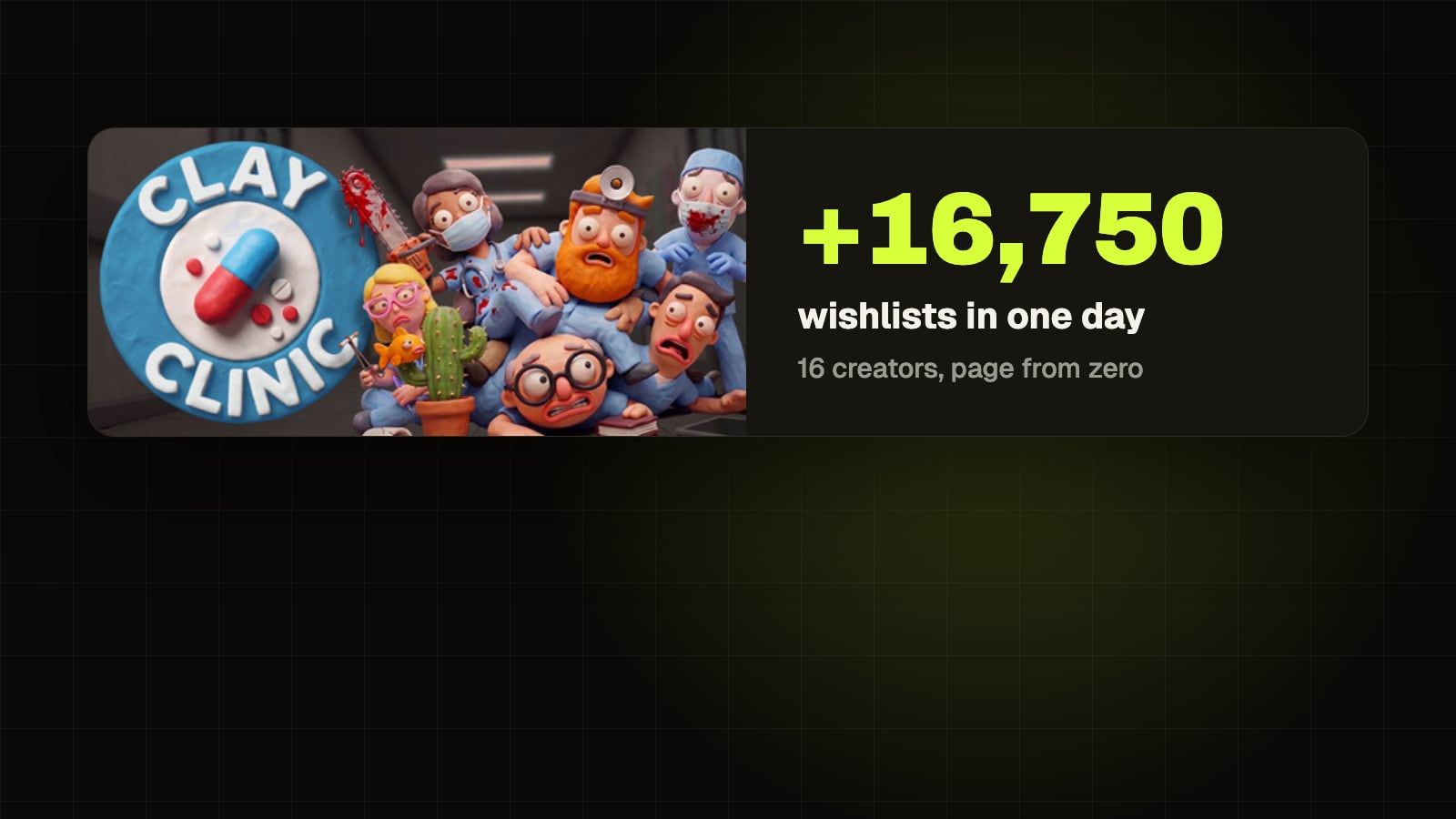
| Clay Clinic | +16,750 | $0.16 |
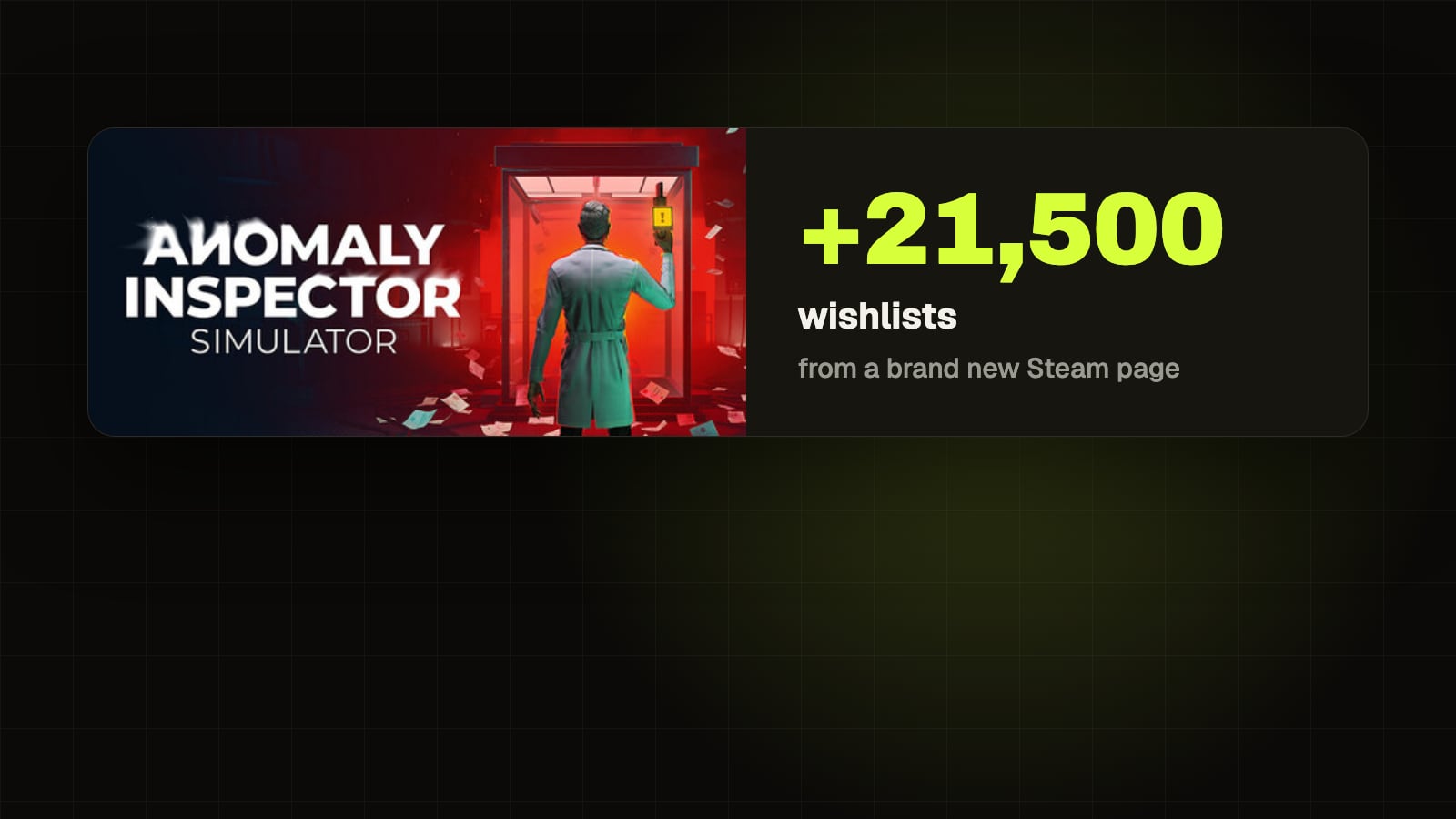
| Anomaly Control Simulator | +21,500 | $0.18 |
| Galactic Vault | +1,307 | $1.22 |
All Trapster case studies use the same basis: creator spend, platform fee excluded, divided by wishlist growth across the campaign window.
What moves your cost up or down
- The hook. A game with a strong visual moment in the first two seconds gets more views per video. This matters more than anything else on the list.
- Genre. Chaotic co-op, sims with a funny premise and horror tend to travel well in short form. Slow strategy games need a sharper angle.
- The brief. Clear rules plus a few content ideas give better videos than a long script. More on that in our influencer marketing guide for indie games.
- Timing. A campaign that lands with a demo, a festival or a discount gives viewers a reason to act today.
- The store page. A page that doesn't convert wastes the views you paid for. See how to get more Steam wishlists.
How much to budget
Start from a goal, not a number. Decide how many wishlists you want before launch, then work backward from a realistic cost per wishlist. If your page and hook are in good shape, $0.15 to $0.30 is a reasonable planning range from our data. If the game is a harder sell in short form, plan for $1.
Campaigns on Trapster start at $3,000. On more than half of them the first video is live within 3 hours of launch.
Only pay for real views
Any pay-per-view model works only if the views are real. Ask every platform or agency how views are verified before you spend. On Trapster every submission is checked on our side, and views that fail the check are never paid.
FAQ
What is a good CPM for game influencer marketing?
Look at effective CPM, not the rate you set. On our recent campaigns it landed between $0.76 and $4.48, with most good campaigns between $1 and $2.50.
What is a good cost per wishlist?
Under $0.30 is strong. Around $1 is normal for games that are harder to show in a 20 second clip.
Is pay per view cheaper than a flat fee?
Usually, for indie budgets, because you don't pay full price for a video that underperforms. Flat fees make sense for one specific big creator you really want.
What is the minimum budget on Trapster?
$3,000 per campaign.
Get a number for your game
Send us your Steam page and we will send back a free forecast: expected views, creators, wishlists, CPM and cost per wishlist. See Trapster for studios or book a call.
Sources: figures come from Trapster case studies. Cost per wishlist and effective CPM are calculated from creator spend, platform fee excluded.
Get a wishlist forecast for your game
Send us your Steam page. We estimate views, creators and cost per wishlist before you spend anything.
Keep reading
How to Get More Steam Wishlists Before Launch
Seven ways to grow Steam wishlists before launch: store page fixes, demos…
Influencer Marketing for Indie Games: A Practical Guide
How indie studios work with gaming creators: picking creators, paying per view…
How to Market Your Steam Next Fest Demo
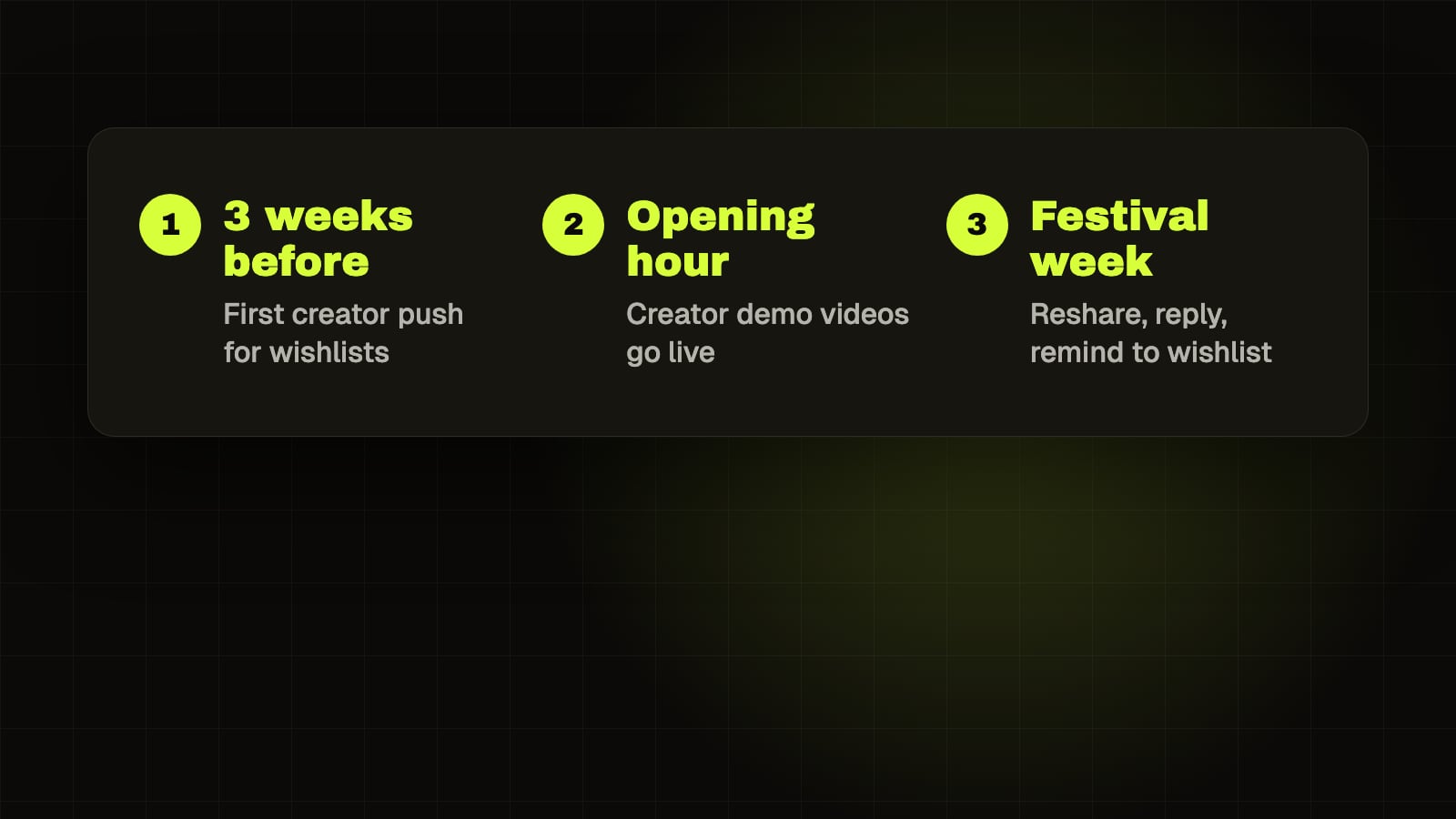
A two wave plan for Steam Next Fest: build wishlists weeks before…