How to Market a Roguelike: Hooks, Demos and Real Launch Numbers
How to market a roguelike or roguelite on Steam: tags, hooks, demos, Next Fest, Early Access and short-form clips, with real numbers from Balatro and Hades.
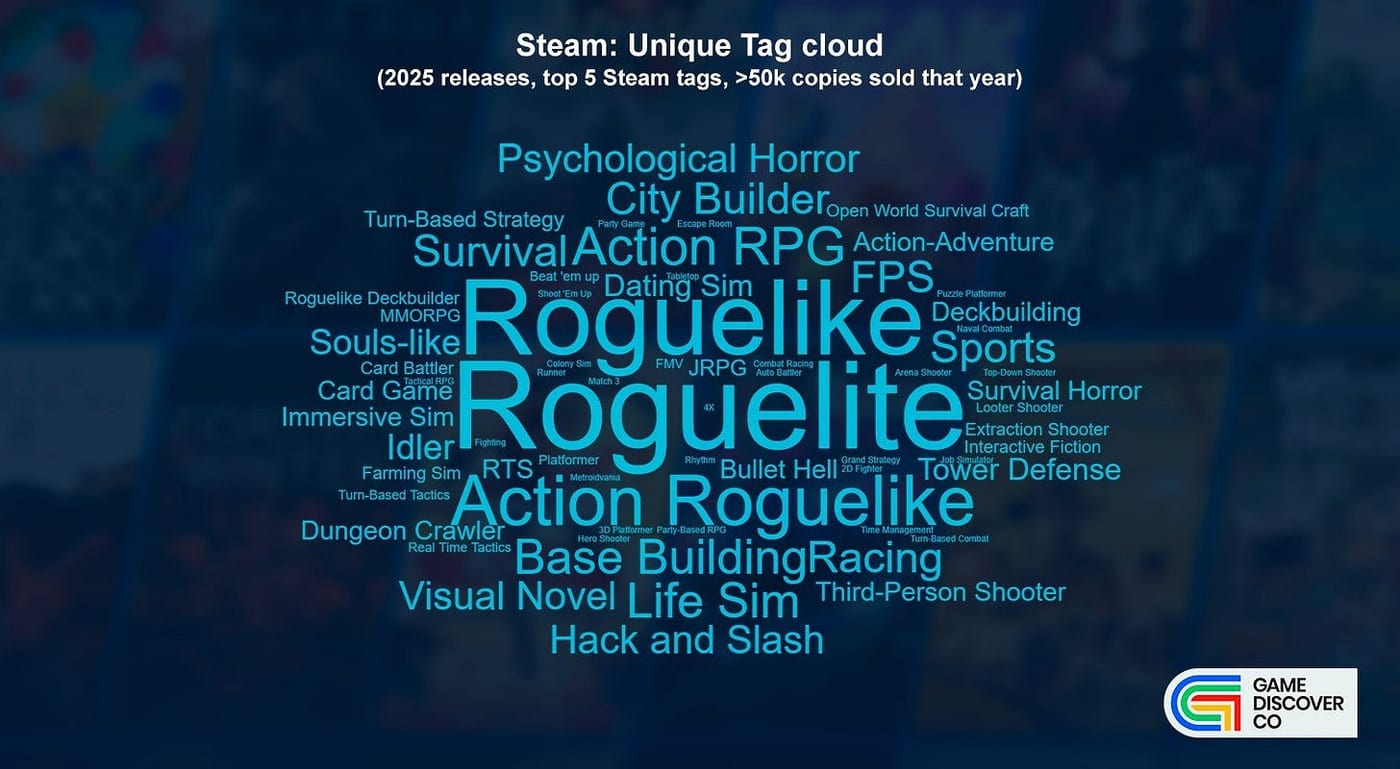
Short answer: Roguelikes and roguelites are the strongest genre on Steam right now: in GameDiscoverCo's August 2026 genre analysis, Roguelite was the #1 tag and Roguelike #2 among new 2025 games that sold more than 50,000 copies. That also means the shelf is crowded, so you market a roguelike by making its core loop visible in seconds, putting a generous demo in front of players and creators early, and letting other people's runs do the selling. Balatro's publisher built its plan on a playable demo, influencer engagement and community, and Peglin had 76,000 wishlists on launch day after its demo had been live for at least a year. Early Access fits the genre well if you can commit to years of updates.
Why roguelikes are easier and harder to sell than they look
The demand is real. GameDiscoverCo's Simon Carless ranked Steam genre tags by how often they appear in the top 5 tags of hit games, and found Roguelite went from #40 in 2021 to #1 in 2025 by copies sold, with Roguelike right behind it at #2. He sums it up as the "run-based randomness" trend being on fire. Chris Zukowski's yearly count of games that reached 1,000 Steam reviews tells a similar story: Roguelike was the #6 genre of 2025 with 22 hits, up from #10 in 2024.
The supply is real too. In the same How To Market A Game post, only 11 of 212 roguelike deckbuilders released in 2025 reached 1,000 reviews, or 5.1%, down from 6.71% in 2024. Zukowski's point is that people keep making them because Slay the Spire showed a huge audience exists, not because the odds are easy.
What this means in practice:
- Roguelike players buy a lot of roguelikes, so Steam has a large, well-defined audience to recommend you to.
- They also compare you to Balatro, Hades and Slay the Spire within seconds. A "solid roguelike" without a clear twist disappears.
- The twist is usually a mashup. Balatro is poker plus jokers, Ball x Pit is Breakout plus survivors-like, CloverPit is a slot machine plus Balatro-style multipliers, Guildrun is an autobattler plus roguelike. You can say each of them in one sentence.
If you are still shaping that sentence, our guide on how to market a Steam demo covers testing it with real players before you spend money.
Tag your roguelike so Steam knows who to show it to
Steam has several overlapping tags for this space: Roguelike, Roguelite, Action Roguelike, Roguelike Deckbuilder and others. Valve's Steam Tags documentation gives you the rules that matter:
- Only your top 20 tags are visible and used for store visibility.
- "The tags given the most weight govern your visibility more than those given less."
- Some store filters prioritize the first 15 tags, and your top 5 should describe the game clearly.
- For recommendations, overlap across several tags matters more than order, and very common tags such as Action barely move the needle compared with more specific ones.
For a roguelike, that means you rank the specific subgenre tags (Roguelike Deckbuilder, Action Roguelike, Bullet Heaven or similar where they truly fit) high, and you don't waste top slots on generic labels. If your game is a mashup, the second genre tag is what separates you from hundreds of lookalikes, so give it real weight. Our full breakdown is in Steam tags explained.
Hooks that sell a roguelike
Roguelike players don't buy a setting. They buy a loop. The hooks that keep showing up in the hits are:
1. Number go up. Balatro's core moment is a score count: chips and multipliers stack until the total looks absurd. That moment is readable with the sound off by someone who has never played poker.
2. Build variety. "No two runs are the same" is a claim. A build is proof. Brotato's developer described the goal as appealing to a very specific niche of people, and the game sells that niche on 40+ characters and hundreds of items. Show two runs side by side that look nothing alike.
3. One more run. Short runs lower the cost of trying again. Brotato's waves last 20 to 90 seconds and a full run takes under 30 minutes, according to its 1.0 press release. Say how long a run is on your store page. It is a selling point, not a spec.
4. The build that breaks the game. This is the clip that spreads. Megabonk, a 3D survivors-like from solo developer vedinad, is chaos by design: the screen fills with weapons and numbers once a build comes online.
5. A familiar object with a twist. Ball x Pit takes Breakout's paddle and bricks and adds ball fusion and base building. CloverPit puts you in front of a slot machine. GameDiscoverCo called the slot machine a "great, grokkable randomized start point", and the game pairs it with a Balatro-style round structure.
Designers can test hooks too. Balatro's LocalThunk used one-hour retention as his rubric for whether the hook worked, per GameDiscoverCo's Balatro breakdown.
Demos and Next Fest for roguelikes
A demo is close to mandatory for this genre. Roguelikes are hard to understand from screenshots and easy to understand after one run. Valve's own demo documentation says a quality demo before release is useful when players need to touch the game to understand it, and you can notify everyone who wishlisted the full game once, within two weeks of the demo first going live.
What the roguelike hits did with their demos:
- Balatro: Playstack built a custom demo with a selection of features and no round limit. It got 100,000 Steam downloads in its first three months, per GameDiscoverCo.
- Peglin: the demo was up continuously for at least a year before launch and stayed up through it. Median demo playtime was 67 minutes against 25 minutes for the median game in How To Market A Game's survey of 80 developers.
- Brotato: the demo drew about 40,000 wishlists before Early Access and was shown in a roguelike-themed Steam festival and in June Next Fest, per the 1.0 press release.
- Ball x Pit: the demo went live on June 6, 2025, right before the June 2025 Next Fest, and the full game launched on October 15, 2025.
- Megabonk: a demo was on Steam by February 2025, seven months before the September launch.
- Guildrun: Leyline revealed the game with a demo and passed 275,000 demo players in about 10 days and about 230,000 wishlists. Median demo playtime was 3 hours 55 minutes.
Note the long playtimes. Roguelike demos often get played like full games, so decide early whether you cap them by time, by content or not at all. Balatro's publisher chose no round limit. Either way, every demo player who finishes a run should land on a wishlist button.
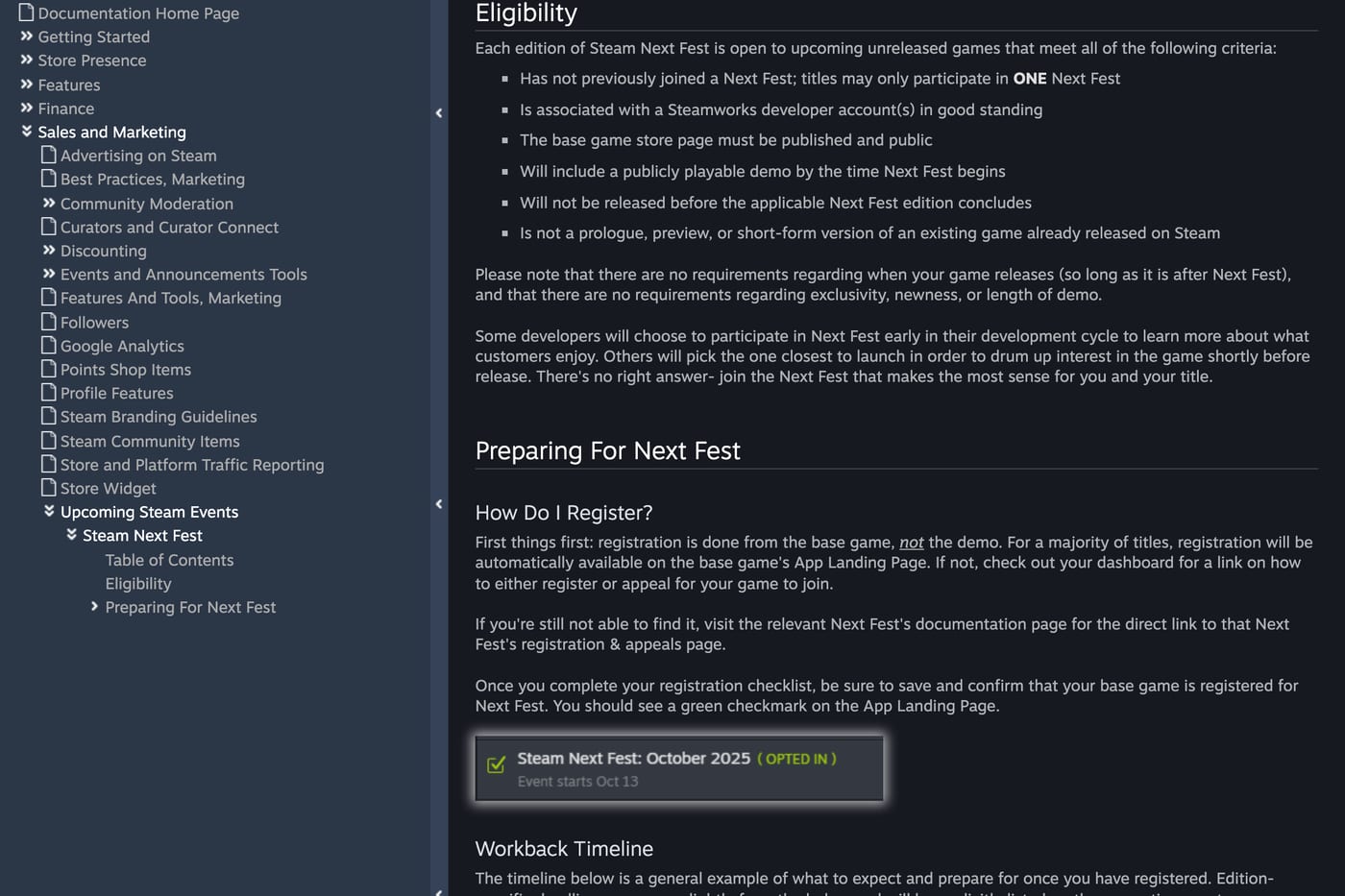
On Next Fest, the rules are strict: a game can enter only one Next Fest, must not release before that edition ends, and must have a public demo when it starts, according to Valve's Next Fest page. Because you get one shot, many roguelikes launch the demo weeks or months earlier, build momentum with creators, and use Next Fest as the second wave. Balatro's demo was one of the ten most played demos of the February 2024 Next Fest, and the game launched a week after the festival, on February 20, 2024. More on timing in our Steam Next Fest marketing guide.
Early Access and roguelikes
Roguelikes fit Early Access better than almost any genre. Content can be added in layers (new characters, items, bosses), every patch gives players a reason to start a new run, and the community helps balance builds. The record backs it up:
- Hades sold 1 million copies by its September 2020 launch, and 700,000 of those came during Early Access, which started in December 2018.
- Vampire Survivors started in Early Access in December 2021 at about $3 and reached 1.0 on October 20, 2022.
- Brotato sold over 2 million copies on Steam by its June 23, 2023 1.0 release, priced at $5.
- Nova Drift spent about five years in Early Access. It launched EA with roughly 4,000 wishlists and had 396,218 lifetime Steam units by its August 2024 1.0, per How To Market A Game. Zukowski calls EA "an accelerant": a successful game does very well in EA, and one with softer sales crashes faster.
Two Valve rules to plan around, from the Early Access documentation: "Early Access titles do not receive the same launch visibility as a v1.0 release," so your 1.0 is a second launch you should market like one. And if you raise the price at 1.0, you can't run a discount for 30 days after the increase, so don't schedule a launch discount and a price rise on the same day. Our Steam Early Access marketing guide covers the update cadence.
Short-form clips for roguelikes
Roguelikes produce good short-form video almost by accident: every run has a setup and a payoff, often in under a minute. The formats that fit the genre:
| Format | What it shows | Example of the hook |
|---|---|---|
| The broken build | A late-run screen full of effects, damage numbers flying | Megabonk, Ball x Pit |
| The score reveal | A hand or turn that stacks multipliers to a huge number | Balatro, CloverPit |
| Run 1 vs run 50 | The same character, weak and then overpowered | Brotato, Vampire Survivors |
| The one item | A single pickup that changes the whole run | Most item-based roguelites |
| The impossible question | A premise that makes people argue in comments | How Many Dudes? |
Keep the clip to one idea, put the payoff in the first two seconds or tease it on screen, and keep the game's name visible in text, since many viewers watch muted.
Be honest about where short-form helps, though. For How Many Dudes?, a dude-builder roguelike from Butterscotch Shenanigans, one YouTube Short got 941,000 views in its first week and drove more than 2,000 wishlists, and its December demo added more than 100,000 wishlists in a month, on top of the 6,400 it had at the end of November. For Guildrun, the developers said Reels and TikTok were not a big driver; long-form roguelike and autobattler specialists were. The pattern: games with an instantly readable visual payoff win on short-form, and games whose depth needs explaining win with long-form creators. Most roguelikes need both. If you plan paid creator work, our guide to influencer marketing for indie games explains how to pick creators by genre fit, and TikTok for game developers covers posting your own clips.
Creators who replay your game are worth more than one big video
The case studies repeat one lesson: in this genre, creators who come back for run after run drive more wishlists than a single viral spike.
- Vampire Survivors had 8 concurrent players at launch and never more than 20 in December 2021. After SplatterCatGaming posted a 30-minute video on January 6, 2022, it hit 1,143 players that day, and by January 27 more than 27,000 were playing at once, Vice reported.
- Peglin got wishlists every week from streamers who kept playing it. One streamer's videos never passed 10,000 views but still produced a steady flow of high-quality wishlists. It sold 80,204 units and about $1.05 million gross in its first Early Access week.
- 20 Minutes Till Dawn launched with 143,196 wishlists, mostly from streamers and a free prologue that reached New & Trending, then sold 220,523 units in 4 days. Zukowski notes TikTok didn't matter, and the developer's Twitter account had only 720 followers.
- Balatro ran "Jimbo's Invitational," a 24-hour score tournament between creators that peaked at 5,600 viewers, per GameDiscoverCo.
- Nova Drift got much of its early visibility from Path of Exile streamers who enjoy theorycrafting builds.
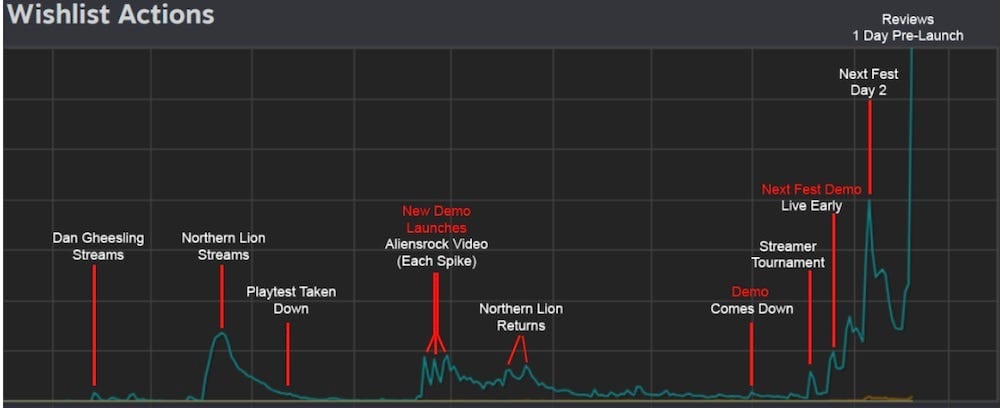
When you send keys, pick creators who already play roguelikes and send them a version with enough content for several sessions. A roguelike that runs out of content after two runs gives a creator nothing to come back to.
Real results from roguelike launches
| Game | Year | Base price | What drove it | Public result |
|---|---|---|---|---|
| Balatro | 2024 | $14.99 | Demo with no round limit, creators, Discord | 1 million in under a month; 5 million by January 2025 |
| Megabonk | 2025 | $9.99 | Early demo, solo developer | 1 million in two weeks, 117,336 peak players |
| Ball x Pit | 2025 | $14.99 | Demo before June Next Fest, Devolver | 300,000 in 5 days; over 1 million by December 2025 |
| CloverPit | 2025 | $9.99 | Triple-I Initiative showcase reveal with a live demo | 100,000 wishlists in its first week after the reveal |
| Brotato | 2023 | $4.99 | Demo, roguelike festival, Early Access | 2 million on Steam by 1.0 |
| Peglin | 2022 | $19.99 | Year-long demo, weekly streamers | 80,204 units in Early Access week one |
| Hades | 2020 | $24.99 | Long Early Access | 1 million, 700,000 of them in EA |
Ball x Pit's milestones were announced by developer Kenny Sun and publisher Devolver; the game also launched on Game Pass, so player counts are higher than sales. Megabonk is a good reminder that timing advice isn't law: vedinad said everyone warned him not to launch in a crowded September, and he launched anyway.
A roguelike marketing plan, step by step
- Write the one-sentence mashup. "X meets Y" plus the twist. If you can't say it, players can't repeat it.
- Set your tags. Rank the specific subgenre tags and your second genre high in the top 5.
- Make the store page show the loop. First trailer seconds and first screenshots should show a build mid-run, not a title card. State run length.
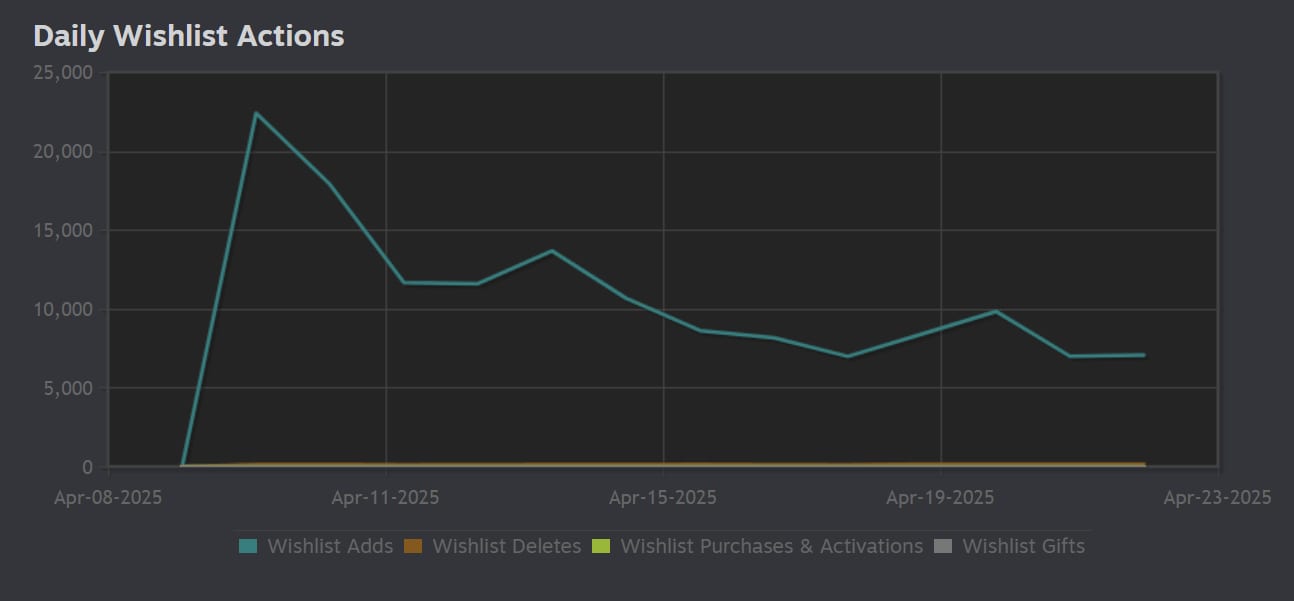
- Release a demo early. Months before Next Fest if you can, then notify wishlisters within the two-week window.
- Seed creators who play the genre. Send keys to roguelike specialists, small ones included, and give them enough content for repeat videos.
- Cut clips from your own runs weekly. Broken builds and score reveals for short-form, longer runs for YouTube.
- Use Next Fest as a second wave. Update the demo, add content, and treat it as a relaunch.
- Decide on Early Access honestly. If you can ship content updates for 1 to 3 years, EA fits. If not, launch 1.0.
- Market 1.0 as a new launch. New trailer, new creator push, no price rise on launch day if you want a discount.
FAQ
What is the difference between a roguelike and a roguelite for marketing?
For marketing on Steam, both are tags players use to find run-based games. Roguelite usually signals persistent progression between runs. Use whichever describes your game honestly and rank the more specific subgenre tag high.
Is the roguelike market too saturated?
It is crowded, not closed. Roguelite and Roguelike were the top two tags among 2025 hits in GameDiscoverCo's data, while only 5.1% of 2025 roguelike deckbuilders reached 1,000 reviews. A clear twist matters more than the genre.
Should a roguelike have a demo?
In most cases, yes. Balatro, Peglin, Brotato, Ball x Pit and Megabonk all had Steam demos before launch, and roguelikes are easier to understand after one run than from a trailer.
Should I launch my roguelike in Early Access?
If you can keep adding content for a long time, Early Access suits the genre. Hades sold 700,000 copies in Early Access. Valve notes Early Access titles don't get the same launch visibility as a 1.0 release.
How much should a roguelike cost on Steam?
The hits span a wide range: Brotato and Vampire Survivors at $4.99, Megabonk and CloverPit at $9.99, Balatro and Ball x Pit at $14.99, Peglin at $19.99 and Hades at $24.99. Price against the games your tags put you next to.
What kind of videos work best for roguelikes on TikTok and Shorts?
Clips with a visual payoff: a broken build, a huge score or a run 1 vs run 50 comparison. Deep strategy games often get more from long-form creators.
Sources: GameDiscoverCo newsletter (genre analysis, Balatro, CloverPit, How Many Dudes?, Guildrun); How To Market A Game (2025 and Peglin, Nova Drift, 20 Minutes Till Dawn breakdowns); Steamworks documentation (tags, demos, Next Fest, Early Access); Steam store pages and Megabonk's Steam announcement; Game Developer; Vice; PCGamesN; Shacknews; GamingOnLinux; Item Level; GamesRadar; KitGuru; Brotato 1.0 press release; checked November 2026.
Get a wishlist forecast for your game
Send us your Steam page. We estimate views, creators and cost per wishlist before you spend anything.
Keep reading
Twitter for Game Developers: Is X Still Worth It in 2026?
Is X still worth it for indie devs? Link penalty facts, Bluesky…
How to Market a Strategy Game: 4X, RTS and City Builders
How to market a strategy game on Steam: who buys it, demos…
Instagram Reels for Game Developers: Ranking, Formats, Steam Links
How Instagram ranks Reels, which game formats work, how to send viewers…