YouTube for Game Developers: Devlogs, Shorts and Steam Links
Should your game have a YouTube channel? Devlogs vs Shorts vs trailers, what YouTube's algorithm rewards, and how to link Shorts to Steam.
Short answer: Yes, your game should have a YouTube channel, but what you put on it matters more than having it. YouTube is where players most often say they find games: in a 2024 Big Games Machine survey of about 1,000 US players, 64% said they use it for game discovery, more than any other platform in the survey. YouTube's own help pages say its system ranks videos by whether viewers choose them, keep watching and feel satisfied (YouTube Help), and that views are not tied to how often you upload (YouTube Help). For most studios that means a channel built around trailers and Shorts that show the game, with long devlogs only if you can treat them as a second job. Links in Shorts are not clickable, so your path to Steam has to run through a related video, a long-form description or your channel links (YouTube Help).
Should your game have a YouTube channel?
You will need one anyway. Your Steam trailer, your Next Fest demo video and every press reupload start from a file somewhere, and a channel under your studio name is where people land when they search for the game. That part costs almost nothing.
The real question is how much more to do. There are three kinds of content a studio can run, and they have very different costs and payoffs.
| Format | What it does for you | Effort | Who watches |
|---|---|---|---|
| Trailers and announcement videos | A searchable home for your key videos, and the file press and creators reupload | Low after the trailer exists | Players who already heard of the game |
| Shorts (vertical, up to 3 minutes) | Puts gameplay in front of people who never heard of you | Medium: several clips a week | Mostly strangers in the Shorts feed |
| Long devlogs (8 to 25 minutes) | Builds a following that knows you as a person | High: Chris Zukowski calls YouTube "a full time job" (How To Market A Game) | Often other developers, plus your future players |
If you only have time for one thing beyond trailers, make it Shorts. Devlogs can work very well, but the examples below show they reward people who commit for years and pick a game players also want.
Trailers: the channel as a home for your best video
Your trailer is the most watched video you will make, and most of its views may happen on other people's channels. That is fine. Upload it to your own channel first so the original is easy to find and link, then let outlets copy it.
Example: Choo-Choo Charles. Gavin Eisenbeisz of Two Star Games had a channel of about 8,000 subscribers when he posted the announcement trailer in October 2021. He estimated the trailer was viewed over 20 million times across reuploads by outlets like IGN and GameSpot, and the game got about 14,000 wishlists on the day it went out (How To Market A Game). His own channel was small. The hook was the trailer, and press picked it up because players were already sharing it. As Zukowski put it in that post: "Press is the result of, not the cause of initial traffic."

If your trailer is not ready yet, start with how to make a game trailer. On YouTube, the same file does double duty: you can set it as the related video for every Short you post, which matters more than it sounds (see the linking section below).
Devlogs: when they work and who they reach
A devlog channel turns you, the developer, into the show. When it works it gives you something Steam cannot: an audience that watches your game grow and shows up on launch day.
Example: Thronefall. Jonas Tyroller documented the game on his YouTube channel, which had about 177,000 subscribers in 2023. His co-developer Paul Schnepf told GameDiscoverCo they "received a lot of the early players from the devlog Jonas had posted." The biggest wishlist jump still came from the June 2022 Steam Next Fest demo and YouTuber coverage, and the game sold about 315,000 units on Steam by October 2023 (GameDiscoverCo). Zukowski points to Jonas as proof that YouTube works, with the caveat that he "dedicated his life to it".
Example: Alva Majo. The Spanish developer had 376,000 subscribers in 2022 and uploaded one video a week for over three years, which he said took about half his working time. His view of the payoff: "The greatest advantage of my YouTube channel is having a guaranteed push at launch" (GameDiscoverCo).
Example: Mind Over Magnet. Mark Brown runs Game Maker's Toolkit, a game design channel that now has 1.75 million subscribers (YouTube), and documented the game in his Developing video series. He reported about 50,000 wishlists at launch in November 2024, about 10,000 sales in the first week and 12,446 by early December (GMTK newsletter). That is a solid launch for a first puzzle game, and he credits the channel for "some, if not most, of the sales." It is also a reminder that a huge audience of people who like watching game design does not convert into buyers one to one.
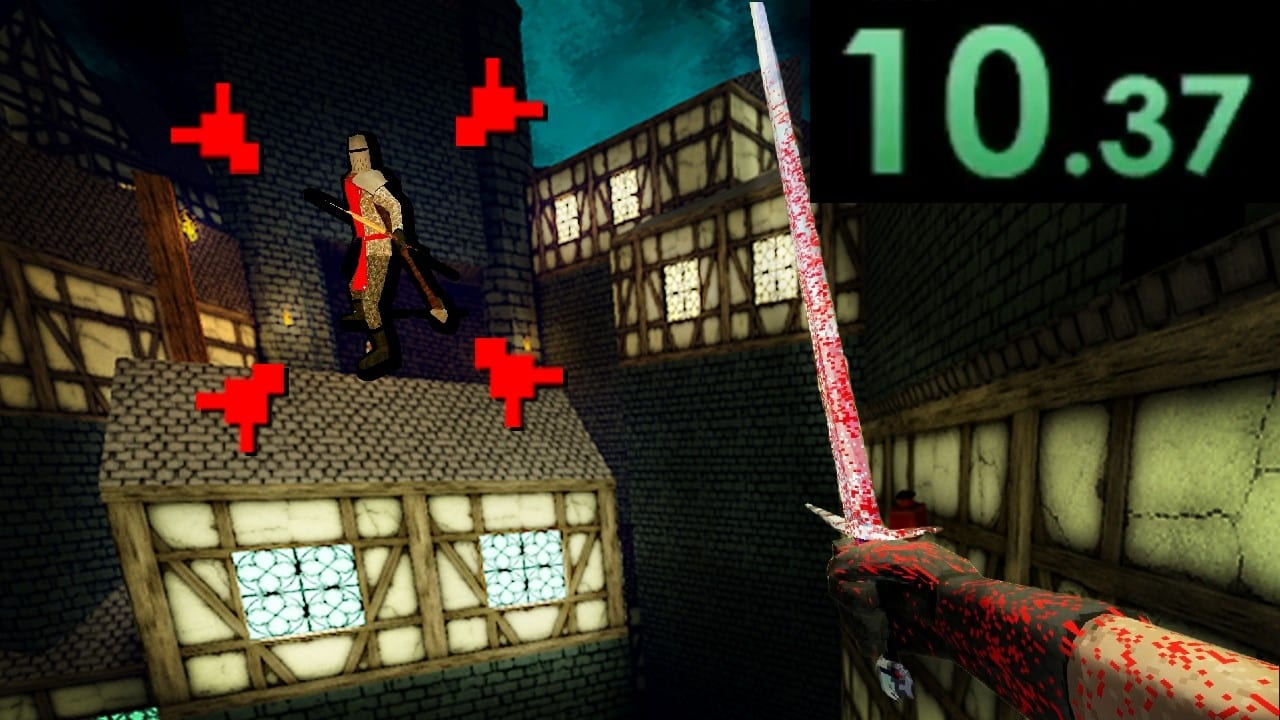
Example: Bloodthief. Blargis built a channel of 118,000 subscribers (YouTube) around devlogs for his fast melee dungeon runner. One of them, "Speedrunners Broke My Game. I Embraced It.", has about 2.6 million views (YouTube). The game launched on September 22, 2025 and its store page lists just over 1,000 user reviews (Steam). Healthy for a solo game, and far smaller than the view counts. A devlog about how a game was made also draws other developers, who watch for the craft rather than to buy.
What these cases have in common:
- They started early. Every one of them was posting long before launch, often for years.
- The video is about a problem or a story, not a patch list. "Speedrunners broke my game" is a story. "Devlog 14: new enemies" is a changelog.
- The game itself had a hook that worked in a clip. Devlogs amplified it, but none of them carried a game players did not want.
How to structure a devlog episode is its own topic, covered in how to make a devlog. The YouTube-specific part is packaging and links, below.
Shorts: the cheapest way to reach strangers
Shorts are where YouTube puts your game in front of people who were not looking for it. The current rules, from YouTube's own help pages:
- A Short is any square or vertical video up to three minutes long, for uploads from October 15, 2024 on. Landscape videos stay long-form even when they are short (YouTube Help).
- A Short over one minute with an active copyright claim of any type, Content ID included, is blocked worldwide, so licensed music in a long Short is a real risk. Under one minute, that block does not apply (same page).
- YouTube counts a view "the moment a video starts to play across all formats" (YouTube Help). A big Shorts view count is a count of starts, so judge your clips by retention in Analytics and by Steam traffic, not by the headline number.
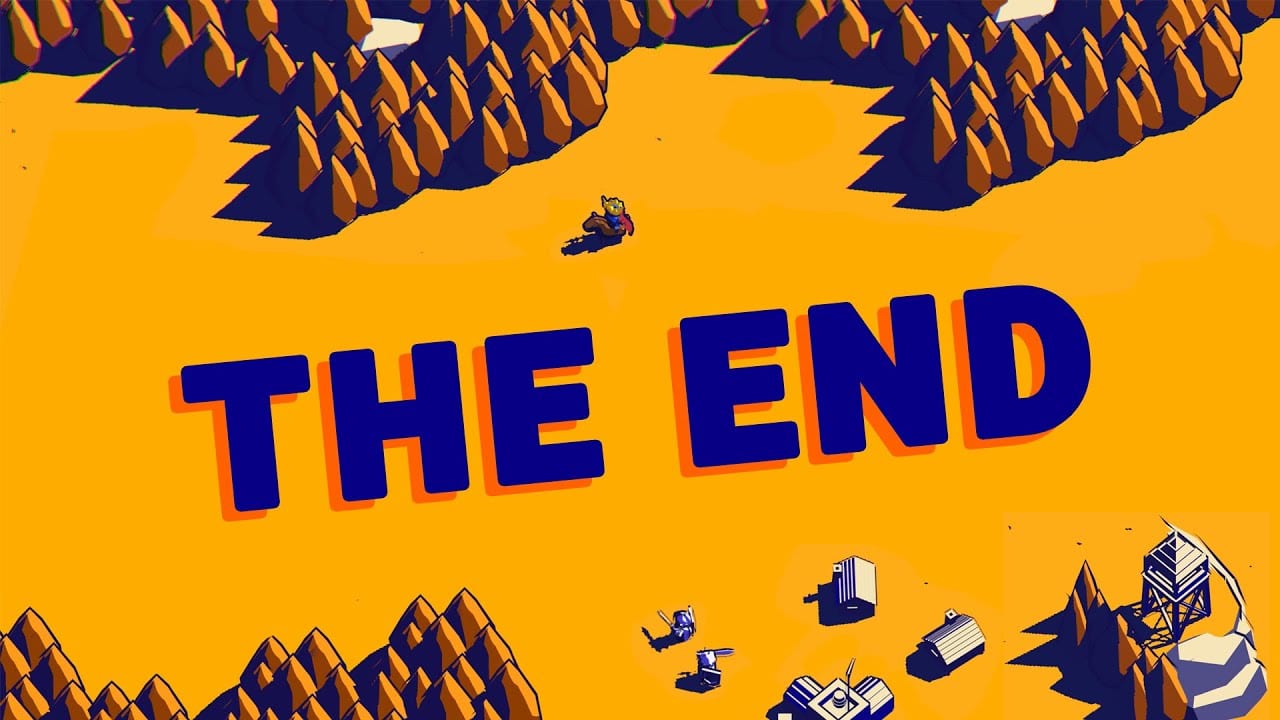
Example: Megabonk. The developer vedinad ran devlogs and Shorts side by side. His first devlog, "I'm Making Vampire Survivors but 3D" (February 2025), has about 1.6 million views (YouTube). His Shorts went further: "Did I make my game TOO FAST?!" from March 2025 has about 3.5 million views (YouTube), and "My Game Launch is COOKED", posted a week before launch, has about 3.6 million (YouTube). By comparison, the game's own trailer has about 350,000 views (YouTube). In a Short shortly before the September 18, 2025 launch, the developer said the game had 80,000 wishlists (New Leaf News). It then sold 1 million copies in about two weeks, by the developer's own post (GamingOnLinux). The Shorts did not sell a million copies on their own, but they built the audience the launch started from.
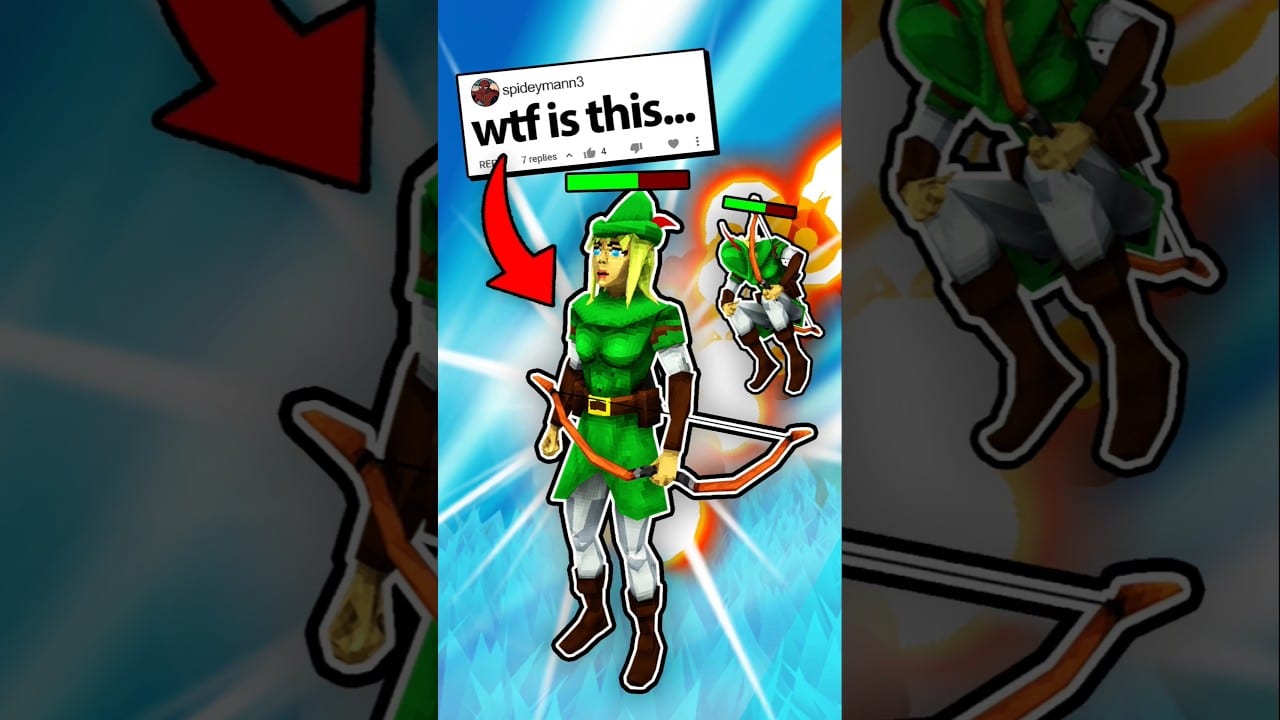
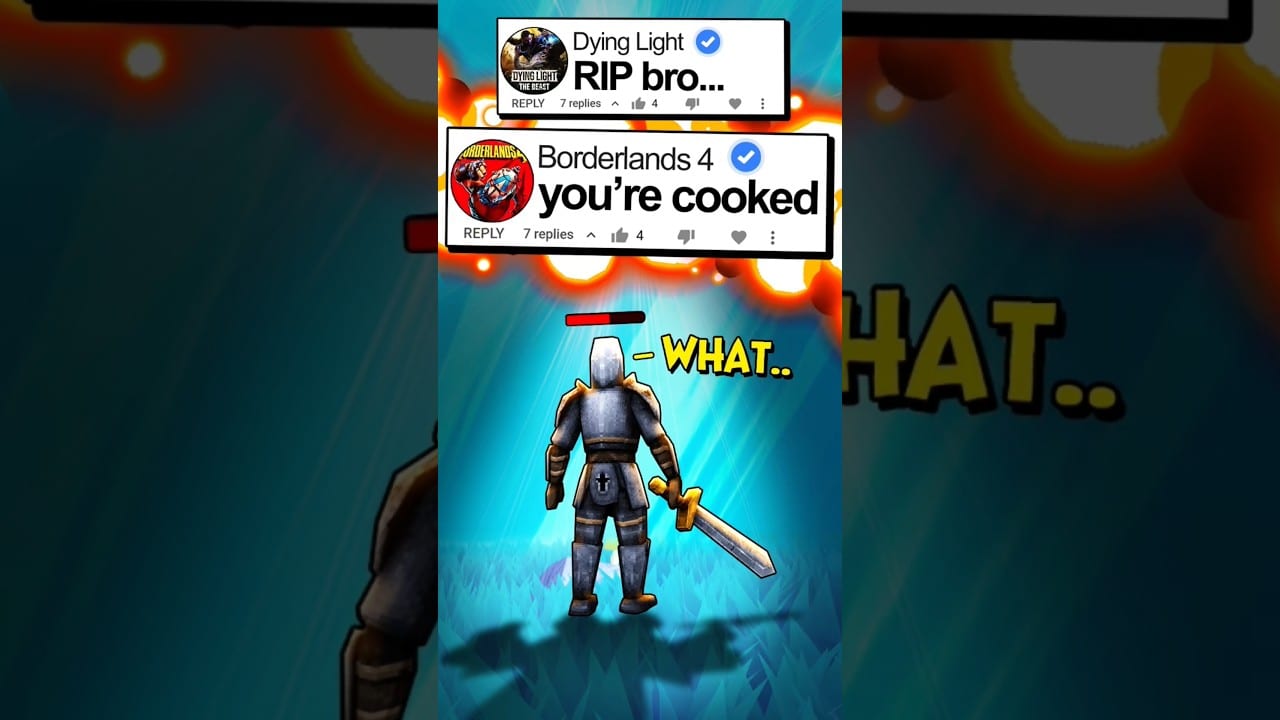
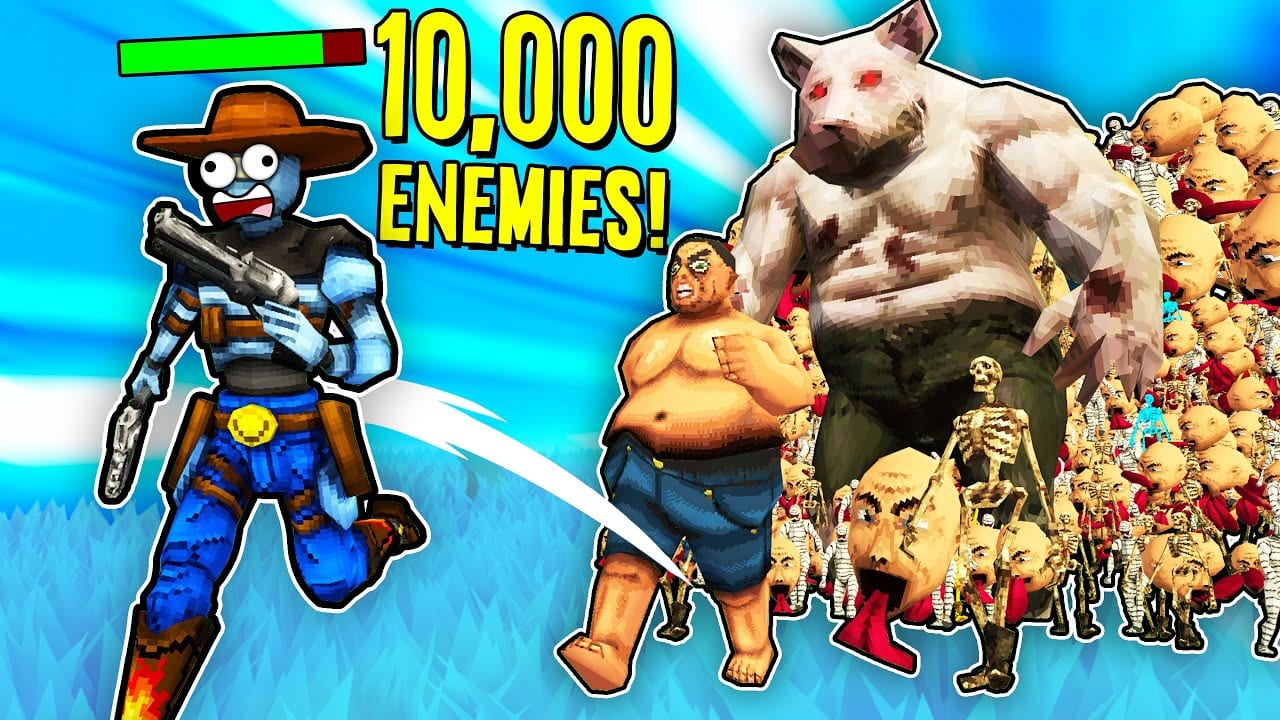
Look at his titles. Each Short is framed as a developer with a problem: a bug, a balance question, a launch date. That gives a stranger a reason to watch past the first seconds, and the gameplay on screen does the selling. The same clips can go to TikTok; the differences between the two platforms are in TikTok for game developers.
What the YouTube algorithm actually rewards
YouTube publishes more about its recommendation system than most platforms. The short version from its creator help pages:
- Appeal. Did people choose to watch when they saw your video, or skip it and click "not interested"? This is your title and thumbnail, or the first frame of a Short.
- Engagement. "Once viewers start watching, do they stick around?" YouTube says the first seconds are "when viewers decide to stay or move on" (YouTube Help).
- Satisfaction. Did viewers enjoy it? YouTube lists likes and dislikes among the signals it uses, and says it aims to "maximize long-term viewer satisfaction" (YouTube Help).
A few things YouTube says do not matter as much as people think:
- Upload frequency. YouTube says views across uploads are "not correlated with time between uploads" (same page). Post when you have something good. A schedule helps your audience, not the algorithm.
- Tags. "Tags can be helpful but are not essential for discovery" (YouTube Help). They mostly catch misspellings of your game's name.
- Breaks. YouTube tells creators to take them when needed, with the note that returning viewers may take time to warm up again.
For a game studio this translates to one rule: show the game early. A Short that opens on your logo loses viewers in the window YouTube says decides everything. Open on the most surprising second of gameplay and explain after.
Thumbnails and titles
Thumbnails and titles are how YouTube measures appeal on long-form videos, so they deserve as much care as the edit.
- Custom thumbnails need a verified phone number. It gives you access to YouTube's intermediate features (YouTube Help). Do it the day you create the channel.
- Keep it simple and readable. YouTube's own tips: avoid complex designs, make the image as large as possible because it shows differently across devices, and put key words first in the title because "viewers may only see part of your title" (YouTube Help).
- Accurate beats clever. YouTube's tip is to "make sure your title accurately represents the video." A title that oversells the video wins the click and then loses on engagement and satisfaction.
- Test, do not guess. YouTube Studio lets you A/B test up to three titles, thumbnails or both on a long-form video. It picks the winner by watch time, not click-through rate, and a test should finish within two weeks. It needs advanced features and does not work on Shorts (YouTube Help).
For game channels, the thumbnail that works is usually a real frame from the game with one clear subject, plus a few words that set up the question the video answers. Your Steam capsule is built to be read at a glance on a store shelf, and that is a different job.
Linking to Steam from YouTube
This is where most studios lose traffic. Here is where links work, from YouTube's link help page (YouTube Help):
| Place | Clickable? | Notes |
|---|---|---|
| Shorts description and Shorts comments | No | Blocked "to reduce spam and scam attempts" |
| Related video link on a Short | Yes, to your own videos only | Shown under your channel handle in the Shorts player (YouTube Help) |
| Long-form description and comments | Yes | Needs advanced features (YouTube Help) |
| Channel profile links | Yes | Up to 14 links on your channel page |
| End screen link element | Yes, with conditions | Video must be at least 25 seconds; external links need the YouTube Partner Program (YouTube Help) |
| Brand link on a Short | Only for a partner brand | Must go to the sponsoring brand's site, so not to your own Steam page (YouTube Help) |
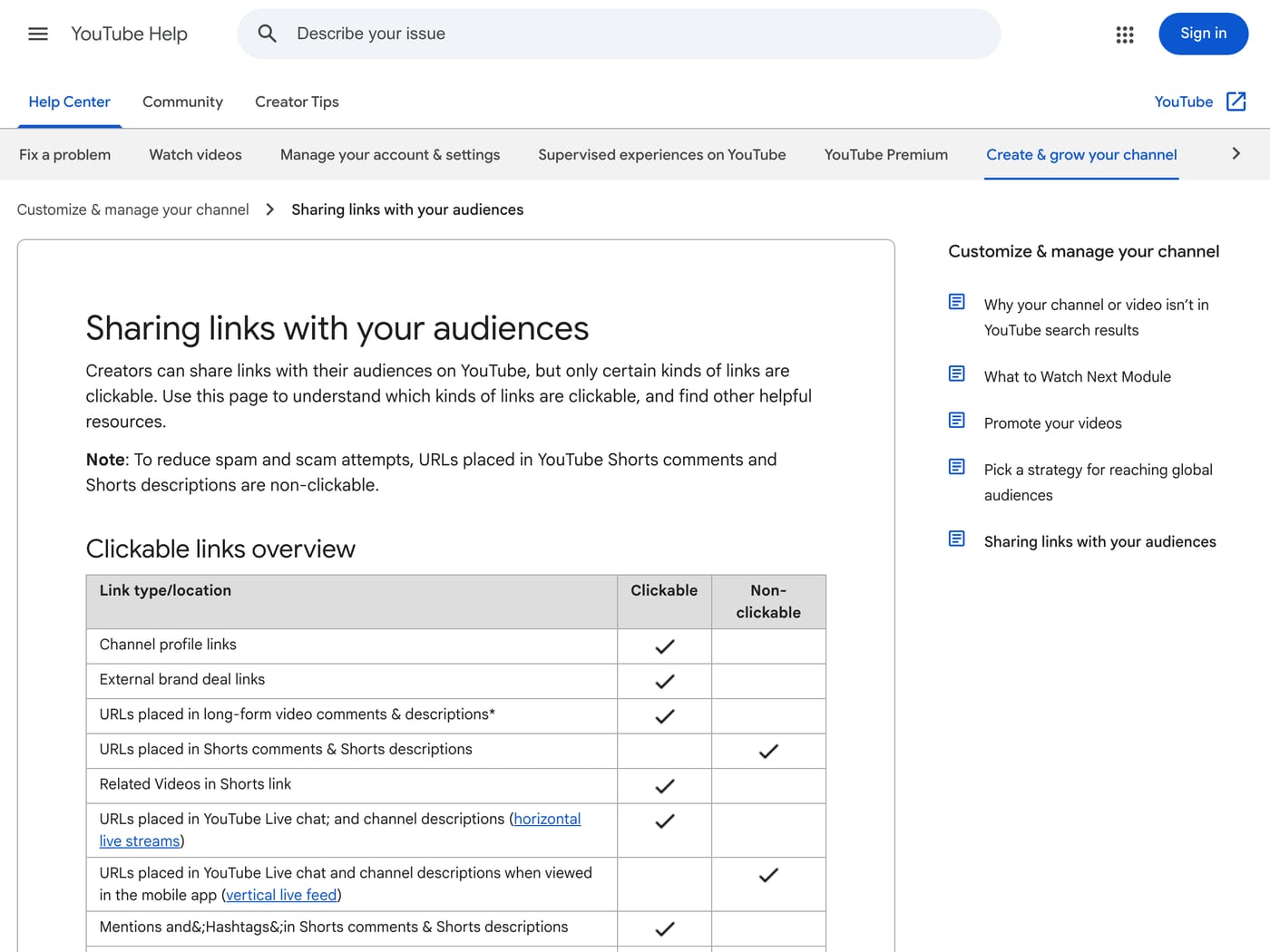
So the working route from a Short to Steam has two hops:
- Upload your trailer or a short gameplay overview as a long-form video, with the Steam link as the first line of the description.
- In YouTube Studio, open each Short and set that video as its related video. The related video has to be public or unlisted, and the feature needs advanced features.
- Add the Steam page as the first of your channel profile links, so anyone who taps your name finds it.
- Say the game's name on screen in every Short. Many viewers will search Steam for it directly, and that is a win even though no link gets the credit.
- Tag every link with UTM parameters. Steam reports visits, wishlists and purchases for logged in users within 72 hours of the click, and conversions are final four days after the visit (Steamworks). Use one
utm_source=youtubeand a differentutm_contentper video. Setup details are in Steam UTM tracking.
Expect UTM numbers to undercount YouTube. Shorts viewers who search Steam by name show up as search or direct traffic, not as your campaign.
A realistic plan for a small team
- Set up properly. Studio-name channel, verified phone, advanced features enabled through ID or video verification, Steam link first in channel links.
- Post the trailer and one gameplay overview as long-form videos with UTM links in the descriptions. These become the related videos for everything else.
- Cut two or three Shorts a week from real gameplay. Each one opens on the hook, names the game and points to the overview as its related video. Keep music you do not own out of anything over a minute.
- Decide on devlogs honestly. If someone on the team enjoys making them and can keep going for a year or more, do it. If not, skip them. A dead devlog channel with three episodes does nothing for you.
- Review monthly. Check retention and Steam UTM conversions per video. Make more of whatever kept viewers past the first seconds and sent people to Steam.
Your own channel reaches the people YouTube decides to show it to. When you want reach beyond that, the next step is getting other people's channels to cover the game; how creator views turn into Steam wishlists shows what to expect from that.
FAQ
Should my indie game have its own YouTube channel?
Yes. At minimum it hosts your trailer and gives players something to find when they search the game's name. Whether to go further with devlogs depends on whether you can keep posting for a year or more.
Are YouTube Shorts good for indie games?
They are the cheapest way to show your game to strangers on YouTube. Several of Megabonk's pre-launch Shorts drew millions of views, and the developer said it had 80,000 wishlists shortly before launch.
Can I put a Steam link in a YouTube Short?
Not a clickable one in the description or comments. Use the related video feature to send viewers to a long-form video with the Steam link, and put Steam in your channel profile links.
How long can a YouTube Short be?
Up to three minutes, if the video is square or vertical and was uploaded on or after October 15, 2024. Shorts over one minute with an active copyright claim are blocked worldwide.
Do devlogs actually get wishlists?
They can, if you commit for a long time and the game has a clear hook. Thronefall's developers said many early players came from Jonas Tyroller's devlog, but much of a devlog audience is other developers.
How often should I upload to YouTube?
YouTube says views are not correlated with time between uploads. Post when the video is good, and keep a steady rhythm for your audience's sake.
Does YouTube use tags for discovery?
Barely. YouTube says tags are not essential for discovery and mainly help with misspellings, so spend that time on the title, thumbnail and first seconds.
Sources: YouTube Help: recommendation performance, YouTube Help: performance FAQ, YouTube Help: sharing links, YouTube Help: related video on Shorts, YouTube Help: three-minute Shorts, YouTube Help: A/B testing, YouTube Help: feature access, Steamworks UTM analytics, GameDiscoverCo on Thronefall, GameDiscoverCo on Alva Majo, GMTK on Mind Over Magnet's launch, How To Market A Game on Choo-Choo Charles, Big Games Machine survey via Game Developer; checked November 2026.
Get a wishlist forecast for your game
Send us your Steam page. We estimate views, creators and cost per wishlist before you spend anything.
Keep reading
How Many Copies Do Indie Games Sell? Real Steam Numbers by Tier
Most Steam indie games sell under 1,000 copies. Real numbers by tier…
Game Marketing Hook: How to Find, Test and Show Yours
What a game marketing hook is, how to test one cheaply with…
How to Name Your Game: Searchable, Memorable and Legally Safe
How to name your game: pass the Steam, Google and trademark checks…