How Many Copies Do Indie Games Sell? Real Steam Numbers by Tier
Most Steam indie games sell under 1,000 copies. Real numbers by tier, first week to first year multipliers, and what moves a game up a tier.
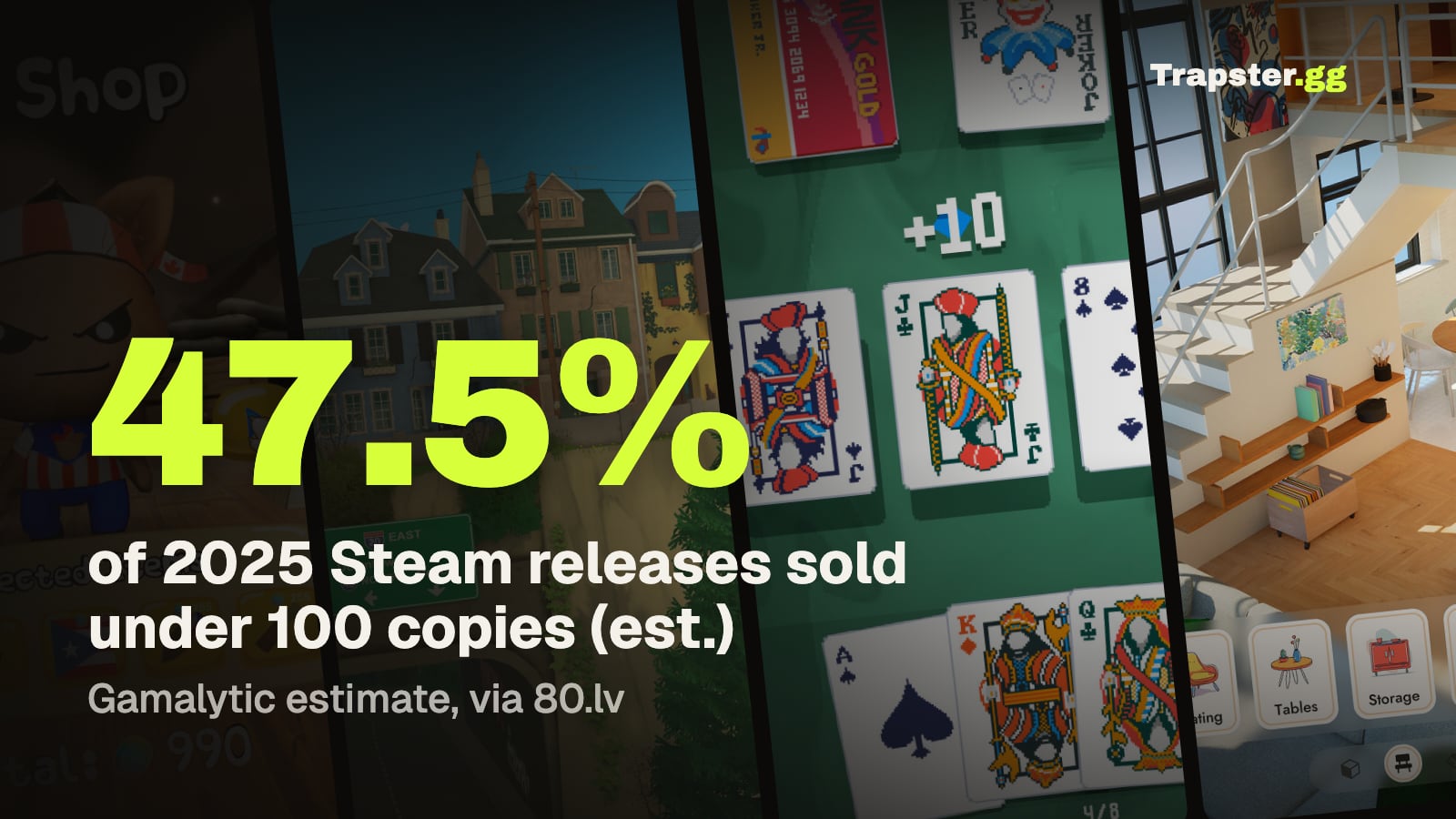
Short answer: Most indie games on Steam sell a few hundred copies or fewer. Gamalytic's estimates for 2025 releases put 47.5% of games under 100 copies sold and only 1.8% above 100,000, with a median revenue of about $249 (80.lv on Gamalytic data). The average is far higher because a few hits take most of the money. Valve said 5,863 games earned more than $100,000 on Steam in 2025 (PCGamesN). If your game does sell, GameDiscoverCo's data says year one usually lands at about 2.6 times your first week in copies (GameDiscoverCo).
Why "average indie game sales" is the wrong number to ask for
Valve does not publish sales for individual games. Every figure you see for a specific game comes from one of three places: the developer or publisher sharing it, an analytics firm estimating it (usually from review counts), or Valve publishing an aggregate. This guide uses all three and labels which is which.
The second problem is that the average lies. Steam sales follow a power law. Gamalytic's estimate for 2025 releases (data up to October 21, 2025) put the median game at about $249 in revenue but the average at about $358,900 (80.lv). That gap is the whole story. A handful of breakouts pull the mean up by three orders of magnitude, while the typical game barely covers its $100 Steam Direct fee.
A separate estimate from We Love It, which converts review counts into sales with a multiplier, found that the top 1% of paid games took 84.9% of all estimated Steam revenue, and that the median paid game earned about $3,356 over its lifetime when we checked in November 2026 (We Love It Steam Revenue Report). Different method, same shape.
So the useful question is not "how many copies does the average indie game sell". It is "which tier is my game likely to land in, and what moves a game from one tier to the next".
The distribution: how many games sell how many copies
Here is Gamalytic's estimated split of 2025 Steam releases by copies sold, as reported by 80.lv. These are estimates, and games released close to the October 2025 snapshot had only weeks to sell, which pushes the bottom tiers up a little.
| Copies sold (estimate) | Share of 2025 releases |
|---|---|
| Under 100 | 47.5% |
| 100 to 1,000 | 28% |
| 1,000 to 10,000 | 16% |
| 10,000 to 50,000 | 5.4% |
| 50,000 to 100,000 | 1.2% |
| Over 100,000 | 1.8% |
The same dataset found that about 66% of 2025 games earned under $1,000 and about 8% earned over $100,000. About 40% did not make back the $100 fee (Tech4Gamers on Gamalytic). Gamalytic itself says its numbers are not 100% accurate, and estimates are weakest for small games.
Two things are worth knowing before you panic. First, the bottom of that table is full of asset flips, abandoned projects and games with no marketing at all. If you have a real Steam page, a trailer and a few thousand wishlists, you are not starting from the median. Second, the top is bigger than it sounds. 1.8% of a year's releases is still well over 200 games selling six figures.
What Valve itself says
Valve rarely shares numbers, but at GDC in March 2026 Tom Giardino and Kaci Aitchison Boyle said 5,863 games earned more than $100,000 on Steam in 2025, and their slide showed the count growing year on year (PCGamesN). In 2020 it was around 3,000, according to 80.lv's report on the same talk.
Read that carefully. It counts every game on Steam earning $100,000 during 2025, including old games and big franchises, not only 2025 releases. It tells you the middle class of Steam is growing in absolute terms. It does not tell you the odds for a new release, which the Gamalytic table shows are still small. Valve has not published a median.
First week, first month, first year
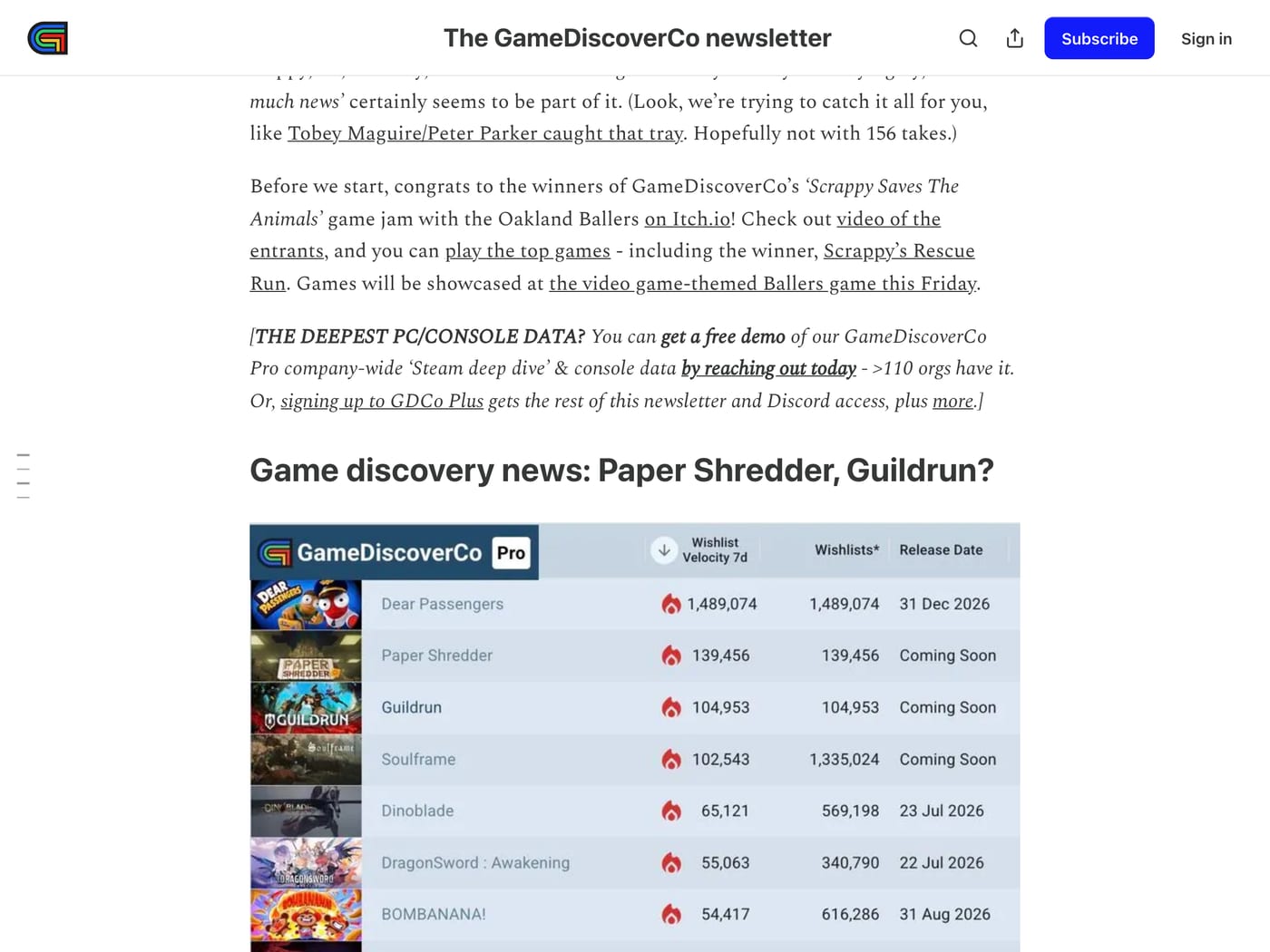
Once a game has launched, the best public guide to what comes next is GameDiscoverCo. In July 2026 it studied about 5,000 Steam games launched between July 2023 and July 2025 that sold more than 1,000 copies in month one (GameDiscoverCo).
| Time since launch | Median copies, relative to week 1 | Median revenue, relative to week 1 |
|---|---|---|
| Week 1 | 1.0x | 1.0x |
| Month 1 | 1.39x | 1.42x |
| Year 1 | 2.59x | 2.46x |
| Year 2 | 3.32x | 2.99x |
So if you sell 2,000 copies in week one, a typical result is roughly 5,200 by the end of year one. The same post found the tail varies a lot by tier and genre:
- Games selling 1,000 to 10,000 in week one reached a median 1.96x by year one.
- Games selling 10,000 to 100,000 in week one reached 3.16x.
- Games selling more than 100,000 in week one reached 4.64x.
- Games with co-op tags reached 3.53x, and games priced $10 or more did slightly better than games under $10.
The ratio between week one and month one also spreads wide. Lethal Company sold 4.14 times its week one in its first month, Mouthwashing 2.54x, while Wargroove 2 was front-loaded at 1.08x (GameDiscoverCo).
The uncomfortable part: small launches get small tails. A game that sells 1,500 copies in week one usually does not find its audience later. The long tail is a multiplier, not a rescue.
How to predict your own week one
Two public rules of thumb get you close.
From wishlists. GameDiscoverCo's October 2025 update put median week one sales at roughly 0.10x to 0.17x of launch wishlists depending on the sample: 0.17x in a poll of games with more than 10,000 wishlists, 0.15x for games with more than 25,000, and 0.10x for games priced above $10 (GameDiscoverCo). It also found results vary by 10 to 20 times around the median. We go deeper on this in Steam wishlist conversion rate.
From launch day players. For March 2025's top 50 launches, the median game without pre-orders sold 21.8 times its day one peak concurrent players in week one (GameDiscoverCo). If you peak at 300 players on day one, a typical week one is about 6,000 copies.
Put together: 10,000 wishlists at launch usually means somewhere around 1,000 to 1,700 week one copies, and roughly 2,000 to 4,400 in year one. That is an estimate built on medians, so treat it as a planning range, not a forecast.
Real games at each tier
Every number below is either shared by the developer or publisher, or published by a named analyst. Single studio numbers are only that studio's experience.
| Game | Tier | What happened |
|---|---|---|
| Neko Ghost, Jump! (Burgos Games) | about 100 | 17,000+ wishlists, but only 100 copies on day one and about 32 more in the following days, per the developer's account |
| Forge Industry (four person team) | about 100 | 2,500 wishlists, 104 copies and $1,824 gross in week one at $16.99, per How To Market A Game |
| Dungeons of Edera | low thousands | about 2,500 wishlists, 1,824 copies in 7 days, about 20% refunded, per the developer's postmortem |
| Indoorlands (Pixelsplit) | about 10,000 | 13,000 wishlists at 1.0, 1,250 week one copies, just over 9,000 lifetime and about €100k net against €200k production cost, per Game World Observer |
| Lost Ember (Mooneye Studios) | over 100,000 | 100,000 wishlists, 17,000 Steam copies in week one, 74,000 in year one, 134,000 after two years, per the studio's postmortem |
| Small Spaces (Niklas Tomkowitz, Pretty Soon) | over 100,000 | about 85,000 wishlists, 9,980 week one copies, about 141,000 in year one, per GameDiscoverCo |
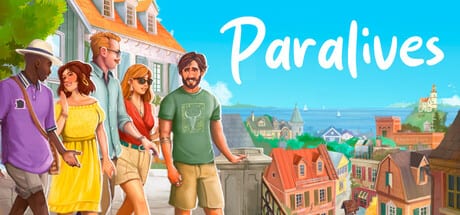
| Paralives (15 person team) | 1,000,000 | 1 million copies in its first month of Early Access, after 750,000 wishlists reported in early 2024, per GameDiscoverCo |
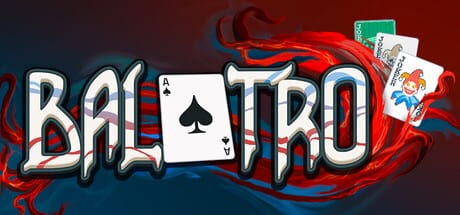
| Balatro (LocalThunk, Playstack) | 1,000,000 | 250,000 copies in 72 hours and over 1 million across all platforms in under a month, per Playstack via Game World Observer |
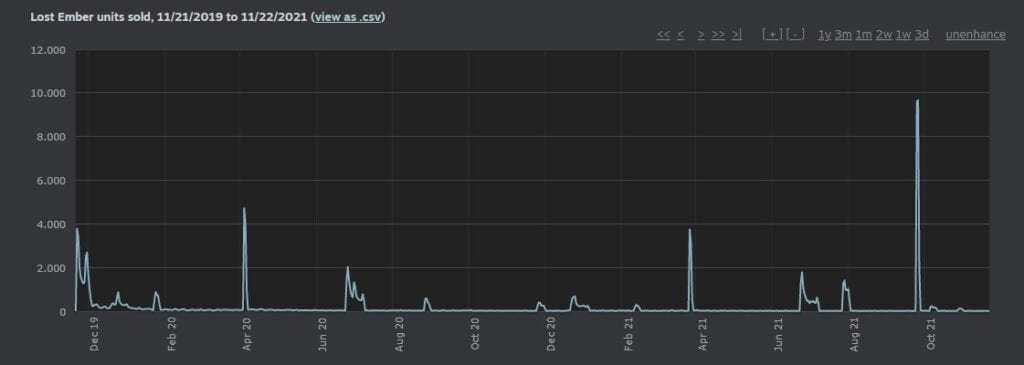
Notice that Neko Ghost, Jump! and Lost Ember both launched with large wishlist counts and got very different results. Wishlists predict a range. They do not guarantee the middle of it.
What moves a game from one tier to the next
From 100 to 1,000: a game people understand in five seconds
Chris Zukowski's breakdown of Forge Industry ranks the reasons in order of impact, and the top of the list is not marketing. It is art that did not look professional, confusing UX with no outside playtesting, and a slow tutorial that hid the hook. The demo's median playtime was 9 minutes, so players left before they saw the game (How To Market A Game). Only after those come the late demo, few festivals and too few wishlists.
Neko Ghost, Jump! had a different problem. The game had been shown at PAX, Gamescom and Steam festivals, but it launched in Early Access days after the Winter Sale with limited pre-launch PR, and creators and major outlets largely ignored it. Its wishlists converted at roughly 0.7% (Game World Observer).
From 1,000 to 10,000: enough wishlists to get seen at launch
At this tier the bottleneck is usually launch volume. Zukowski noted that 2,500 wishlists was too few for Forge Industry to reach Steam's Popular Upcoming list (How To Market A Game). Since the June 2026 home page refresh, Popular Upcoming shows the most anticipated releases of the coming month, so it is a list you qualify for before launch, not after. See Steam Popular Upcoming for how that works and how to get more Steam wishlists for the pre-launch side.
Example: Core Defense, a $9.99 solo game, grossed $20,186 in week one. The developer called the standalone demo "by far the most effective thing I did", worth about 3,000 wishlists, and said more than half of sales came from non-English speaking countries after translating into almost a dozen languages (GameDiscoverCo guest post). That is one developer's report from 2020, but the levers still apply.
From 10,000 to 100,000: reviews and a reason to keep selling
Good reviews separate games that convert from games that do not. In GameDiscoverCo's 2025 study, the games that sold far below their wishlist count had a median 67% (Mixed) review score after seven days, while the top 20 over-performers had 91% (GameDiscoverCo). Reviews also drive estimates: a separate analysis cited in GameDiscoverCo's long tail post puts about 100 reviews at roughly 3,000 sales (GameDiscoverCo). Our guide to the Steam review score covers the thresholds.
Then you need a tail. Small Spaces sold 14.1 times its week one copies in year one, more than five times the median. GameDiscoverCo credits a November 2025 update shipped alongside a Daily Deal, one creator video with about 11 million views across Instagram and TikTok, and a paid short-form creator campaign that added about a million more views (GameDiscoverCo). If you are weighing that route, creator views to Steam wishlists shows what the conversion looks like.

From 100,000 to 1,000,000: an audience that existed before the store page
The million sellers above did not get there from Steam visibility alone. Paralives ran a Patreon at about $50,000 a month for years and had 750,000 wishlists in early 2024, long before its 2026 launch (GameDiscoverCo). Balatro was profitable in its first hour and sold 500,000 copies in 10 days, a pace that comes from word of mouth, not from store placement alone (Game World Observer).
Look at the extremes in GameDiscoverCo's conversion data: Peak sold 266 times what its wishlists predicted, R.E.P.O. 68 times, Webfishing 67 times (GameDiscoverCo). Those are friend-group games that spread through videos and co-op invites after launch. You cannot plan for that outcome, but you can build a game where it is possible: a clear hook, short clips that make sense without sound, and a reason to bring a friend.
How to set a realistic sales target
- Count your launch wishlists honestly. Use the number you expect on launch day, not your best week's growth extrapolated.
- Apply 0.10x to 0.17x for week one. Use the lower end if your price is over $10.
- Multiply week one by about 2 to 2.6 for year one. Use about 2x if your week one is under 10,000 copies, closer to 3x if it is above and your reviews are strong.
- Convert to money. Gross revenue is copies times your average selling price after discounts and regional pricing, which Lost Ember put at about €15 against its list price. Then take off Steam's cut, refunds and taxes.
- Compare against your budget. If the plan only works at the 90th percentile, change the plan: cut scope, find more wishlists, or move the date.
FAQ
How many copies does the average indie game sell on Steam?
The median is in the low hundreds or below. Gamalytic estimated that 47.5% of 2025 Steam releases sold under 100 copies and 75.5% sold under 1,000.
How many copies does a successful indie game sell?
Selling over 10,000 copies puts a game in roughly the top 8% of 2025 releases by Gamalytic's estimate. Over 100,000 is about the top 2%.
How many wishlists do I need to sell 10,000 copies?
At a median conversion of about 0.15x and a 2x year one tail, you need roughly 33,000 launch wishlists: about 5,000 in week one, about 10,000 in year one. Real results vary by 10 to 20 times either way.
How much does a typical indie game make on Steam?
Gamalytic put the 2025 median at about $249 in revenue. We Love It's estimate of median lifetime earnings across all paid Steam games was about $3,356 when we checked.
How many games make over $100,000 on Steam?
Valve said 5,863 games earned over $100,000 on Steam in 2025, up from around 3,000 in 2020. That count includes older games, not just new releases.
How many copies will I sell after the first week?
GameDiscoverCo's median for games launched July 2023 to July 2025 is 2.59 times week one copies by the end of year one and 3.32 times by year two.
Can I see how many copies a Steam game sold?
Not directly, unless the developer shares it. Tools like Gamalytic estimate sales from review counts, so treat any single game figure from them as an estimate.
Sources: GameDiscoverCo long tail study, GameDiscoverCo wishlist conversions, GameDiscoverCo launch CCU study, 80.lv on Gamalytic 2025 data, PCGamesN on Valve's GDC 2026 talk, We Love It Steam Revenue Report, How To Market A Game, Mooneye Studios; checked November 2026.
Get a wishlist forecast for your game
Send us your Steam page. We estimate views, creators and cost per wishlist before you spend anything.
Keep reading
Game Marketing Hook: How to Find, Test and Show Yours
What a game marketing hook is, how to test one cheaply with…
How to Name Your Game: Searchable, Memorable and Legally Safe
How to name your game: pass the Steam, Google and trademark checks…
How to Get Your Game Into a Showcase (2027 Guide)
How to get your game into Wholesome Direct, Day of the Devs…