DLC Strategy for Indie Games: Types, Timing, Pricing and Data
Should your indie game have DLC? What to ship at launch, when to release an expansion, how to price it, and how Steam shows DLC.
Short answer: Most indie games should not plan a big paid expansion before launch. A small supporter pack and a soundtrack cost little and can sit next to the base game from day one, while a real expansion makes sense only after the game has sold well and you have shipped free updates. Chris Zukowski's 2026 developer survey found median DLC revenue of $80 for games that grossed under $10K and over $1M for games that grossed $1M+ (How To Market A Game). Valve itself warns that "it might not be a good idea to launch with a DLC on day 1" because players can read it as content cut from the base game (Steamworks DLC docs). The main thing DLC buys you on Steam is a reason to bring the base game back in front of people.
The four kinds of DLC indie games ship
| Type | What it is | Typical effort | When it fits |
|---|---|---|---|
| Expansion | New levels, story, modes or systems | Months | After a successful launch and free updates |
| Cosmetic | Skins, outfits, visual variants | Days to weeks | Games with a visible character or base the player cares about |
| Soundtrack | The game's music as a separate Steam app | Hours, plus a composer agreement | Almost any game with original music |
| Supporter pack | A "tip jar" item, often wallpapers, art or a small cosmetic | One to two weeks | Day one, for fans who want to pay more |
The effort figures for soundtracks and supporter packs come from the developers in Zukowski's survey: soundtracks are mostly MP3 uploads plus cover art, and most supporter packs took one to two weeks to make (How To Market A Game).
Examples of each type on Steam
US list prices and release dates from each Steam store page, checked November 2026:
| Game (base price) | DLC | Type | Price | Released |
|---|---|---|---|---|
| DREDGE ($19.99) | The Iron Rig | Expansion | $11.99 | Aug 2024, 16 months after launch |
| Cult of the Lamb ($24.99) | Woolhaven | Expansion | $16.99 | Jan 2026, about 3.5 years after launch |
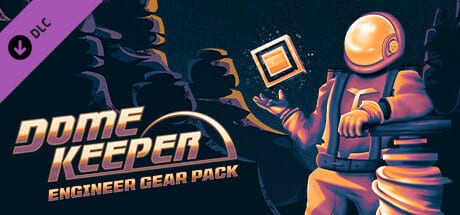
| Dome Keeper ($17.99) | Engineer Gear Pack | Cosmetic | $2.99 | Launch day, Sep 2022 |
| Cult of the Lamb | Cultist Pack | Cosmetic | $4.99 | Launch day, Aug 2022 |
| DREDGE | Original Soundtrack | Soundtrack | $4.99 | Launch day, Mar 2023 |
| DREDGE | Digital Artbook | Supporter | $3.99 | Launch day, Mar 2023 |
| DAVE THE DIVER ($19.99) | Digital Extra | Supporter | $8.99 | Launch day, Jun 2023 |
Dome Keeper's Engineer Gear Pack is a clean example of a cosmetic supporter item: its store page lists a keeper skin, a dome pet and extra music tracks, nothing that changes the game. Cult of the Lamb's Cultist Pack is the same idea for a base builder: decorations and follower forms.
What the data says about DLC revenue
Zukowski's 2026 benchmark. 52 games with 83 DLC, self-reported by developers, grouped by base game gross (How To Market A Game):
| Base game gross | Median revenue from all DLC |
|---|---|
| Under $10K | $80 |
| $10K to $149K | $11,639 |
| $150K to $999K | $8,600 |
| $1M+ | $1,069,000 |
Zukowski notes the middle two tiers look inverted and that only 9 and 7 games reported in them, so read those as noise. The clear pattern is at the ends: DLC for a game nobody bought earns almost nothing, and DLC for a hit earns real money. His rule of thumb: minor supporter style DLC is probably worth it once a game is on track for $10,000+, and at $150,000+ you should definitely prepare DLC. He calls expansions "not worth it" for the two lower tiers because of the opportunity cost.
GameDiscoverCo's share of revenue estimate. Simon Carless wrote that some PC games get "as much as 25-30%" of lifetime revenue from DLC, but he thinks 5 to 15% is more common (GameDiscoverCo, 2022).
Single developer reports collected by GameDiscoverCo (2020):
- Dead in Vinland: $19.99 base game, three DLC at $1.99, $4.99 and $4.99. Lifetime attach rates of 39%, 25% and 28% among base game owners. DLC was about 14% of lifetime revenue.
- X-Morph: Defense: lifetime DLC attach rate about 33%. Up to 50% of sales at any time were the Complete Edition. In a Summer Sale with everything at 75% off, attach rose to about 60%.
- Not Tonight: a $9.99 DLC on a $19.99 game had a 21% attach rate outside sales and 36% during the Summer Sale.
Carless's point in that piece: DLC looks small as a share of lifetime revenue, but measured from the DLC's own launch date it looks much better, because it arrives when base game sales have already flattened.
How DLC affects base game sales
A DLC launch is a marketing beat for the base game.
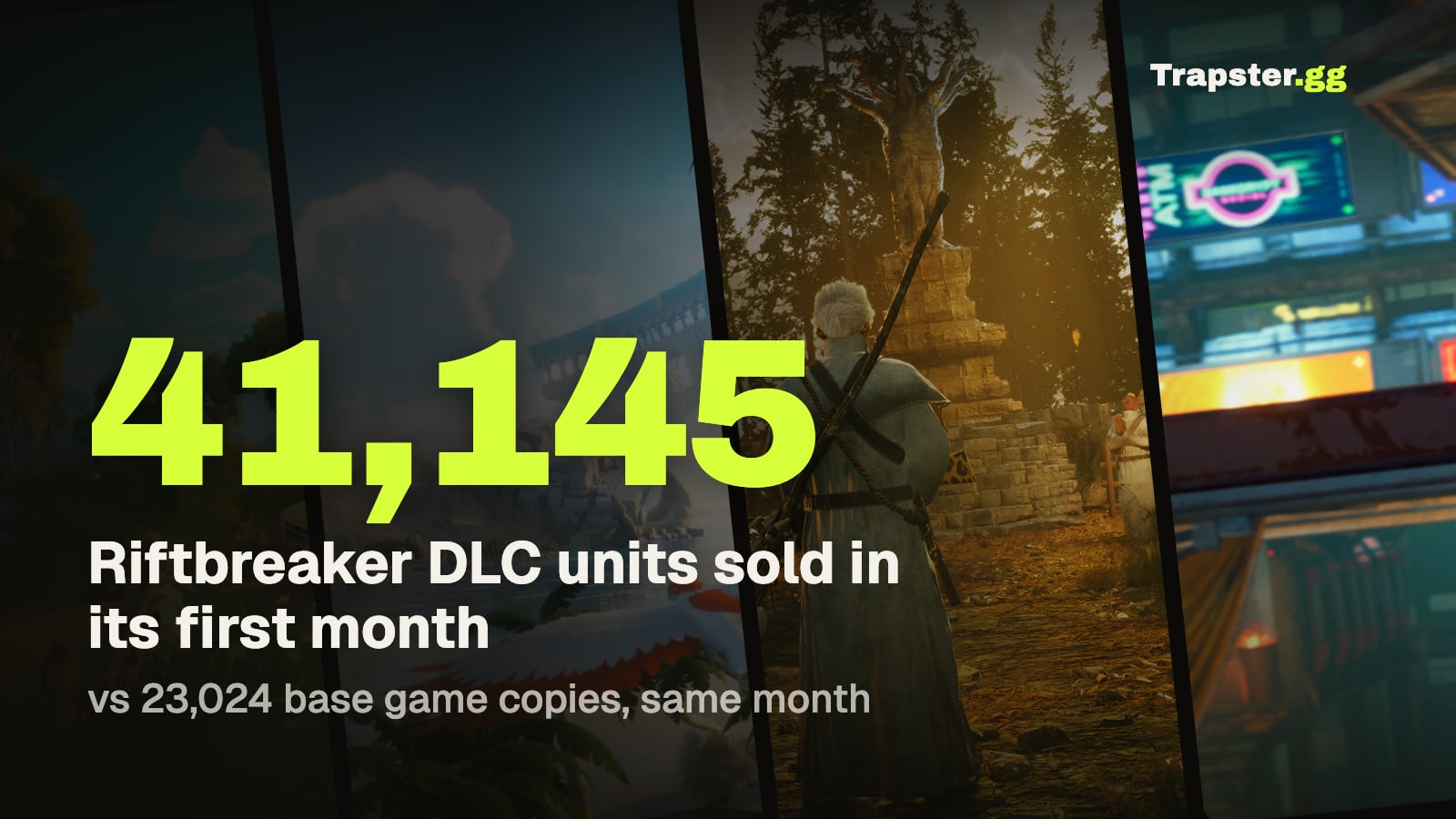
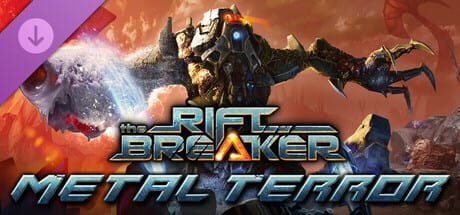
The best documented case is The Riftbreaker. Its $10 Metal Terror DLC sold 41,145 units in its first month. In the same month the $30 base game sold 23,024 units, while a 30% base game discount (a Midweek Madness slot) ran alongside the DLC launch. The DLC had collected almost 16,000 wishlists by the day before release and reached #9 on Steam's global all SKUs chart on launch day (GameDiscoverCo, 2022). The developer also shipped a free content update to all owners on the same day.
Several indie hits since 2023 shipped DLC the same way, as one day with a paid item and a free update, announced on Steam:
- Brotato. The $3.99 Abyssal Terrors DLC launched on October 25, 2024 together with a free local co-op update for up to four players (Steam announcement). Before that, the developer ran a public DLC beta branch for about 10 days (Steam announcement), which gave fans something to talk about before release.
- Cult of the Lamb. The $6.99 Pilgrim Pack shipped on August 12, 2024, the same day as Unholy Alliance, a free major update that added co-op (Steam announcement). The date also lined up with the game's second anniversary.
- Dome Keeper. The $7.99 Lost Keepers DLC, with two new keepers and the new soundtrack included, launched on April 13, 2026 alongside free multiplayer for everyone (Steam announcement). In the following week's patch notes the developer wrote that they were "genuinely blown away by the incredible response" (Steam announcement), without sharing numbers.
The pattern across these cases is a package, not a lone DLC: new paid content, a free update for everyone, a base game discount and a bundle, all on the same day. If you plan a post launch push, read our guide on how to boost sales of a released game.
How Steam surfaces DLC
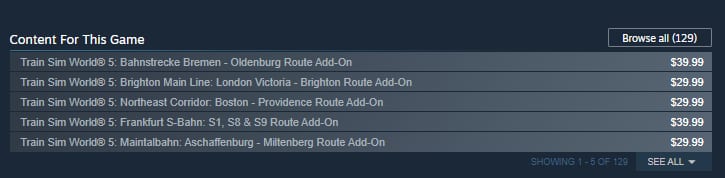
On the base game page. A section below the purchase box shows up to 5 DLC items with a "Browse All" button. You choose which items appear and their order in the Special Settings tab, and you can feature one item at the top, for example an upcoming DLC to collect wishlists (Steamworks DLC visibility).
On the DLC browse page. Every game with DLC gets one automatically, with Top Selling, New Releases, Upcoming and discounted lists. Following that page is the same as following the game, and your announcements show in followers' activity feeds (same page).
Elsewhere on the store. Valve says DLC can be recommended to players of the base game, found in browse and search, and can appear on top sellers lists and in the discovery queue (Steamworks DLC visibility). The main capsule on the home page can include "DLC for products the user has in their library" (Steamworks visibility docs).
For owners. The library page shows DLC that is "new since the last time the player played the game" (Steamworks DLC visibility).
Do base game owners get notified? Not by a dedicated push. Valve's docs do not describe an email to base game owners when you release DLC. What exists: the library highlight above, followers seeing your announcement, and wishlist emails. Valve says email notifications "may be sent to customers based on a variety of trigger actions related to your game, dlc, or software" (Steamworks wishlist docs). Wishlisters of a product get an email or mobile push when it releases and when it is discounted 20% or more (same page, discount docs). So the people who hear about your DLC directly are the ones who wishlisted the DLC itself. That is why Riftbreaker's 16,000 DLC wishlists mattered, and why the DLC page should go live weeks before release.
Update visibility rounds. Valve is explicit: "DLC items do not have their own visibility rounds the way that base games or software titles do." To promote a DLC launch, you post an announcement about it and spend one of the base game's Update Visibility Rounds, which sends people to the base game page where they also see the DLC (Steamworks visibility docs). Each product starts with five rounds, shared between Early Access and full release, and a round lasts up to 30 days or 1M home page impressions (update rounds docs). Rounds are limited, so a DLC launch is a good use of one. Our guide to Steam update visibility rounds covers the timing.
When to release DLC relative to launch
- Launch day: soundtrack and supporter pack only. Zukowski recommends that games heading for $150K+ launch with at least a soundtrack and a supporter pack, bundled with the game (How To Market A Game). Both are clearly extras, so they avoid the "cut content" reaction Valve warns about.
- First months: free updates. Fix what players complain about and add free content. A game with sliding reviews will not sell an expansion.
- About a year in: the expansion, if sales justify it. Zukowski notes expansions usually ship about a year after launch, once you know you have a hit. Hacknet's major expansion came 18 to 20 months after release (GameDiscoverCo).
- Put the DLC page up early. Riftbreaker announced in May and released in July, and its DLC wishlist count grew to almost 16,000 in that window (GameDiscoverCo). Feature the upcoming DLC at the top of the base game's DLC section.
- Release with a free update, a base game discount and a bundle. Valve recommends discounting base game and DLC together when you run a discount (discount docs).
Real timelines from indie games
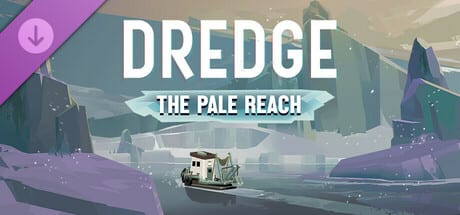
- DREDGE (launched March 30, 2023). Launch day: soundtrack, artbook and the $4.99 Blackstone Key add on. In May 2023 the team posted a roadmap of several free updates plus one paid DLC (Steam announcement). The game passed 1 million copies by October 2023 (Game Developer). The first expansion, The Pale Reach at $5.99, followed on November 16, 2023, seven and a half months after launch (Steam announcement). The Iron Rig, the paid DLC from the 2023 roadmap, slipped to August 15, 2024 (Steam announcement).
- Cult of the Lamb (launched August 11, 2022, 1 million copies in its first week per Gematsu). Launch day: Cultist Pack and soundtrack. Cosmetic packs followed at 8 months (Heretic Pack) and 17 months (Sinful Pack), then the Pilgrim Pack with a free update at two years. The paid story expansion, Woolhaven, came on January 22, 2026 (Steam announcement), after years of free major updates.
- Dome Keeper (launched September 27, 2022). Launch day: Engineer Gear Pack and soundtrack. The $2.99 Assessor Gear Pack arrived on May 3, 2023 alongside a free rework of that keeper (Steam announcement). The larger Lost Keepers DLC came three and a half years after launch.
- Vampire Survivors (1.0 on October 20, 2022). The first paid DLC, Legacy of the Moonspell, came less than two months later at $0.99, and Tides of the Foscari followed in April 2023 at $1.99. On a $4.99 base game, the DLC were priced at $1 to $2.
- DAVE THE DIVER (launched June 28, 2023). Its first post launch DLC were free crossover packs: DREDGE in December 2023 and Godzilla in May 2024. The first paid content pack, Ichiban's Holiday at $6.99, came 21 months after launch. A free crossover DLC still gets a store page and shows in the DLC section, so it works as a cross promotion between two games.
None of these games launched with an expansion, and each shipped free content before its first large paid DLC.
Two discount rules to plan around: a product cannot be discounted for 30 days after its release, and launch discounts must be set before release, run 7 to 14 days and cannot exceed 40% (discount docs). The same docs say any discount on a game needs 30 days between the end of one and the start of the next, so check your base game's last discount before you schedule the DLC week.
How to price DLC relative to the base game
Valve sets no ratio. The reported cases give a range you can sanity check against:
| Game | Base price | DLC price |
|---|---|---|
| The Riftbreaker | $30 | $10 |
| Not Tonight | $19.99 | $9.99 |
| Dead in Vinland | $19.99 | $1.99 to $4.99 |
| House Flipper | not stated in source | $10 to $15 per expansion |
| DREDGE | $19.99 | $5.99 (The Pale Reach), $11.99 (The Iron Rig) |
| Cult of the Lamb | $24.99 | $16.99 (Woolhaven), $4.99 to $6.99 (packs) |
| Dome Keeper | $17.99 | $7.99 (The Lost Keepers), $2.99 (gear packs) |
| Brotato | $4.99 | $3.99 (Abyssal Terrors) |
| Vampire Survivors | $4.99 | $0.99 to $2.49 |
Sources: GameDiscoverCo 2022, GameDiscoverCo 2020, GameDiscoverCo 2022, and the Steam store pages linked above for the last five rows (US list prices, November 2026).
For games priced around $20, a paid expansion sits at roughly a third to a half of the base price, and Cult of the Lamb's story expansion went higher at about two thirds. Small add ons sit in the $2 to $7 range. Cheap games are the exception: Brotato's DLC costs 80% of its $4.99 base price, because there is little room below it. Price the DLC on how much it adds, the same way you priced the game (how to price your indie game).
Use a complete the set bundle. Steam bundles charge buyers only for "the items in that bundle that they don't already have" (Steamworks bundles docs). Base game owners can buy the bundle and pay just for the DLC at the bundle discount. Several developers in Zukowski's survey saw attach rates jump after bundling the game with all DLC, and X-Morph's Complete Edition was up to half of its sales.
Soundtrack as DLC
On Steam a soundtrack is its own app type, not regular DLC (Steamworks DLC docs). An attached soundtrack is created from the base game's landing page, cross links store pages and shares the Community Hub. Unlike DLC, people who don't own the game can buy it. Revenue from an attached soundtrack counts toward the game's total revenue. You need MP3s at minimum, and lossless files are optional. Valve also notes that soundtracks "sell particularly well as a component of a bundle including the base game" (Steamworks soundtrack docs).
Expect modest numbers. Median soundtrack attach rates in Zukowski's survey were under 3% for games that grossed $150K or more. For reference, Cult of the Lamb sells its original soundtrack at $9.99 and added a second album, Hymns of the Unholy, in October 2024, while DREDGE and Dome Keeper price theirs at $4.99 and $6.99. Brotato only released its soundtrack ($4.99) on the day of its first DLC, so a soundtrack can also be part of a later content beat.
When DLC is the wrong call
Carless lists cases where paid DLC is a poor fit: teams with a high monthly burn, games on an unrecouped publishing deal, and small teams at risk of burnout from supporting the base game and building an expansion at once (GameDiscoverCo). If the base game sold a few hundred copies, an expansion will not fix that. The audience problem comes first, and the fix is in getting more Steam wishlists for your next game or relaunch beat.
Valve also advises against putting in-game currency or tradable items in DLC because of fraud risk (Steamworks DLC docs).
If you do ship an expansion, the launch week is a good moment for a short creator push on the base game, since new content gives creators a fresh angle. We cover that in pairing a Steam discount with a creator campaign.
FAQ
Should my indie game have DLC?
A soundtrack and a supporter pack, yes, if they are cheap to make. A paid expansion only after the base game sells well; Zukowski's data puts the threshold for definitely preparing DLC at around $150,000 gross.
Should I release DLC on launch day?
Only small extras like a soundtrack or supporter pack. Valve's own docs warn that launching DLC on day one can look like content held back from the base game.
Does Steam notify base game owners about new DLC?
Valve documents no dedicated email to owners. Owners see new DLC on the game's library page, followers see your announcement, and people who wishlisted the DLC get release and discount emails.
Does DLC get its own Steam visibility round?
No. Valve says DLC does not have its own rounds, so you use one of the base game's Update Visibility Rounds with an announcement about the DLC.
How much should DLC cost compared to the base game?
There is no Valve rule. For games around $20, expansions in our examples sit at about a third to two thirds of the base price, and small add ons at $2 to $7.
Is a game soundtrack DLC on Steam?
It is a separate soundtrack app attached to the game. Unlike DLC, people can buy it without owning the game, and its revenue counts toward the game's total.
Sources: Steamworks DLC docs, Steamworks DLC visibility, Steamworks visibility, Update Visibility Rounds, Steamworks wishlists, Steamworks discounts, Steamworks bundles, Steamworks soundtracks, How To Market A Game DLC benchmark, GameDiscoverCo on Riftbreaker, GameDiscoverCo 2020, GameDiscoverCo 2022, Game Developer on DREDGE, Gematsu on Cult of the Lamb, Steam store pages and announcements for DREDGE, Cult of the Lamb, Dome Keeper, Brotato, Vampire Survivors and DAVE THE DIVER; checked November 2026.
Get a wishlist forecast for your game
Send us your Steam page. We estimate views, creators and cost per wishlist before you spend anything.
Keep reading
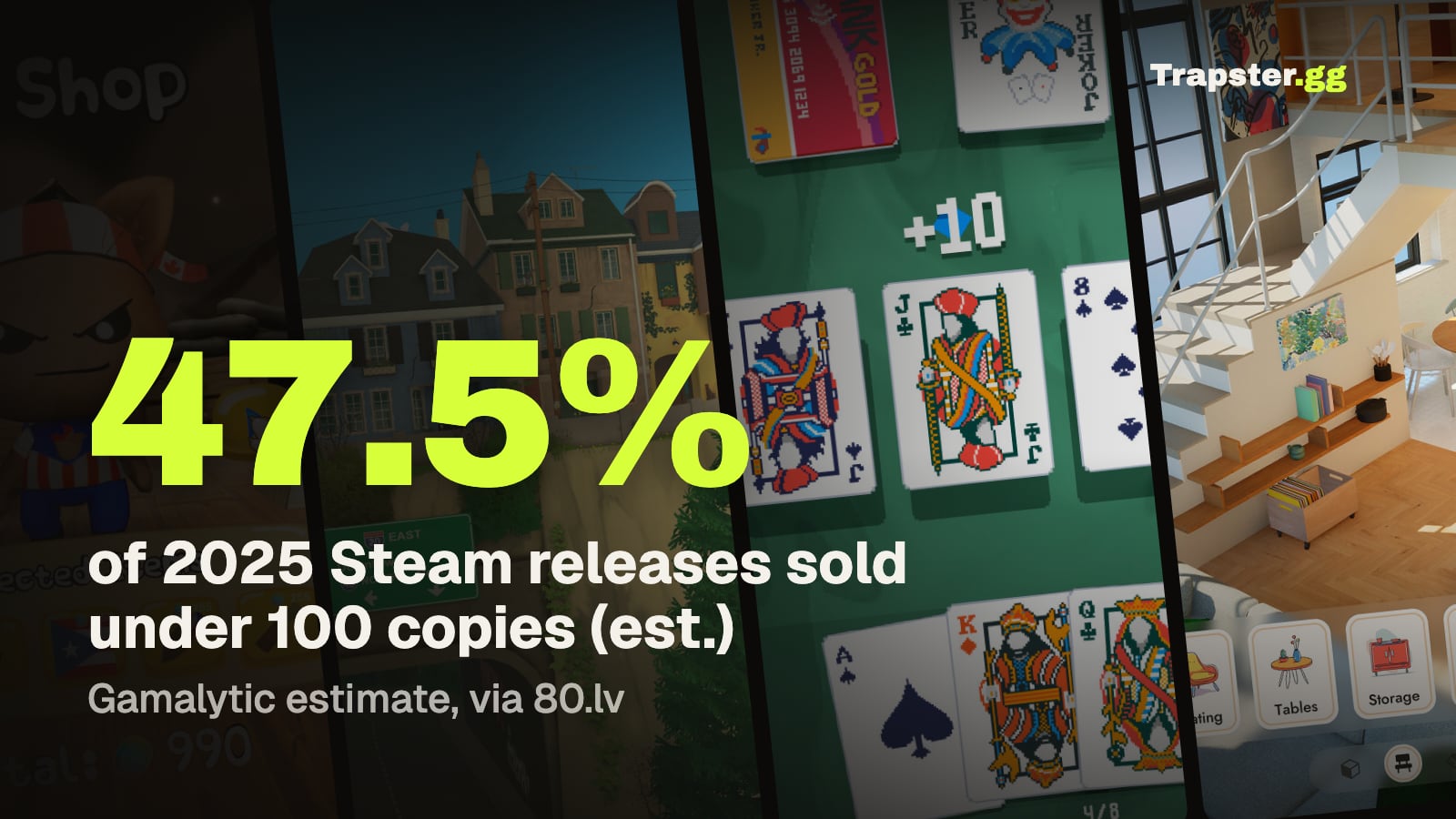
How Many Copies Do Indie Games Sell? Real Steam Numbers by Tier
Most Steam indie games sell under 1,000 copies. Real numbers by tier…
Game Marketing Hook: How to Find, Test and Show Yours
What a game marketing hook is, how to test one cheaply with…
How to Name Your Game: Searchable, Memorable and Legally Safe
How to name your game: pass the Steam, Google and trademark checks…