Game Marketing Agency or Platform: Which One Fits Your Game?
What a video game marketing agency does, what a creator campaign platform does, how they charge, and questions to ask each one.
Short answer: hire a game marketing agency when you need someone to own the whole plan: positioning, trailers, PR, ads and creators, run by people who do it every day. Use a platform when you already know what you need, usually reach from creators on specific dates, and want to pay for results instead of hours. Many indie studios do the planning themselves and use a platform for the paid reach.
What a game marketing agency does
A video game marketing agency works as your outsourced marketing team. Depending on the agency, that can include:
- strategy and positioning for the game;
- store page, capsule and trailer work;
- PR and press outreach;
- paid ads on social platforms and Google;
- influencer outreach, often through the agency's own contacts (some agencies do only this, see Trapster vs influencer agencies);
- community management on Discord and social media.
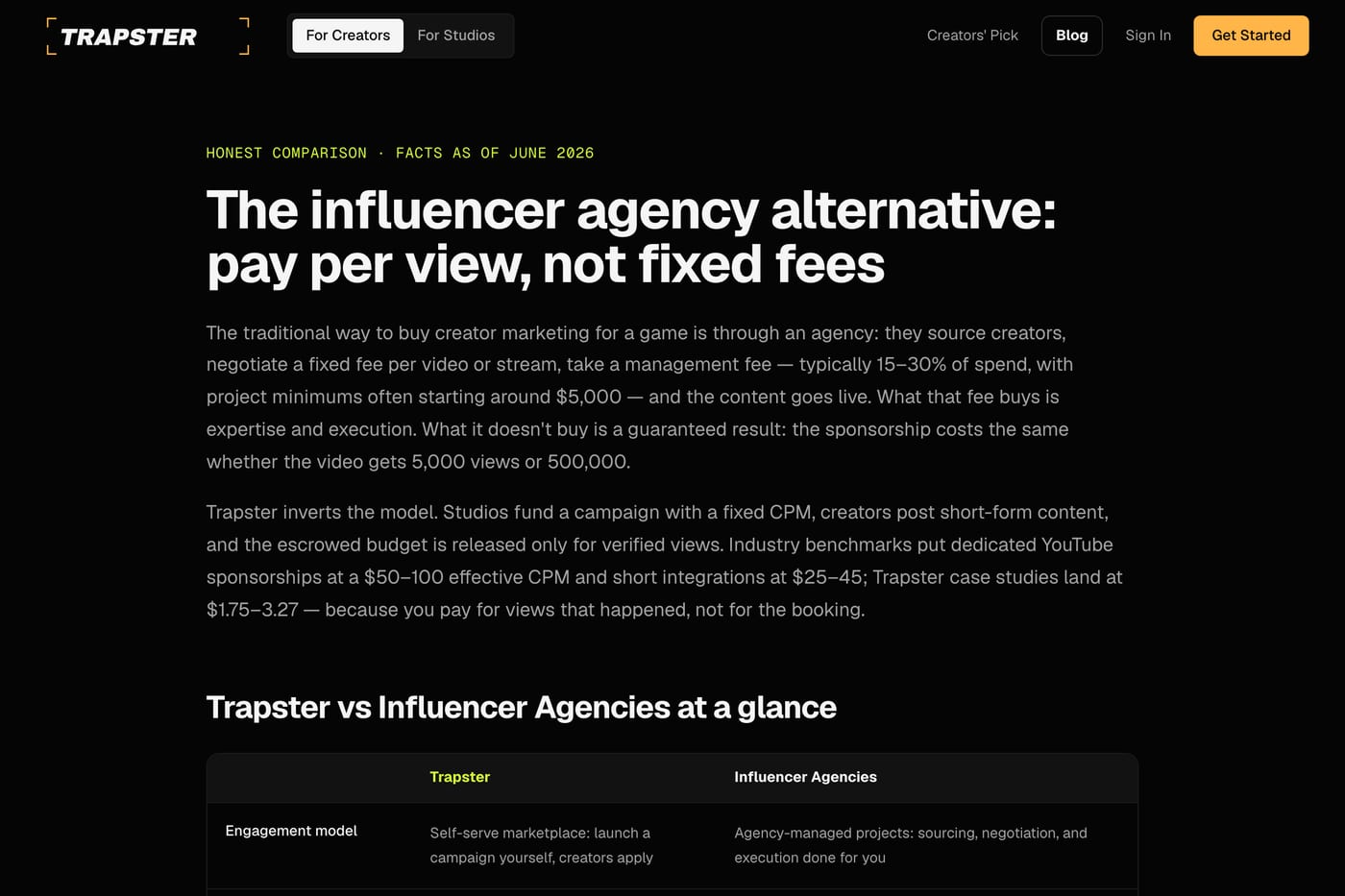
Agencies usually charge a monthly retainer or a fixed project fee, and influencer or ad spend often comes on top. You pay for the team's time and judgment whether or not a given push works.
Good fit if you have budget for several months, no one in the studio who owns marketing, and a game that needs a full plan more than one channel.
What a creator campaign platform does
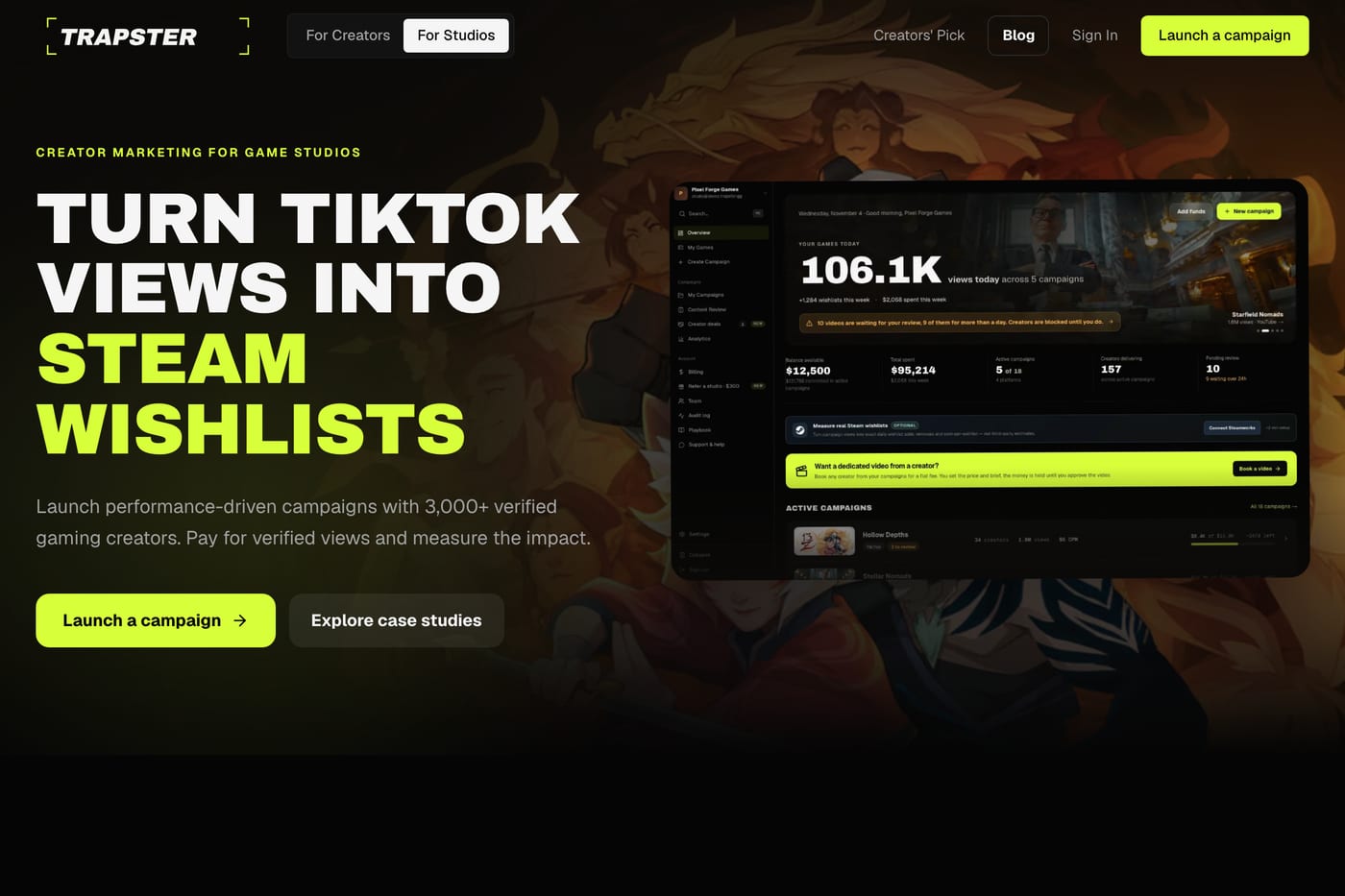
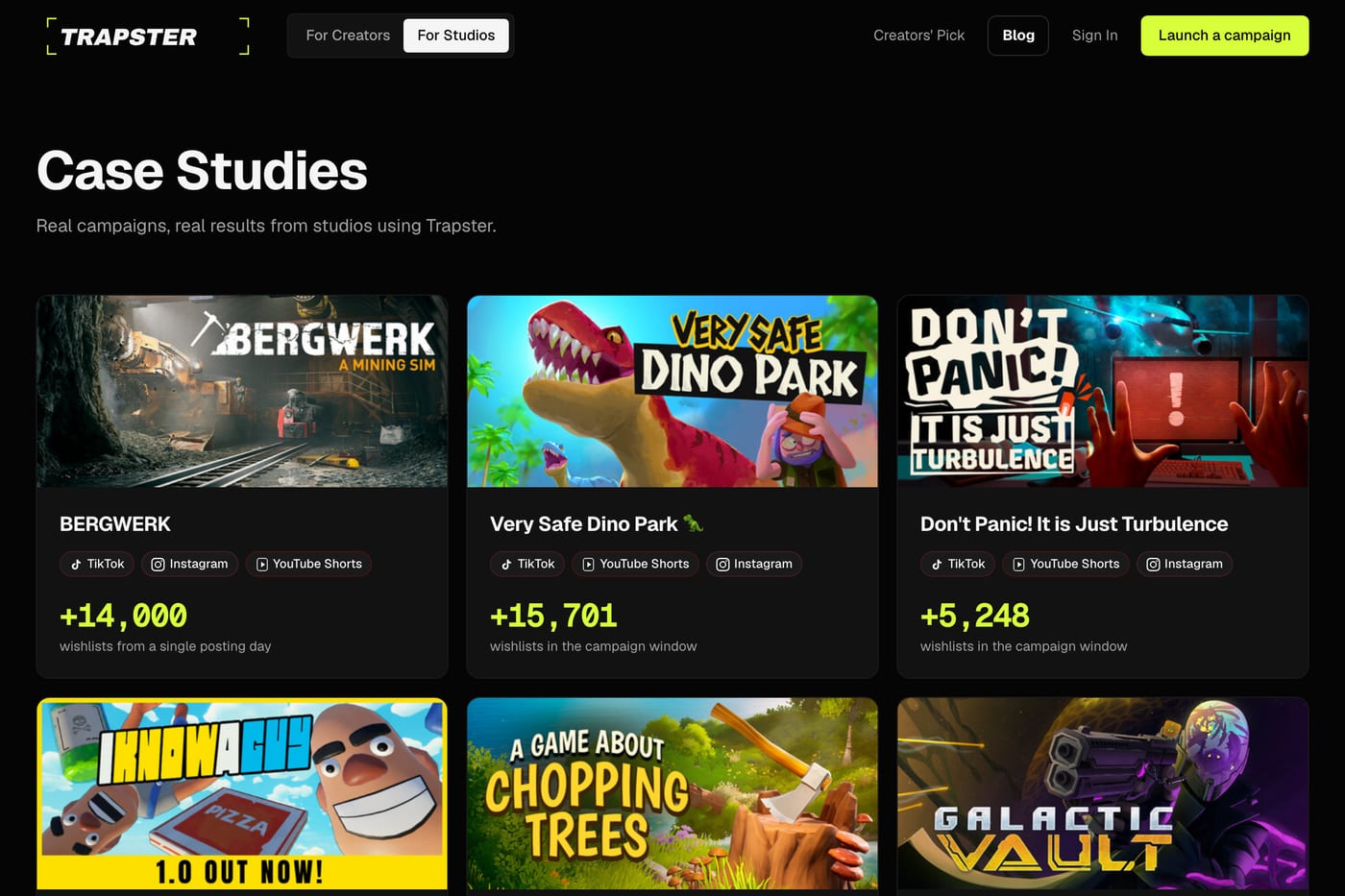
A platform gives you one channel and runs it at scale. On Trapster, you set a budget and a brief, many short-form creators post about your game on TikTok, YouTube Shorts and Instagram Reels in the same few days, and you pay for the views their videos get.
What that looks like in numbers, from completed Trapster campaigns:
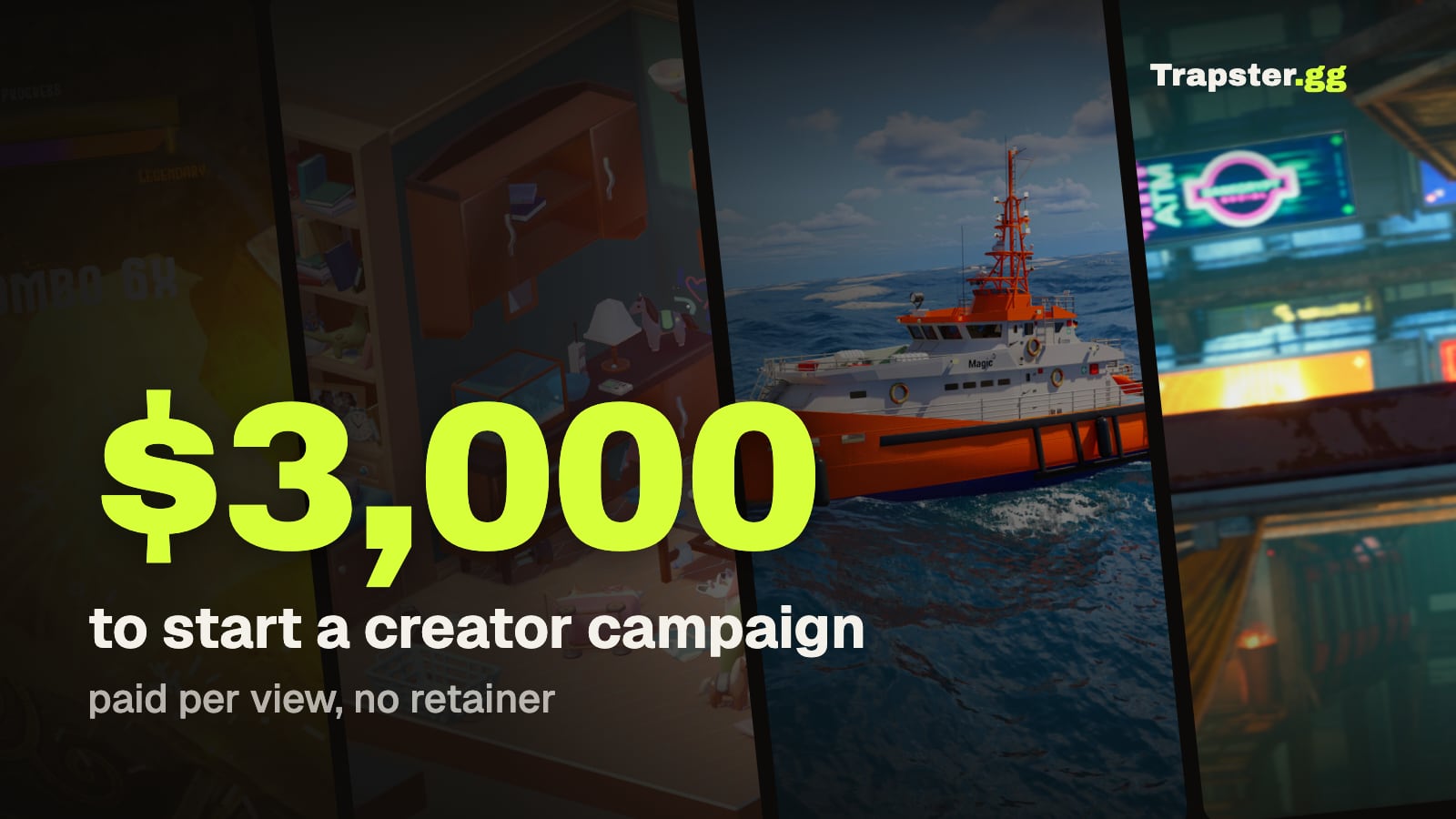
- campaigns start at $3,000;
- on more than half of them, the first video is live within 3 hours of launch;
- the median campaign had 37 creators posting 68 videos;
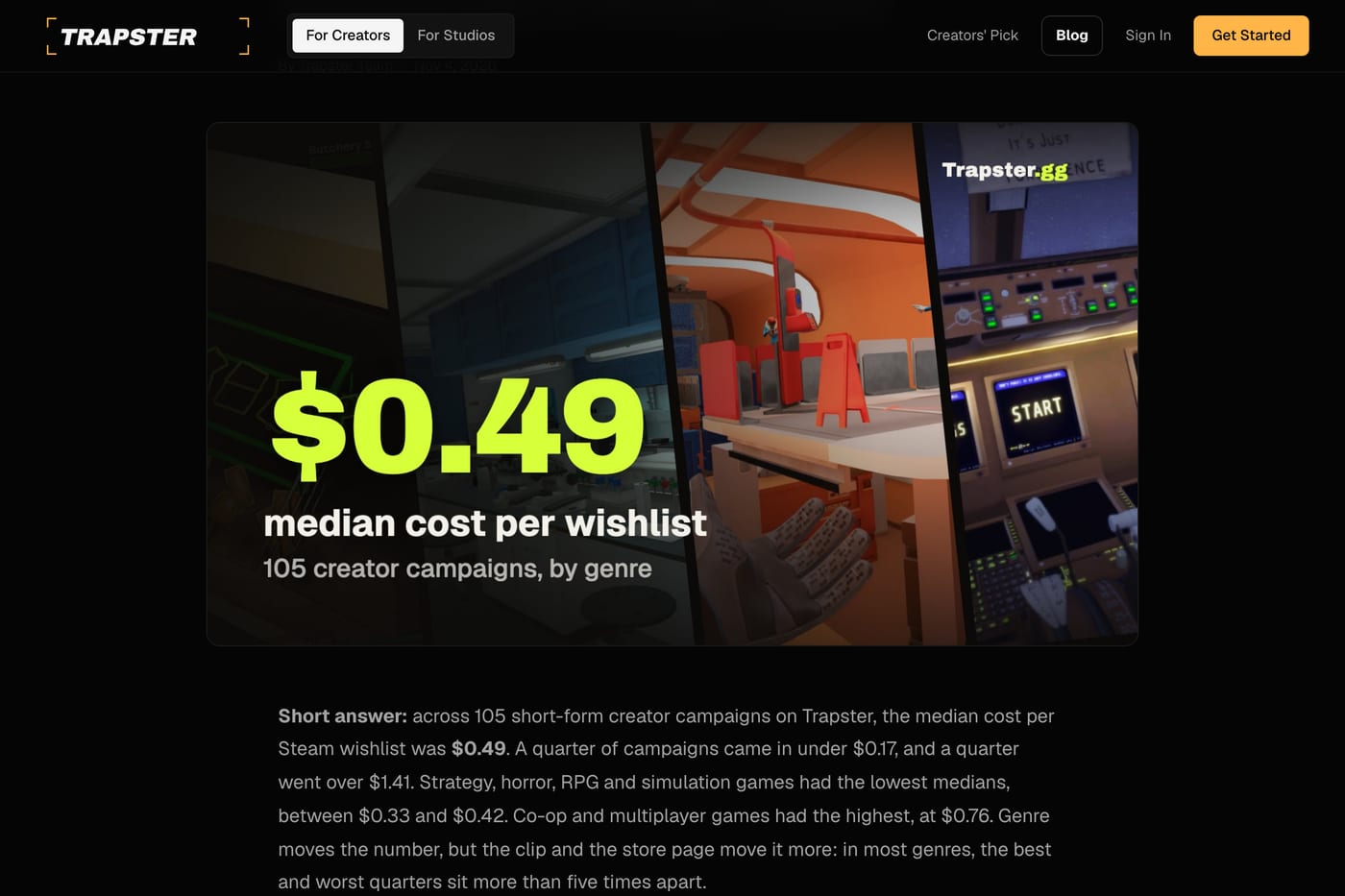
- the median cost was $0.49 per Steam wishlist.
You don't pay for hours or retainers, and every studio gets an account manager who helps with timing and the brief. What a platform won't do is write your positioning, cut your trailer or run your Discord.
Good fit if you know your hook, your store page is ready, and you need reach around a moment: a demo, a festival, launch week or a sale.
Side by side
| Agency | Platform | |
|---|---|---|
| What you buy | A team's time across many channels | Reach on one channel |
| Pricing | Retainer or project fee, spend on top | Campaign budget, paid per view |
| Speed | Weeks to onboard and plan | Videos can go live within hours |
| Who decides the creators | The agency, from its contacts | The platform's creator pool, against your brief |
| What you need in house | Little, the agency leads | Someone who owns the plan and the store page |
Questions to ask an agency
- Which games like ours have you marketed, and what happened to their wishlists? Ask for Steamworks numbers, not views.
- How much of the budget goes to fees and how much to media or creators? You should know before you sign.
- Who exactly will work on our game? Senior people pitch, junior people often execute.
- How will we measure results? If the answer isn't wishlists and sales, push back. The method we use is in how to measure wishlists from a creator campaign.
Questions to ask a platform
- What do I pay for exactly? Per view, per post or a flat fee, and whether there is a minimum.
- How are views checked? Fake views cost money. Ask how the platform verifies them.
- Can I see results from games in my genre? Real case studies with wishlist numbers are a good sign.
- How fast do videos go live? If your demo launches on Monday, the videos need to land that week.
Can you combine them?
Yes. Some studios hire an agency for positioning, trailer and PR, then use a platform for creator reach because it reaches many creators at once. Others skip the agency, follow a plan like how to market a game, and spend the budget on creators and ads. If you're still deciding between channels, see paid ads vs creator campaigns and how to market an indie game on a small budget.
FAQ
Do I need a game marketing agency? Not always. If nobody in the studio owns marketing and you have budget for several months, an agency can run the whole plan. If you know what you need, a platform or a few tools are usually cheaper.
How much does a video game marketing agency cost? Most work on a monthly retainer or a project fee, with ad and influencer spend on top. Ask how much of your budget goes to fees.
What is the difference between an influencer agency and an influencer platform? An agency picks and manages creators for you and charges for that work. A platform gives you access to many creators at once, usually with pricing tied to results like views. We compare the two in detail in Trapster vs influencer agencies.
How quickly can a creator campaign start? On Trapster, the first video goes live within 3 hours of launch on more than half of campaigns.
Trapster figures come from completed campaigns. Cost per wishlist excludes the platform fee.
Get a wishlist forecast for your game
Send us your Steam page. We estimate views, creators and cost per wishlist before you spend anything.
Keep reading
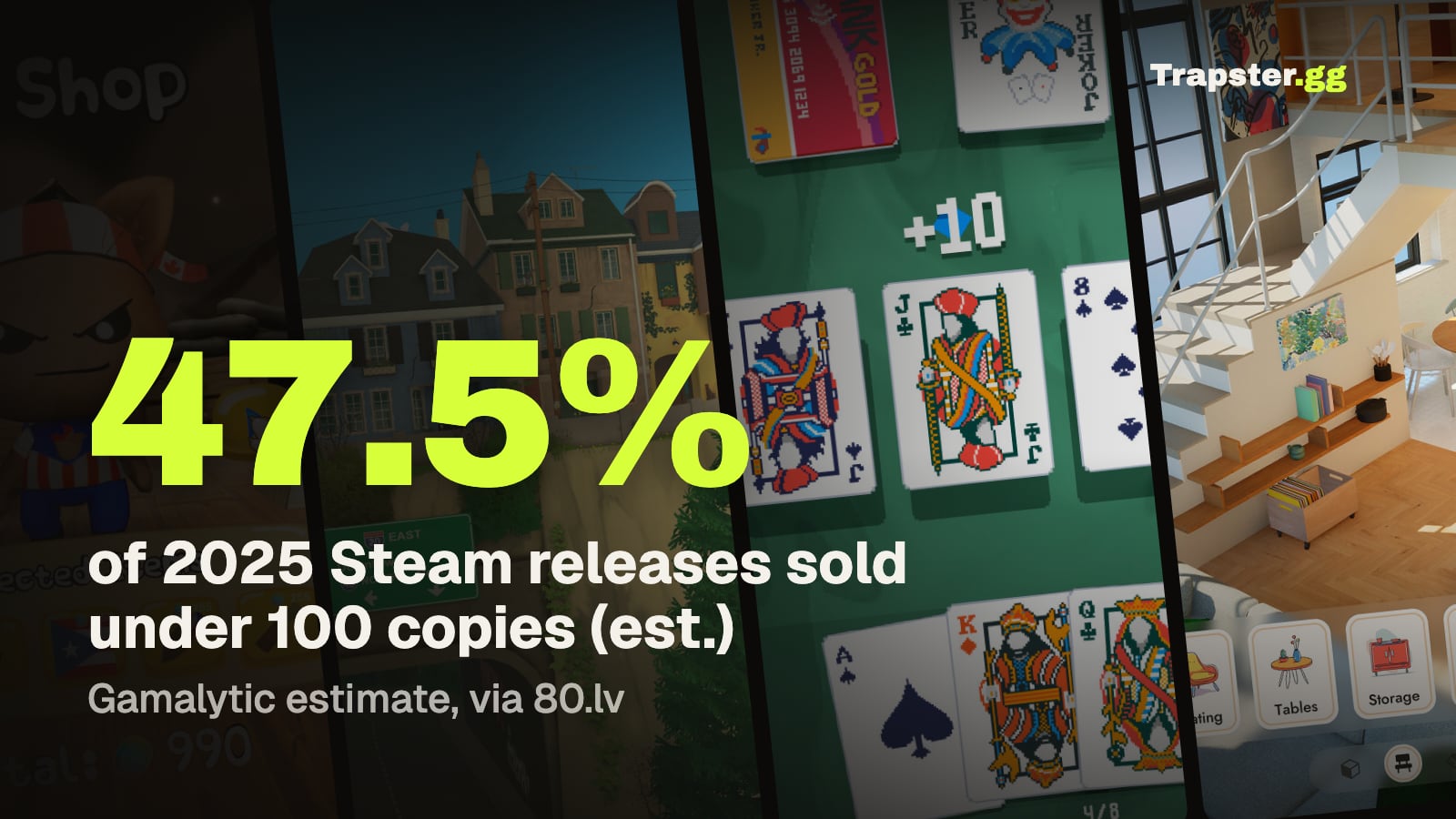
How Many Copies Do Indie Games Sell? Real Steam Numbers by Tier
Most Steam indie games sell under 1,000 copies. Real numbers by tier…
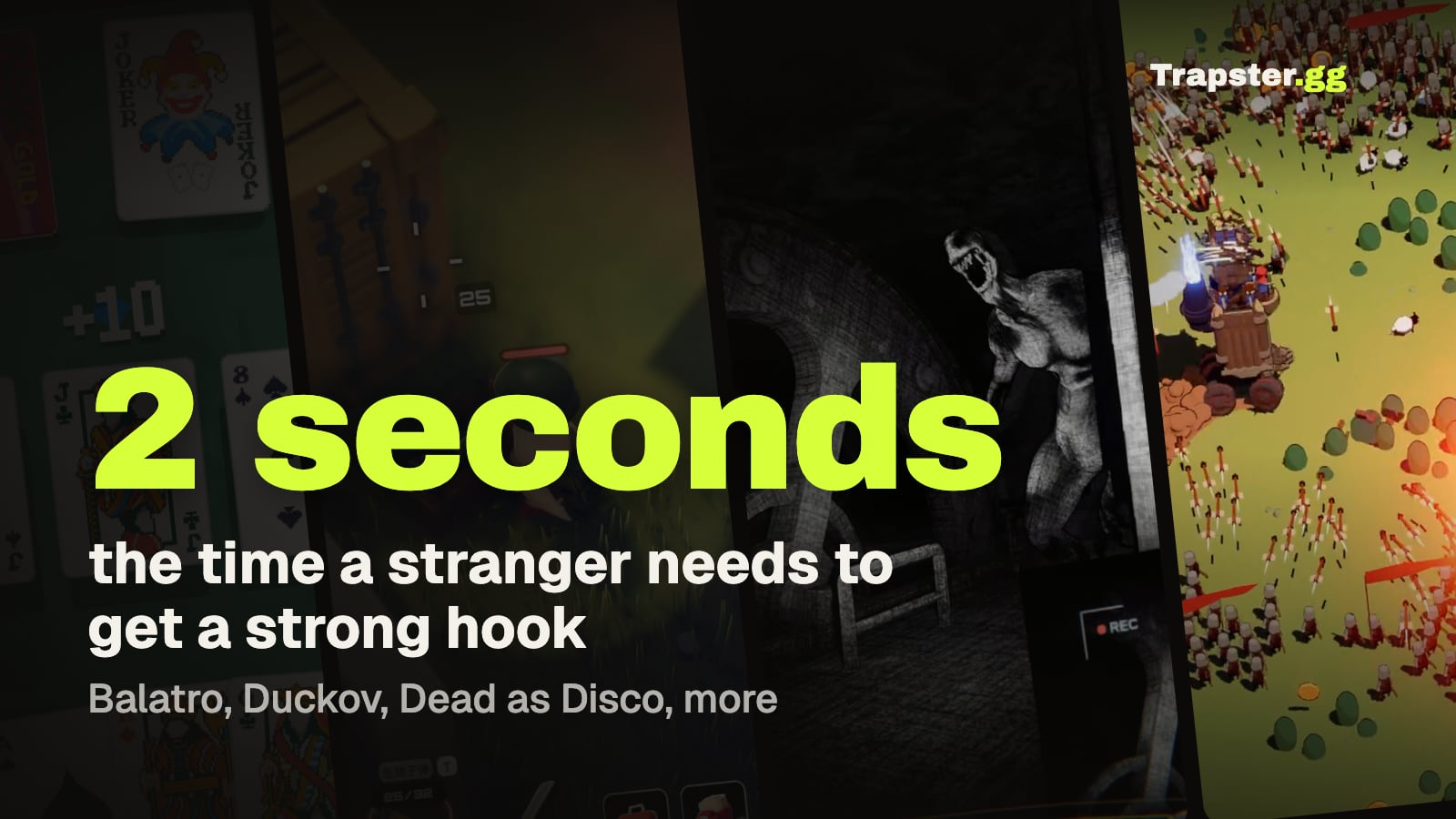
Game Marketing Hook: How to Find, Test and Show Yours
What a game marketing hook is, how to test one cheaply with…
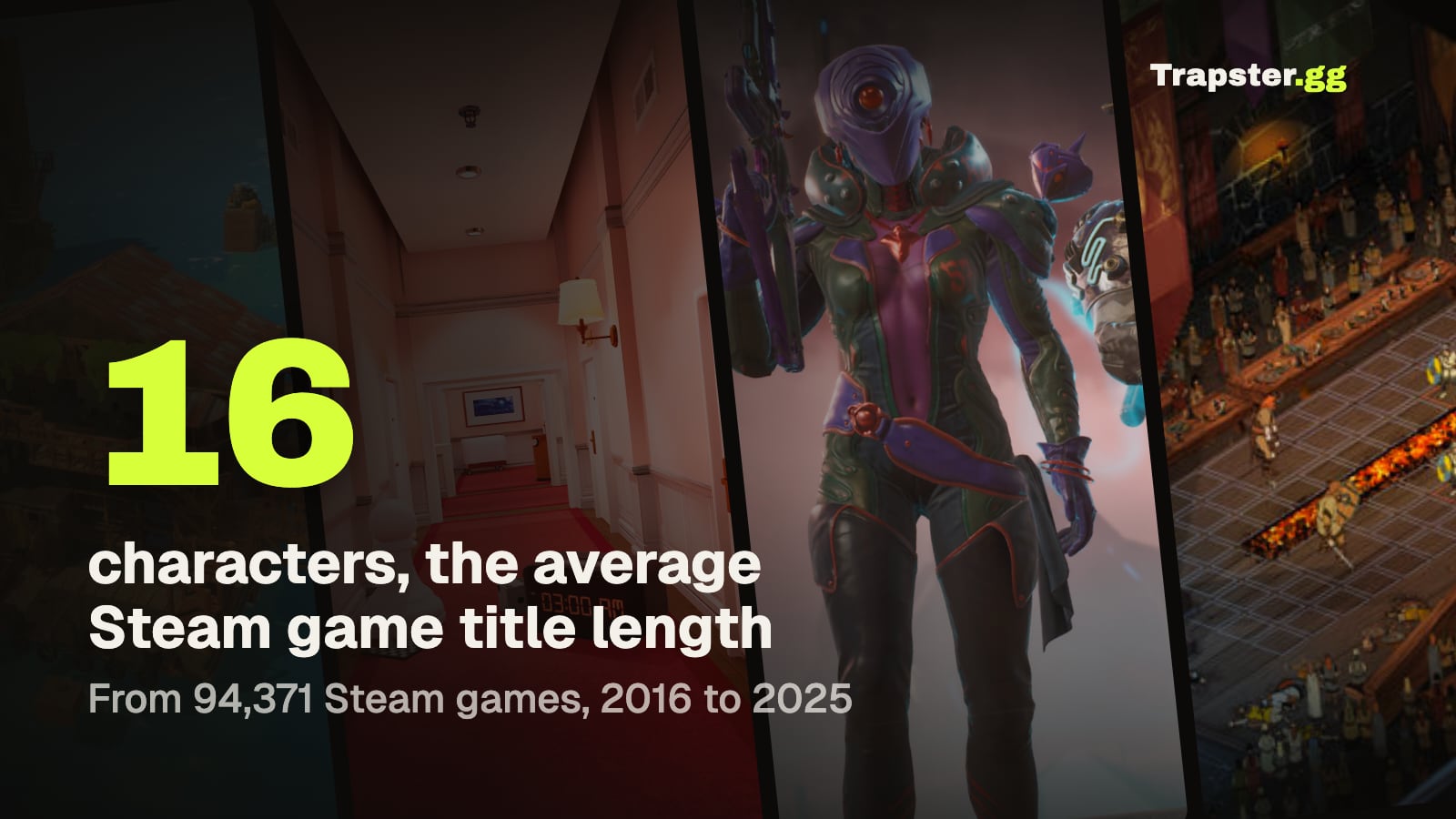
How to Name Your Game: Searchable, Memorable and Legally Safe
How to name your game: pass the Steam, Google and trademark checks…