Steam Fees for Developers: What Valve Takes and When You Get Paid
The $100 Steam Direct fee, the 30/25/20 revenue share, VAT, US withholding, refunds and payouts, with a worked example for a $19.99 game.
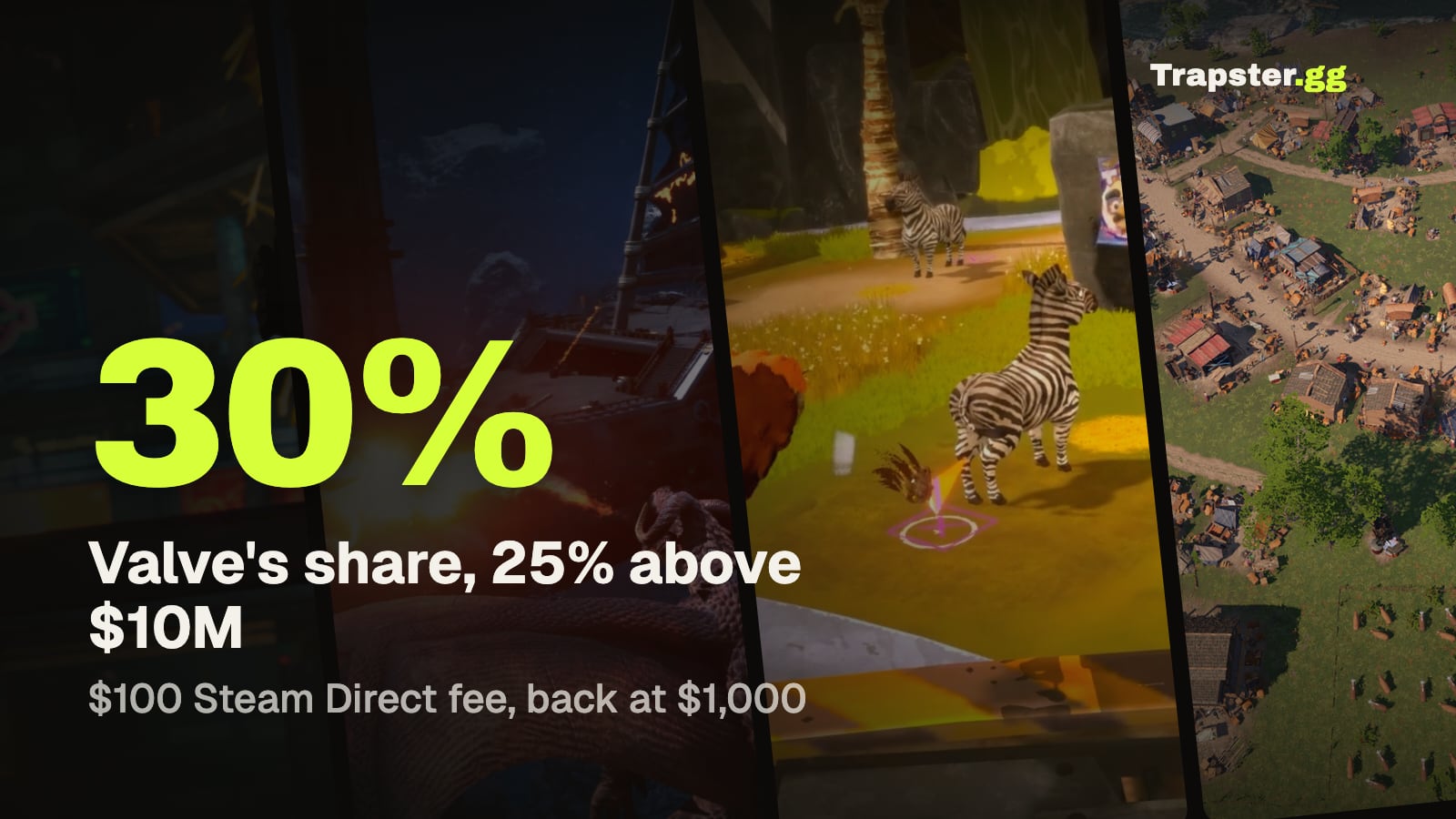
Short answer: putting a game on Steam costs a $100 Steam Direct fee per game, which you get back once the game earns $1,000. After that Valve takes 30% of net revenue, dropping to 25% on revenue above $10 million and 20% above $50 million for that game. Valve pays monthly by US dollar transfer, and if you are outside the US without a tax treaty claim, 30% of US source income is withheld. Steam keys you sell on other stores carry no Valve revenue share at all.
The full list of Steam fees
| Fee | Amount | Source |
|---|---|---|
| Steam Direct fee | $100 per new game, recouped after $1,000 in adjusted gross revenue, not refundable | Steam Direct |
| Revenue share | 30% to Valve, then 25% above $10M and 20% above $50M per game | Valve announcement, 2018 |
| VAT and sales tax | Included in Steam prices where collected, paid to tax authorities by Valve | Tax FAQ |
| US withholding tax | 0% to 30% of US source income, depending on your tax interview | Tax FAQ |
| Payout fees | Valve doesn't pass on wire fees. Your bank may charge its own | Payments FAQ |
| Steam keys sold elsewhere | No revenue share, a free service | Steam keys |
Steam Direct: $100 per game
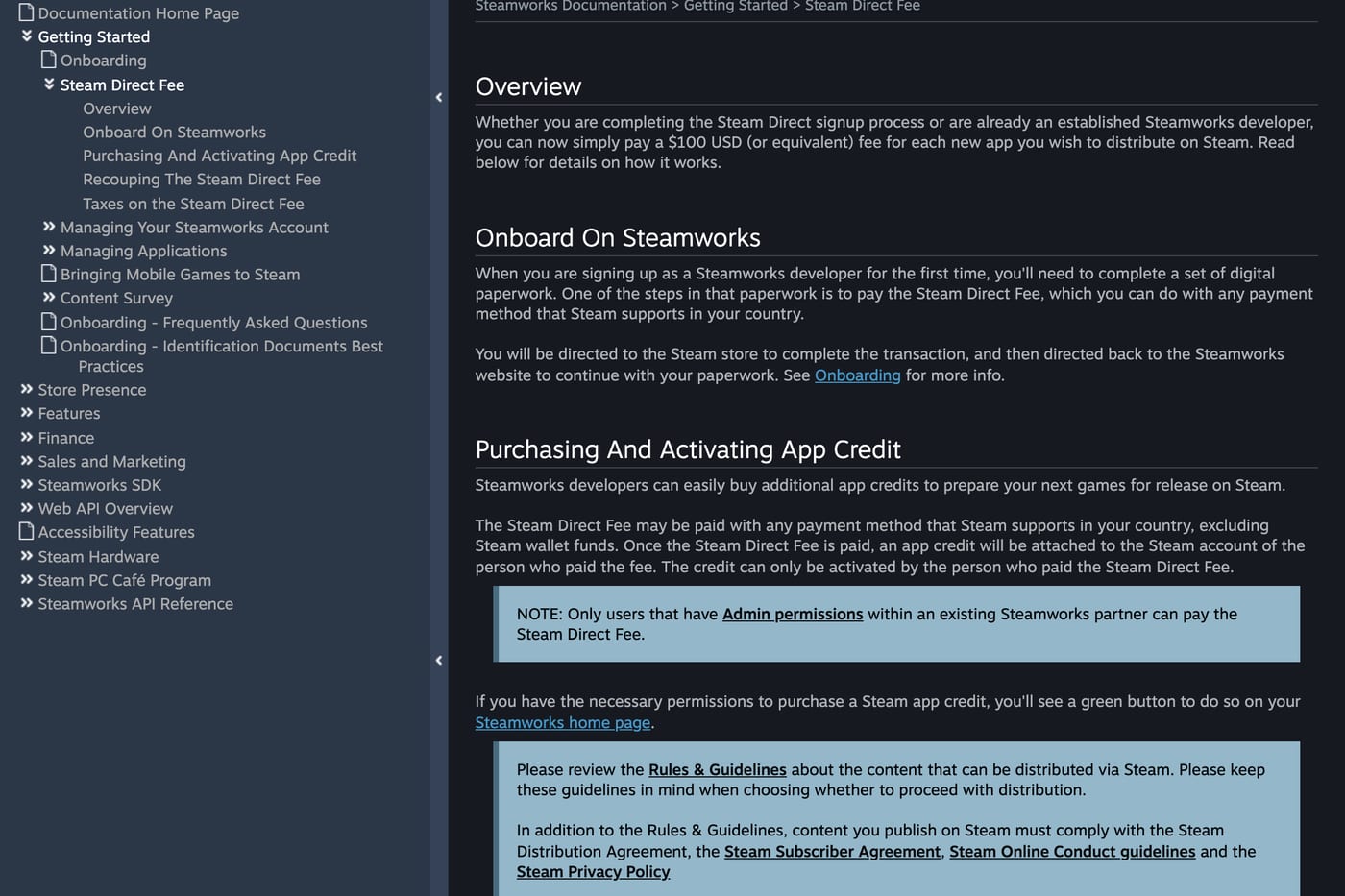
You pay $100 (or the local equivalent, plus VAT where it applies) for each new game you put on Steam. Once that game earns $1,000 in adjusted gross revenue from store sales and in-game purchases, Valve pays the $100 back. If the game never reaches $1,000, the fee is gone: Valve says plainly that it is not refundable (Steam Direct).
The revenue share: 30%, 25%, 20%
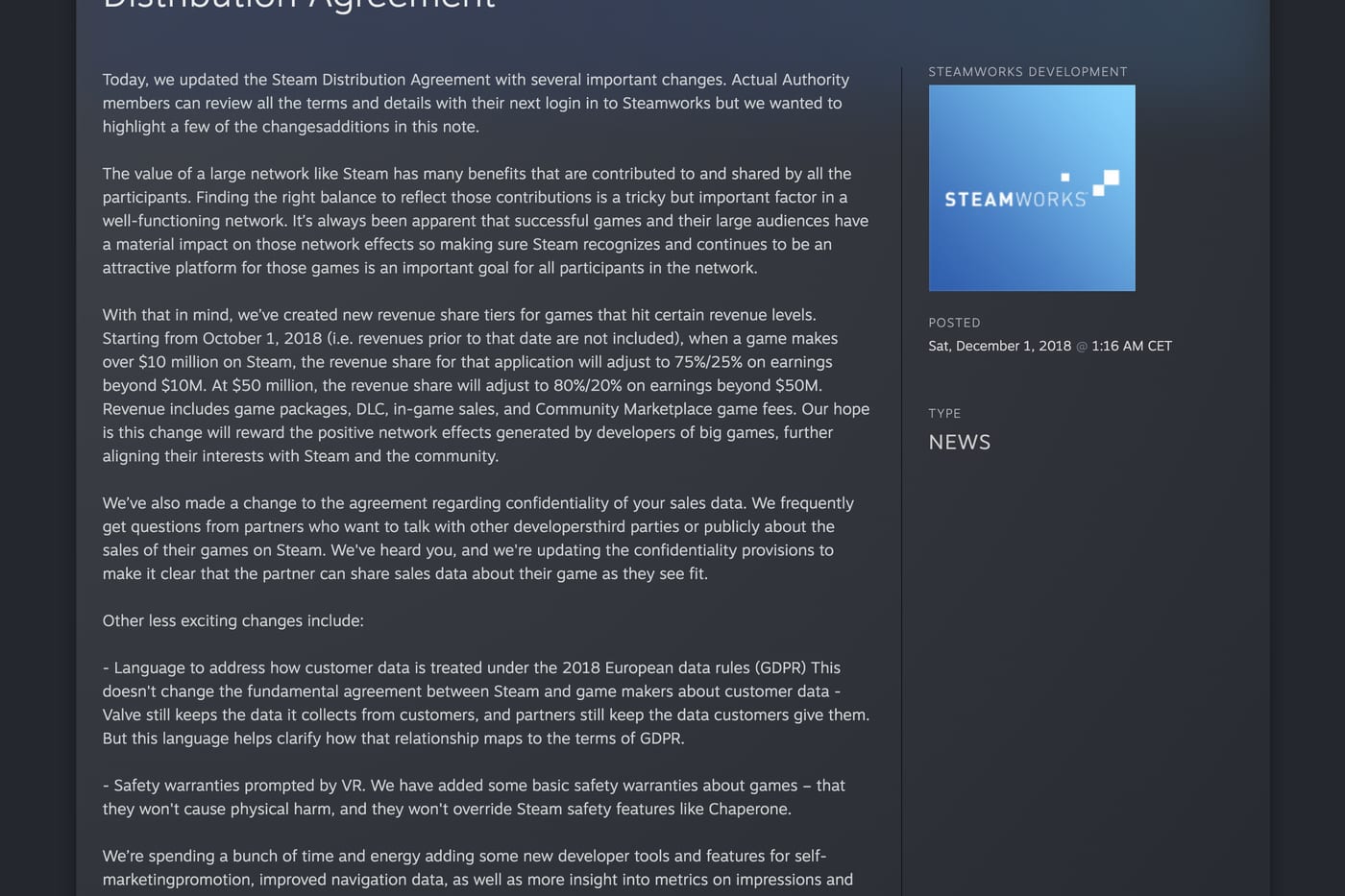
Valve's standard split is 70% to you and 30% to Valve. Since October 1, 2018, the split improves for successful games:
- Above $10 million in revenue, you keep 75% of everything beyond $10 million.
- Above $50 million, you keep 80% of everything beyond $50 million.
The tiers are marginal, so the first $10 million stays at 70/30. They apply per game, not per studio, and count game packages, DLC, in-game sales and Community Market fees. Revenue from before October 2018 doesn't count (Valve announcement).
For almost every indie game, the number to plan with is 30%.
What the 30% is taken from
Valve applies the share to net revenue: gross revenue minus "applicable adjustments" such as refunds, chargebacks and taxes (Payments FAQ). The sales dashboard shows gross. Your monthly report shows what you will actually be paid.
Taxes
VAT and sales tax
Steam prices include VAT in every country where Valve collects it, and Valve pays that tax to the authorities. That covers 71 countries in Valve's tax table plus some US and Canadian sales tax jurisdictions (Tax FAQ). In practice: a €19.99 price in Germany includes German VAT, so your share is calculated on the price without it.
US withholding tax
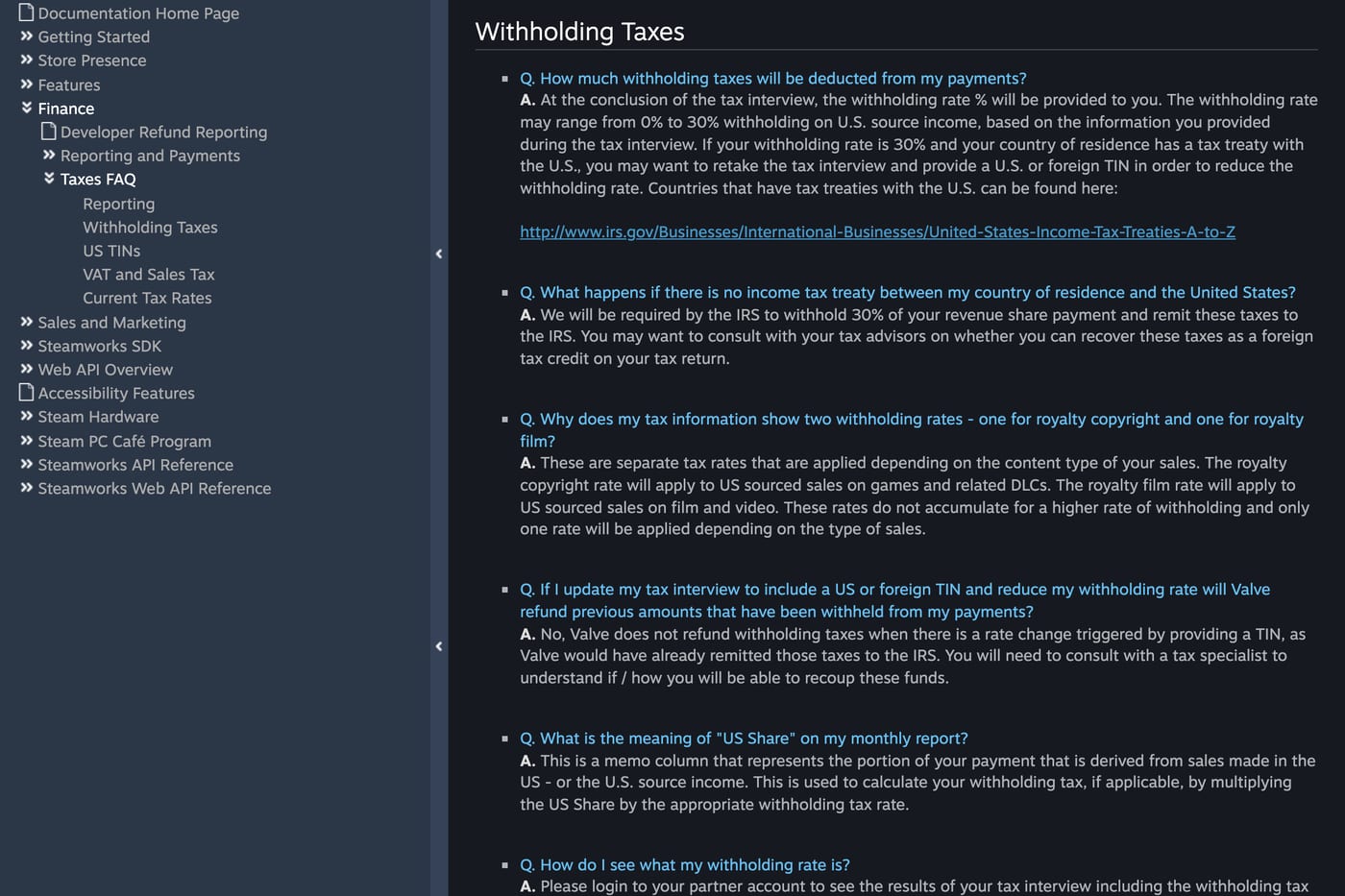
Every partner fills in a tax interview. Based on it, Valve withholds between 0% and 30% of US source income. Without a treaty claim, it withholds 30%. Many countries have a tax treaty with the US that lowers this, often to zero, but you have to claim it in the interview with a tax ID. Valve doesn't refund withholding from past payments when your rate changes, so do the interview properly before your first sales (Tax FAQ).
When and how you get paid
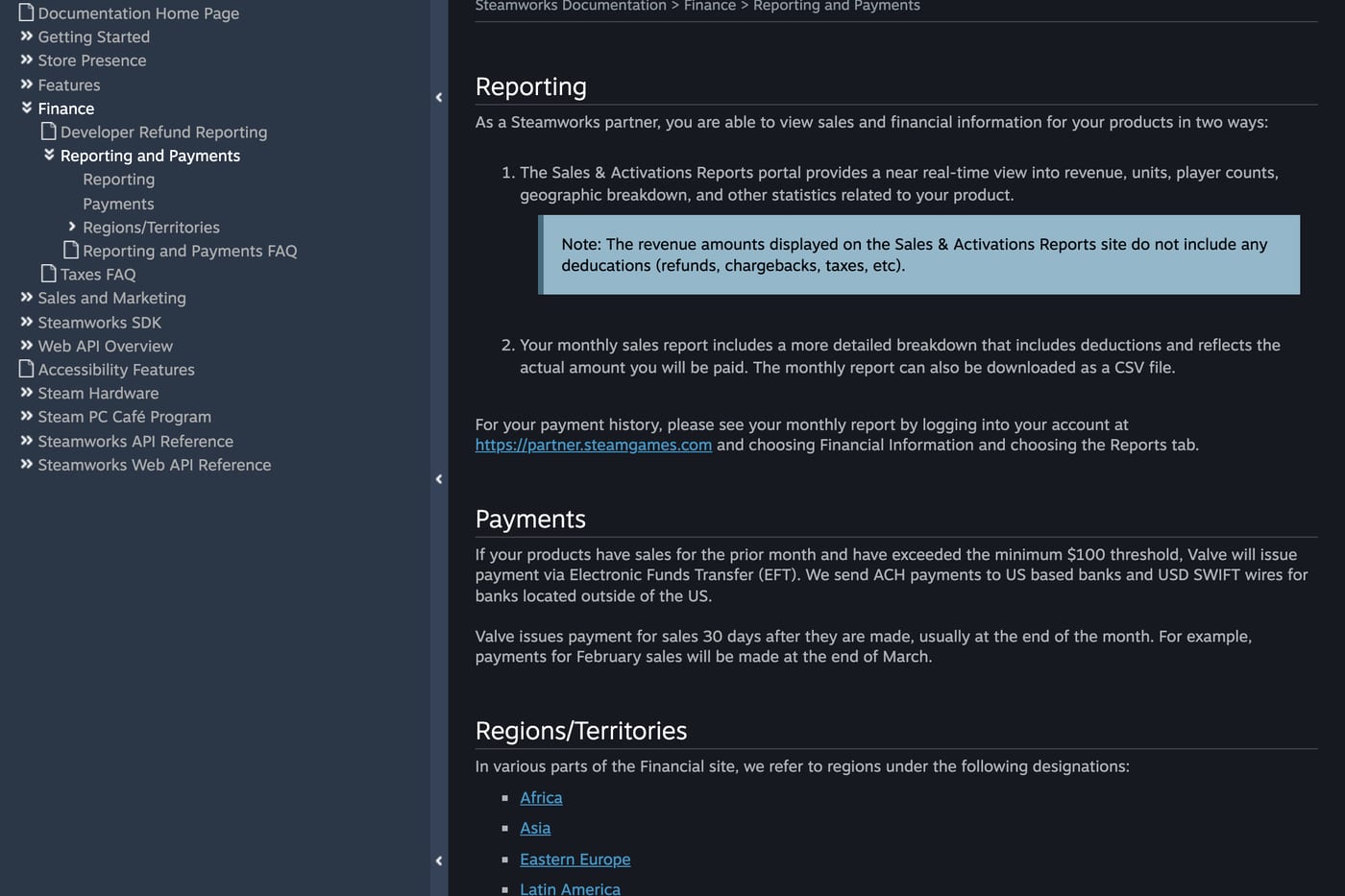
- Monthly. Valve pays for sales 30 days after they are made, usually at the end of the month. February sales are paid at the end of March.
- Minimum $100. Valve may hold your payment until you've earned at least $100.
- In US dollars, by ACH to US banks or USD SWIFT wire elsewhere. Valve doesn't pass on wire fees, but intermediary or receiving banks may charge their own.
Source: payments and sales reporting.
Refunds
Players can get a refund within two weeks of purchase if they played less than two hours (Steam refunds). Refunds come out of your revenue as an adjustment in the monthly report. Valve doesn't document a separate refund fee.
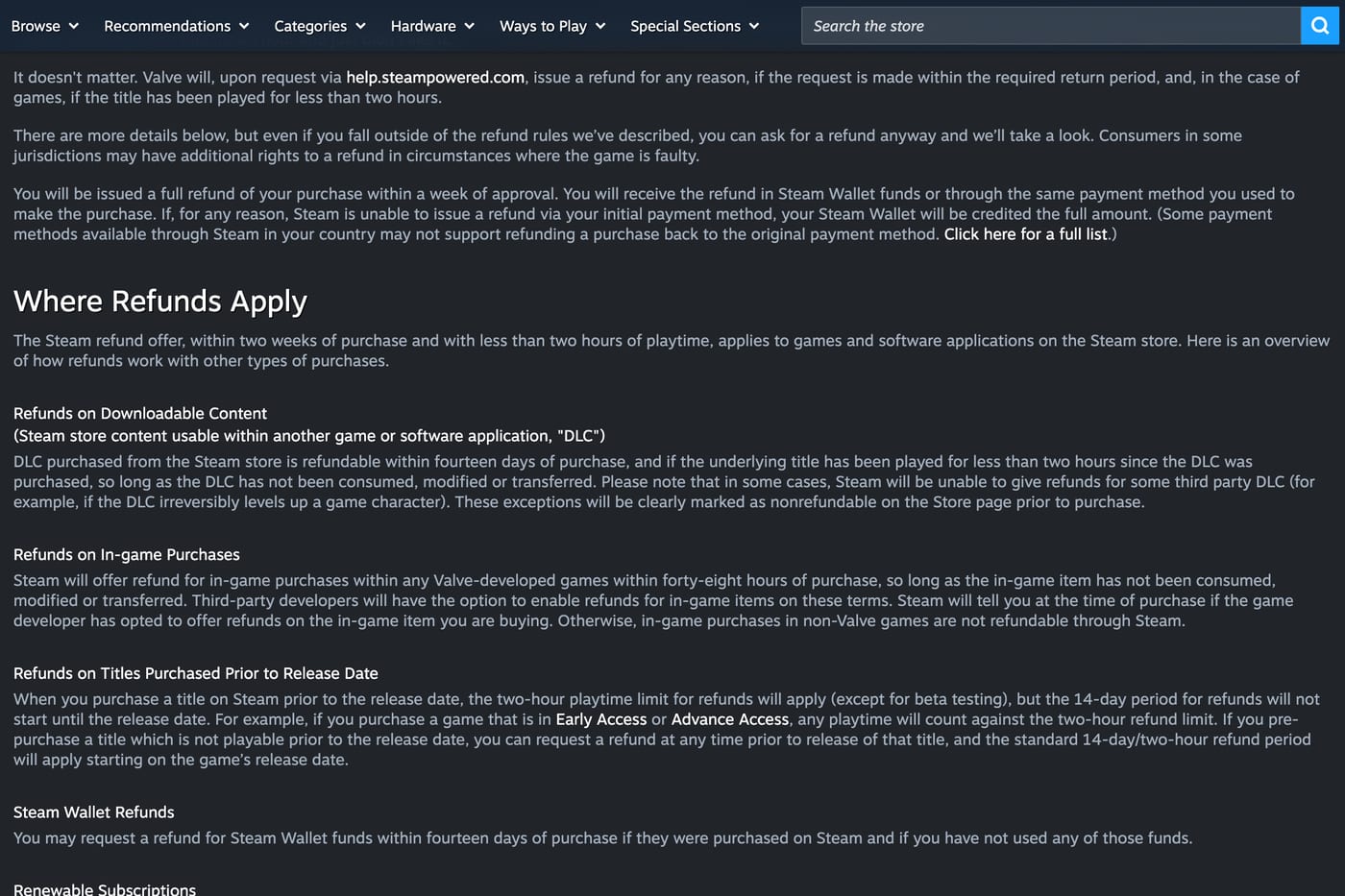
For your launch, this means the first two weeks of sales aren't final. A short game, or one with a rough first hour, sees more refunds.
Steam keys sold on other stores
Valve gives you Steam keys for free, and sales of those keys on other stores carry no Valve revenue share (Steam keys). The conditions:
- Parity: don't give Steam players a worse deal than key buyers. If you discount keys elsewhere, Steam players should get a comparable offer within a reasonable time.
- Limits: up to 5,000 keys at release by default. First time developers wait three weeks after creating an app before requesting keys, and Valve can reject requests that look out of balance with Steam sales.
Keys are also how you give the game to creators and press. How to do that safely is in how to distribute game keys.
Worked example: what a $19.99 game earns
Take 1,000 copies sold at $19.99 in the US, with no sales tax and a 5% refund rate as an assumption:
| Step | Amount |
|---|---|
| Gross sales | $19,990 |
| Minus refunds (5%, assumed) | $18,990 |
| Valve's 30% | $5,697 |
| Your 70% | $13,293 |
| Withholding if you are non-US with no treaty claim (30%) | $3,988 withheld |
| Paid out with a 0% treaty rate | $13,293 |
Two things move the real number more than any fee: the launch discount, and regional prices. How to pick the base price is in how to price your indie game. A launch discount of 10% to 15% lowers the price of every launch week copy, and much of your audience is outside the US, buying at local prices. Across 21 games that connected Steamworks to Trapster, about 7 in 10 wishlists came from outside the US. How to set those is in Steam regional pricing.
What it means for your marketing budget
The fee you control is your marketing spend, so measure it against what a copy or a wishlist actually earns you after Valve's share. If a copy nets you about $13 at a $19.99 price, and roughly 0.10 to 0.20 of your launch wishlists buy in the first week (wishlist conversion rate), a wishlist is worth roughly $1.30 to $2.60 in first week revenue at the full US price, before sales and the long tail. Regional prices lower that, and later sales raise it. Compare that with what wishlists cost you in each channel: the median on Trapster's creator campaigns was $0.49 (cost per wishlist by genre).
FAQ
How much does it cost to put a game on Steam? $100 per game through Steam Direct. Valve pays it back after the game earns $1,000 in adjusted gross revenue.
What percentage does Steam take? 30% of net revenue, dropping to 25% on revenue above $10 million and 20% above $50 million, per game.
Is the Steam Direct fee refundable? No. You only get it back if the game earns $1,000.
When does Steam pay developers? Monthly, about 30 days after the sales, usually at the end of the following month, in US dollars, once you've earned at least $100.
Does Steam take a cut of keys sold on other stores? No. Steam keys are free and carry no revenue share, but Steam players must get a comparable deal.
Do I pay US tax as a developer outside the US? Valve withholds up to 30% of US source income unless you claim a tax treaty in the tax interview, which can lower it, often to zero.
Sources: Steamworks documentation on Steam Direct, payments and sales reporting, payments FAQ, tax FAQ and Steam keys; Valve's revenue share announcement; Steam refund policy. Checked November 2026. This is not tax advice.
Get a wishlist forecast for your game
Send us your Steam page. We estimate views, creators and cost per wishlist before you spend anything.
Keep reading
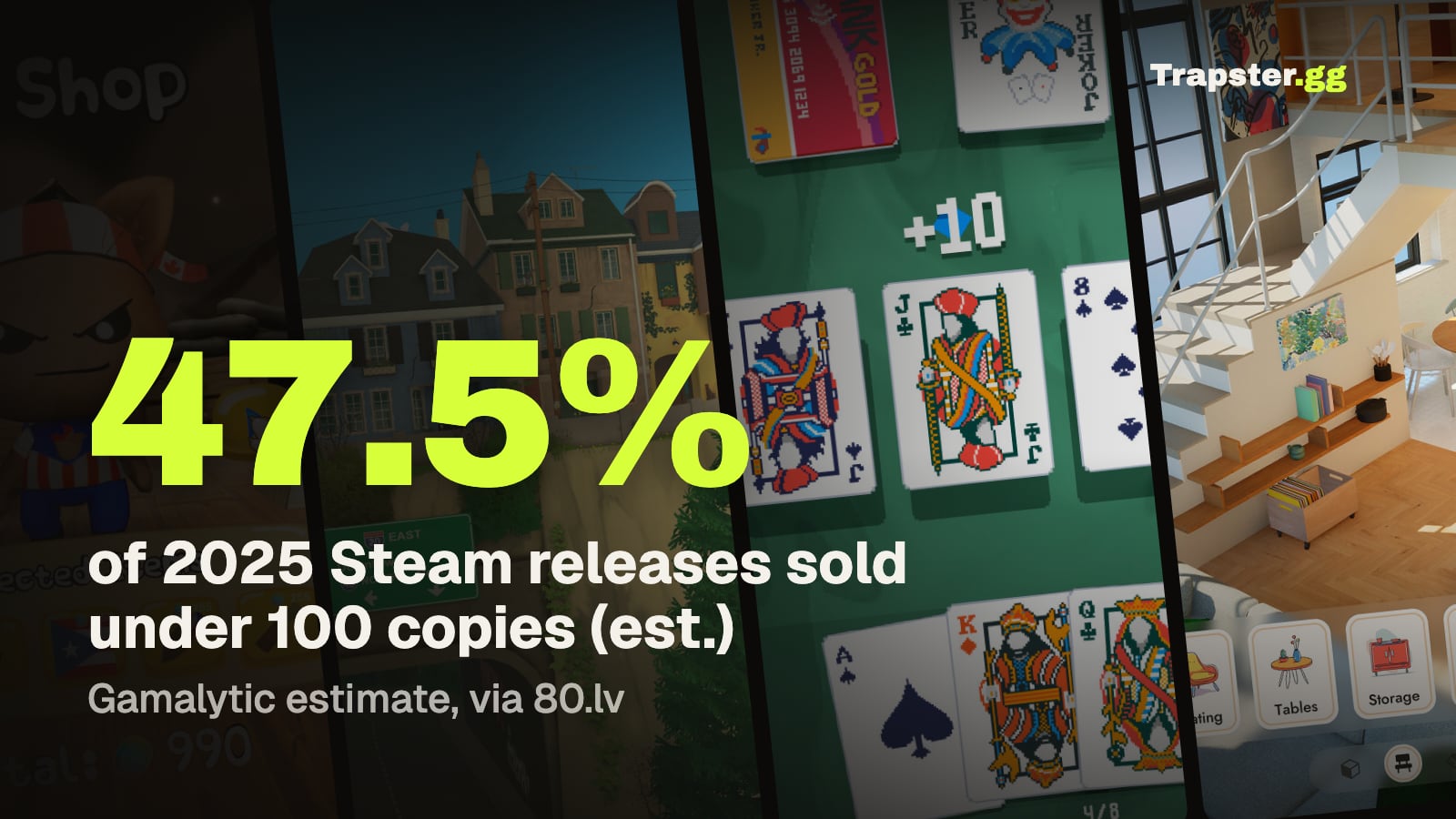
How Many Copies Do Indie Games Sell? Real Steam Numbers by Tier
Most Steam indie games sell under 1,000 copies. Real numbers by tier…
Game Marketing Hook: How to Find, Test and Show Yours
What a game marketing hook is, how to test one cheaply with…
How to Name Your Game: Searchable, Memorable and Legally Safe
How to name your game: pass the Steam, Google and trademark checks…