Game Localization: Which Languages Pay Off on Steam
Which languages to localize your Steam game into, what Steam's survey and Valve's docs say, and what wishlist data from 21 games shows.
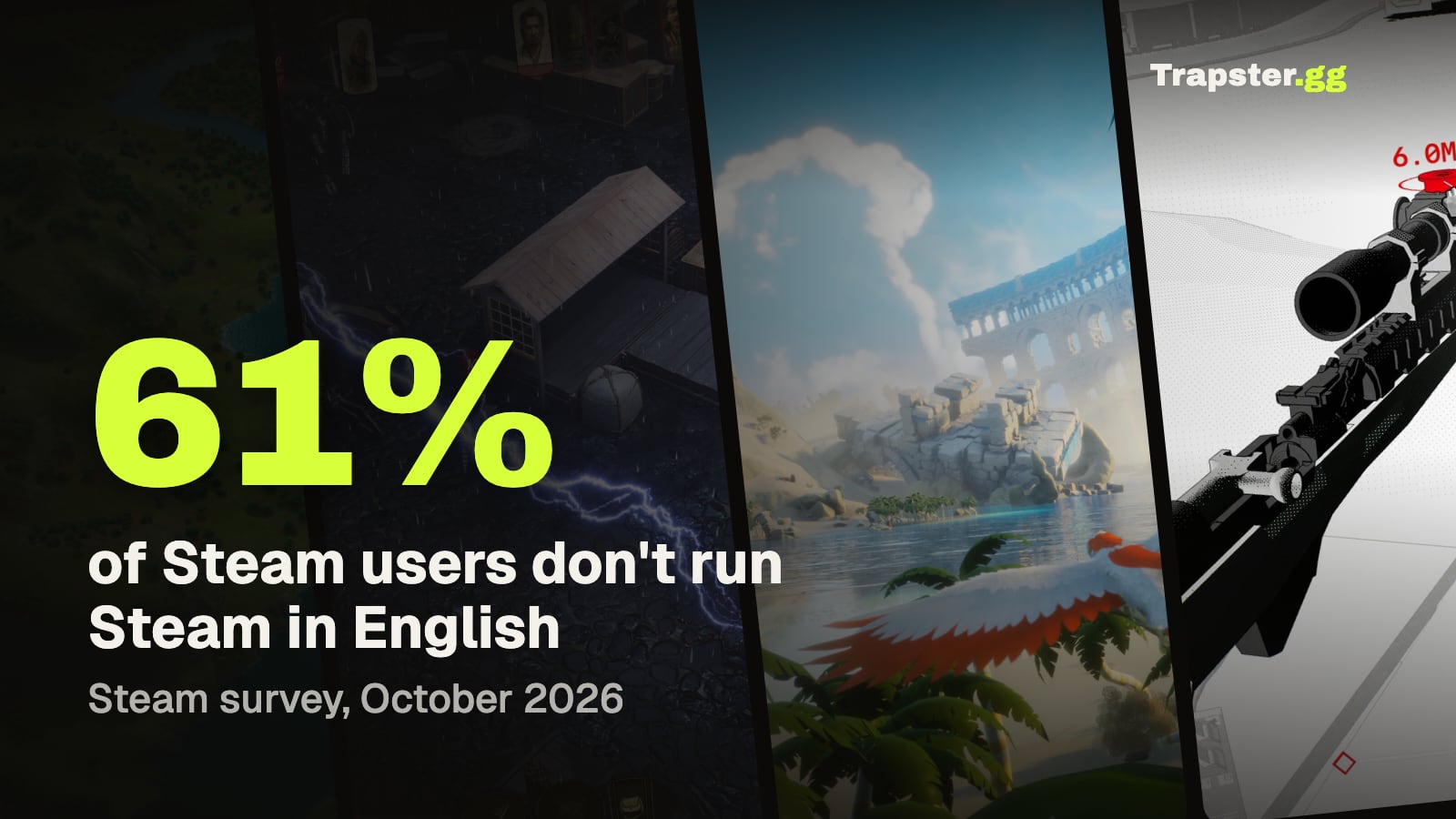
Short answer: for most indie games on Steam, the languages that pay off first are Simplified Chinese, Russian, Spanish, Brazilian Portuguese and German, followed by Japanese, French and Polish. That order follows Steam's own language survey, where English is 39% of users and Simplified Chinese 22% (Steam survey, October 2026). Valve says Steam is "more likely to show your game to players that speak a language supported by your game" (visibility docs). But translation alone isn't enough: in our data, games that all supported Chinese got anywhere from 0.2% to 85% of their wishlists from China, depending on whether anyone marketed them there.
What Steam players speak
Steam's monthly survey, October 2026:
| Language | Share of Steam users |
|---|---|
| English | 39.0% |
| Simplified Chinese | 22.0% |
| Russian | 10.1% |
| Spanish (Spain + Latin America) | 5.7% |
| Portuguese (Brazil) | 4.5% |
| German | 2.9% |
| Japanese | 2.5% |
| French | 2.4% |
| Polish | 1.7% |
| Korean | 1.4% |
| Turkish | 1.4% |
| Traditional Chinese | 1.3% |
Source: Steam Hardware & Software Survey. The Simplified Chinese share swings by up to 10 points from month to month, so look at several months before you decide.
Six in ten Steam users run Steam in a language other than English. A game in English only is, by default, a game for a minority of the store.
How language support affects visibility
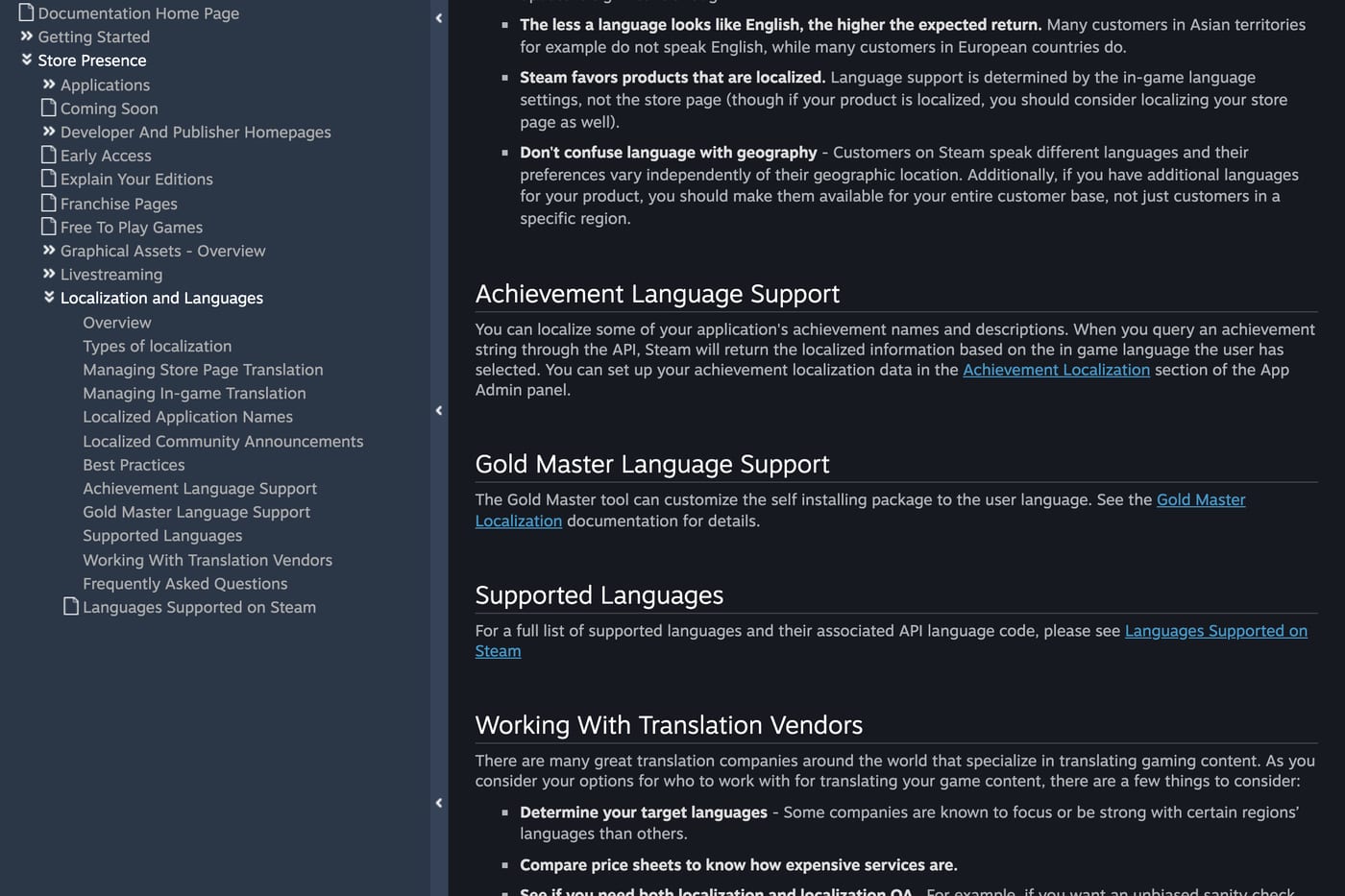
Valve's documentation is clear on three points (localization docs):
- "Steam favors products that are localized."
- Language support is set by the languages you tick for the game, not by the language of your store page. Translating only the store page doesn't count.
- A localized game name is shown to players using Steam in that language and is used in their search suggestions.
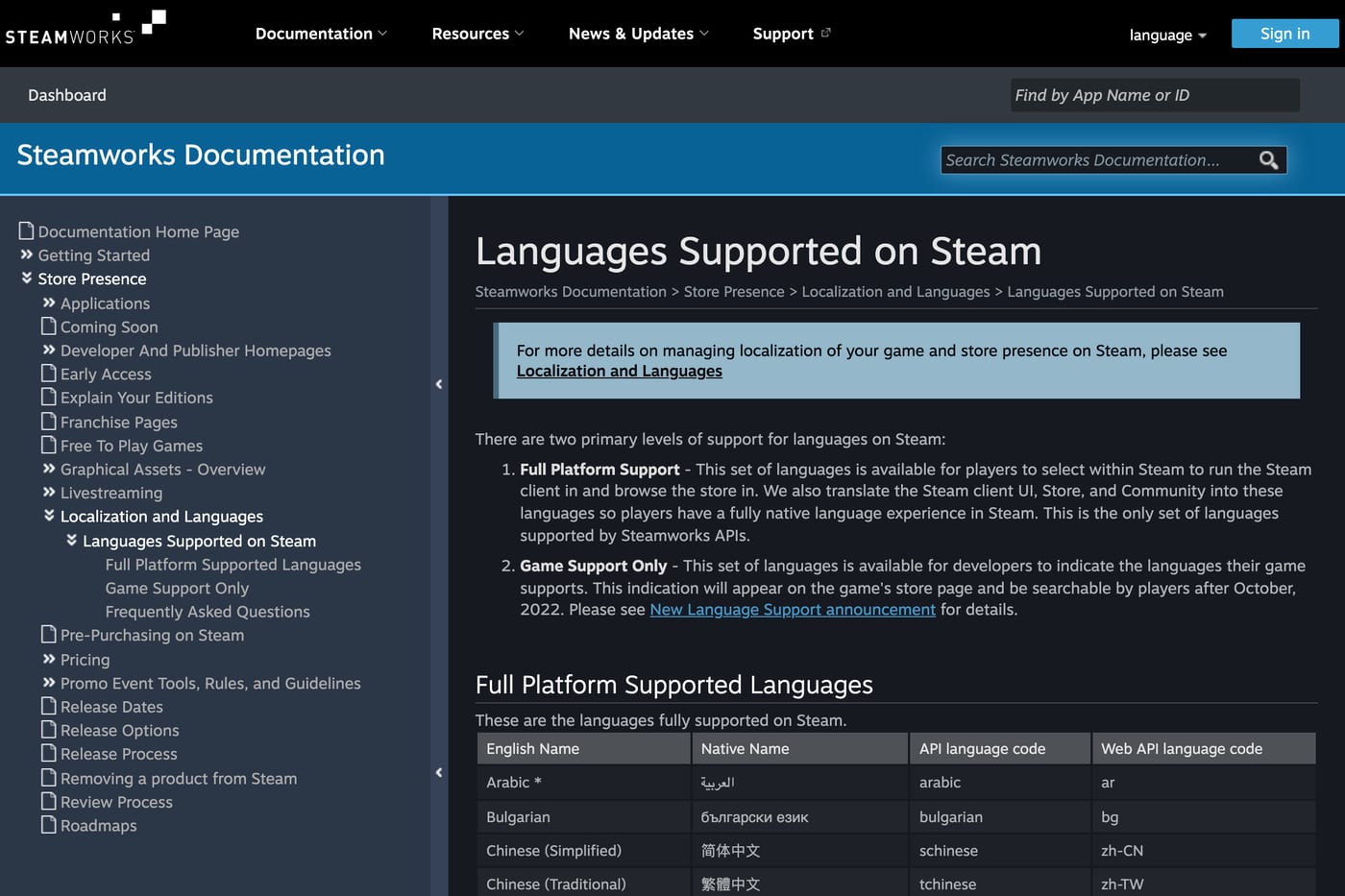
Steam lists about 31 languages with full platform support and about 72 more as game support only, which still show on your store page and are searchable (languages). English is required as the fallback for store content.
What localization did in real games
GameDiscoverCo collected numbers from publishers who tracked it:
- Hooded Horse estimated that about 35 to 40% of French and German wishlists came from localization, slightly over half for Spanish, and over 90% for East Asian languages (GameDiscoverCo, 2021).
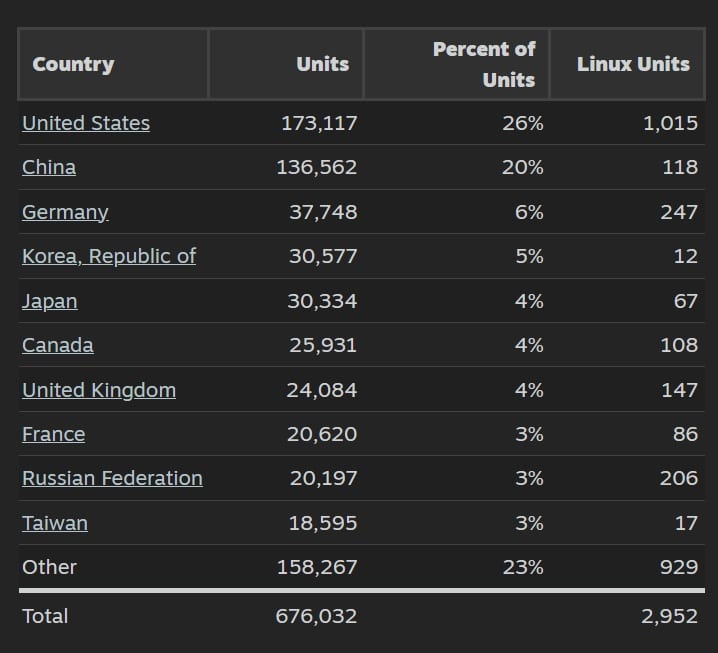
- Fellow Traveller saw China go from 5% or less of units to 20% or more after Chinese localization plus local PR (same source).
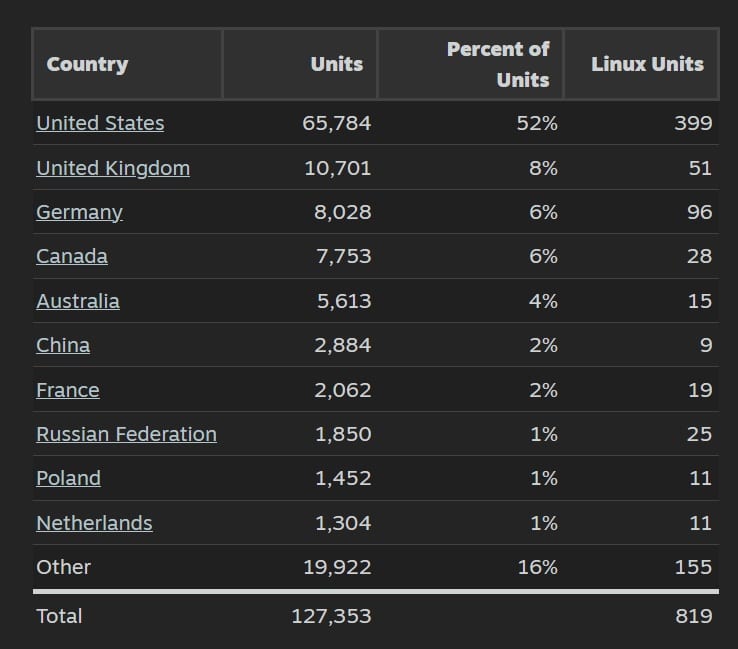
- Against the Storm, in 17 languages, gets at least 32% of sales from China, Japan, Korea and Taiwan combined. Nebulous: Fleet Command, English only, gets 2% from China (GameDiscoverCo, 2023).
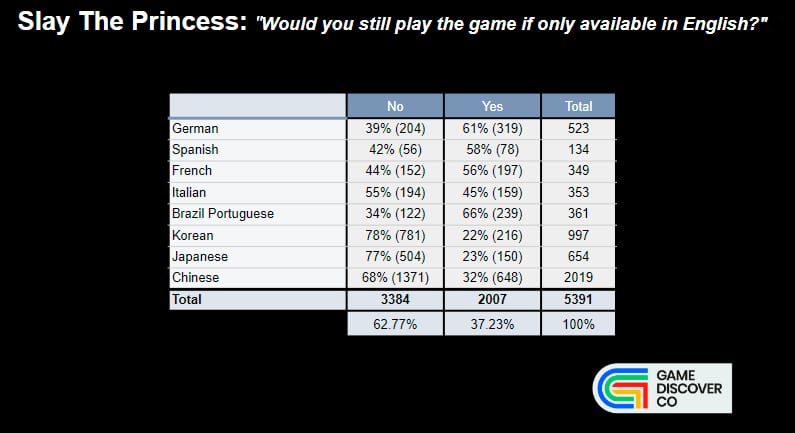
- Slay the Princess asked fans whether they would play a text heavy game in English. In Brazil 66% said yes, in Germany 61%, in China 32%, in Japan 23% and in Korea 22% (same source).
The pattern: European players often cope with English, Asian players mostly don't. The more text your game has, the more localization matters, and the more it matters in Asia.
What our data adds: translation opens the door, marketing walks people through it
We looked at where wishlists came from across 21 games that connected Steamworks to Trapster, and compared it with the languages each game supports.
| Market | Share of all wishlist adds | Median share per game |
|---|---|---|
| United States | 28.6% | 23.2% |
| Germany | 8.6% | 5.6% |
| Russia | 7.1% | 5.2% |
| China | 6.5% | 1.4% |
| United Kingdom | 5.7% | 4.4% |
| France | 4.8% | 4.9% |
| Kazakhstan | 3.5% | 2.6% |
| Brazil | 2.9% | 3.6% |
| Poland | 2.9% | 1.5% |
| Japan | 2.0% | 0.7% |
Seventeen of the 21 games support Simplified Chinese. Among them, the share of wishlists from China ranged from 0.2% to 85%, with a median of about 4%. Same translation, a 400 times difference. What separated them was everything around the translation: whether the game was covered by Chinese creators and media, and whether its genre is popular there. Pricing and marketing for Chinese players are in selling your game in China on Steam.
Russian shows the other side. Two games in our set had no Russian translation, and still got 5% and 13% of their wishlists from Russia. Russian speaking players clearly find and wishlist games in English. Whether a Russian translation would have added more, our data can't say, but the publisher numbers above point that way for other languages.
So the order of work is: translate the game, then tell players in that language that it exists. A translation nobody hears about rarely moves the number.
Which languages to pick, by game type
Text light games (action, physics, sims with little dialogue): interface and subtitles in the big five (Simplified Chinese, Russian, Spanish, Brazilian Portuguese, German) are cheap and cover most of the non-English store.
Text heavy games (narrative, RPG, strategy): East Asian languages matter most here, because players there are least likely to play in English. Simplified Chinese first, then Japanese and Korean if your genre is strong there.
Your own data beats any general list. The by country wishlist report in Steamworks shows where players already find your game, and that is where a translation has the most people to convert. Here is where to find it.
How to do it without wasting money
- Build for localization from day one. Keep all text in string tables, leave room for longer German words, and pick fonts that cover Chinese and Cyrillic.
- Translate the store page and game name too. Players search in their language.
- Use professional translators for the store page and key UI. It's the first thing players see.
- Set regional prices before you launch. Localization brings players from markets where the US price is too high. See Steam regional pricing.
- Market in the language. Creators who speak to that audience, localized trailers or subtitles, and a launch timed to the market. We showed what localized creator campaigns did in should your indie game work with non-English creators.
- Measure it. Compare the by country wishlist share before and after a language goes live.
FAQ
What languages should I localize my game into on Steam? For most games: Simplified Chinese, Russian, Spanish, Brazilian Portuguese and German first, then Japanese, French and Polish. Text heavy games should prioritise East Asian languages.
Does Steam show localized games more? Yes. Valve says Steam favors localized products and is more likely to show your game to players who speak a language it supports.
Does translating only the store page count as localization on Steam? No. Language support is set by the languages supported in the game, not by the store page.
What share of Steam users speak Chinese? In the October 2026 Steam survey, 22% of users ran Steam in Simplified Chinese and 1.3% in Traditional Chinese. The Chinese share moves a lot from month to month.
Is localization worth it for a small indie game? Usually for text light games, since interface translation is cheap. In our data, though, the payoff depended on marketing in that language as much as on the translation itself.
Sources: Steam Hardware & Software Survey (October 2026); Steamworks documentation on localization, supported languages and visibility; GameDiscoverCo issues from 2021 and 2023. Wishlist shares come from wishlist adds in 21 games that connected Steamworks to Trapster, matched with each game's supported languages on its Steam page.
Get a wishlist forecast for your game
Send us your Steam page. We estimate views, creators and cost per wishlist before you spend anything.
Keep reading
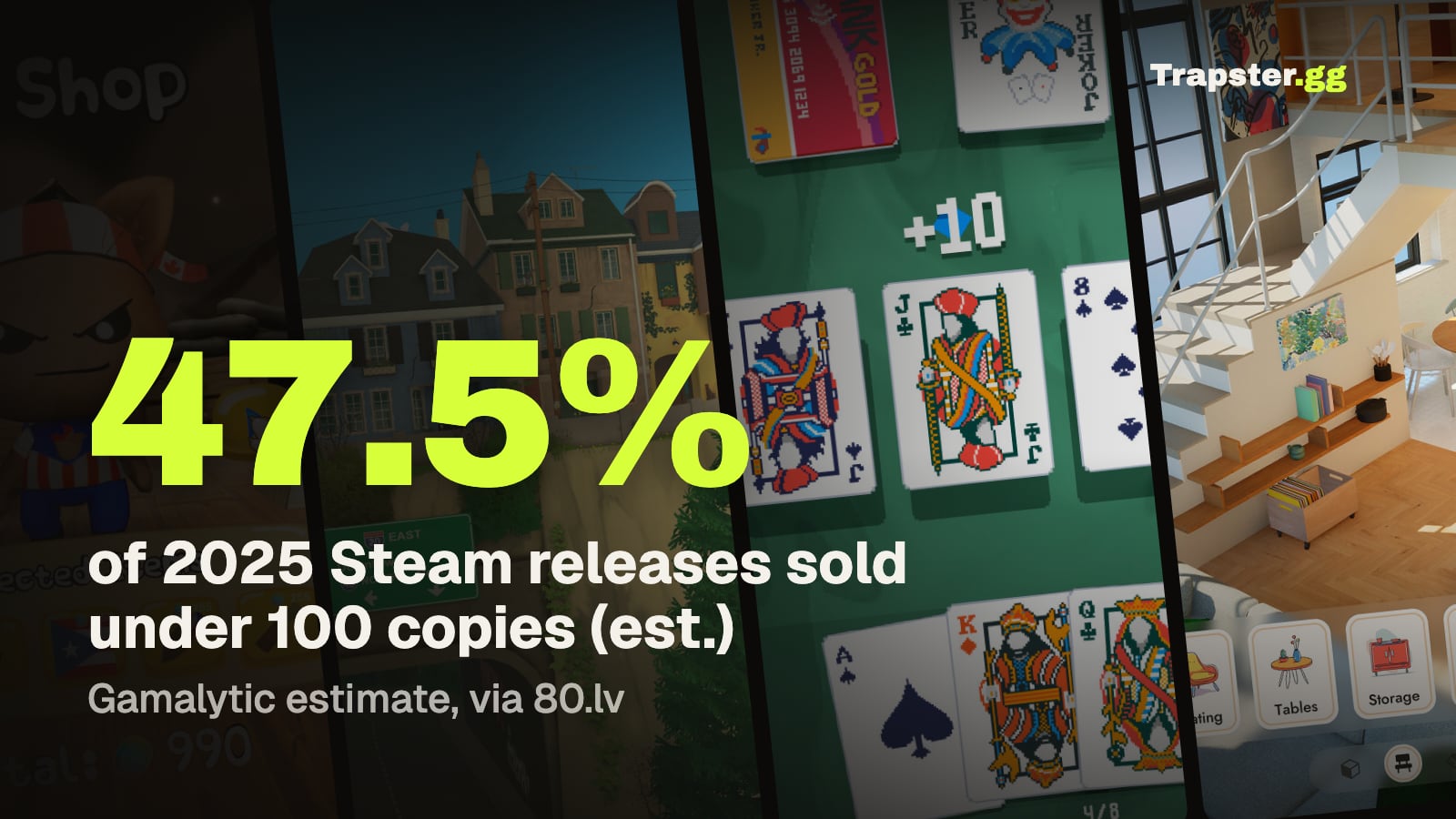
How Many Copies Do Indie Games Sell? Real Steam Numbers by Tier
Most Steam indie games sell under 1,000 copies. Real numbers by tier…
Game Marketing Hook: How to Find, Test and Show Yours
What a game marketing hook is, how to test one cheaply with…
How to Name Your Game: Searchable, Memorable and Legally Safe
How to name your game: pass the Steam, Google and trademark checks…