Indie Game Publishers Accepting Pitches in 2026: 20 Verified
20 indie game publishers taking pitches, each checked on its own site in November 2026: genre focus, how to submit, a notable title, and red flags to avoid.
Short answer: Plenty of indie game publishers still take open pitches in November 2026, but each one wants something different. Raw Fury asks for a playable PC build, a deck and a development budget, Fellow Traveller only signs story-rich games, and DreadXP only publishes horror. Others are closed right now: Finji says it is "not currently signing new projects", and Devolver's pitch portal was down for maintenance when we checked. Use the table below to shortlist the publishers that fit your genre, then pitch through their official page only.
How we built this list
Every row below was checked on the publisher's own website in November 2026. We kept a publisher only if its site has a live submission route (a form or a pitch email) and gives no sign that signing has stopped. We dropped publishers whose site we could not load, whose pitch route was closed, or whose site listed no way to pitch. That is why some well known names are missing. The "notable title" column lists a game shown on the publisher's own site or press page, not a sales claim.
Submission pages change often. Before you send anything, open the link and read the current instructions again.
Indie game publishers accepting pitches (November 2026)
| Publisher | Focus (in their own words or portfolio) | How to submit | Notable title on their site |
|---|---|---|---|
| Akupara Games | Likes deckbuilders, strong narratives, inclusive stories and unique mechanics, "bonus points if its spooky". No educational, kid or family focused games, no VR/AR, and no politics or religion as the primary theme. Unity preferred | Four-part form: game details, roadmap and budget, links, then deck, trailer and build | Rain World |
| Big Fan Games | Games built on licensed IP. Looking for games that release in 2027 or later | Four-step form. Trailer or gameplay video and pitch deck required, build optional | Warhammer 40,000: Boltgun 2 |
| Chucklefish | No stated genre. Wants games past the idea stage with charming visuals and fun gameplay | Pitch form linked from the page: deck, Steam or itch.io page, video, demo or Steam key | Eastward |
| Coffee Stain Publishing | No stated genre | Online form at pitch.coffeestain.com | Deep Rock Galactic |
| Critical Reflex | No stated genre. Portfolio spans tower defense, deckbuilders, story-rich and action platformers | Online form behind "Pitch your game" | ORX |
| Curve Games | Describes itself as a publisher of "Triple I" games | Developer contact form | For The King II |
| Daedalic Entertainment | Four areas: storytelling, strategy, co-op and wholesome games | Email scouting@daedalic.com | Site catalog offline when checked |
| Dear Villagers | Premium PC games with console potential from small and medium teams. No mobile or free-to-play. Strong single-player content | Pitch form. Have a deck, production plan, budget and ideally a build ready | Fabledom |
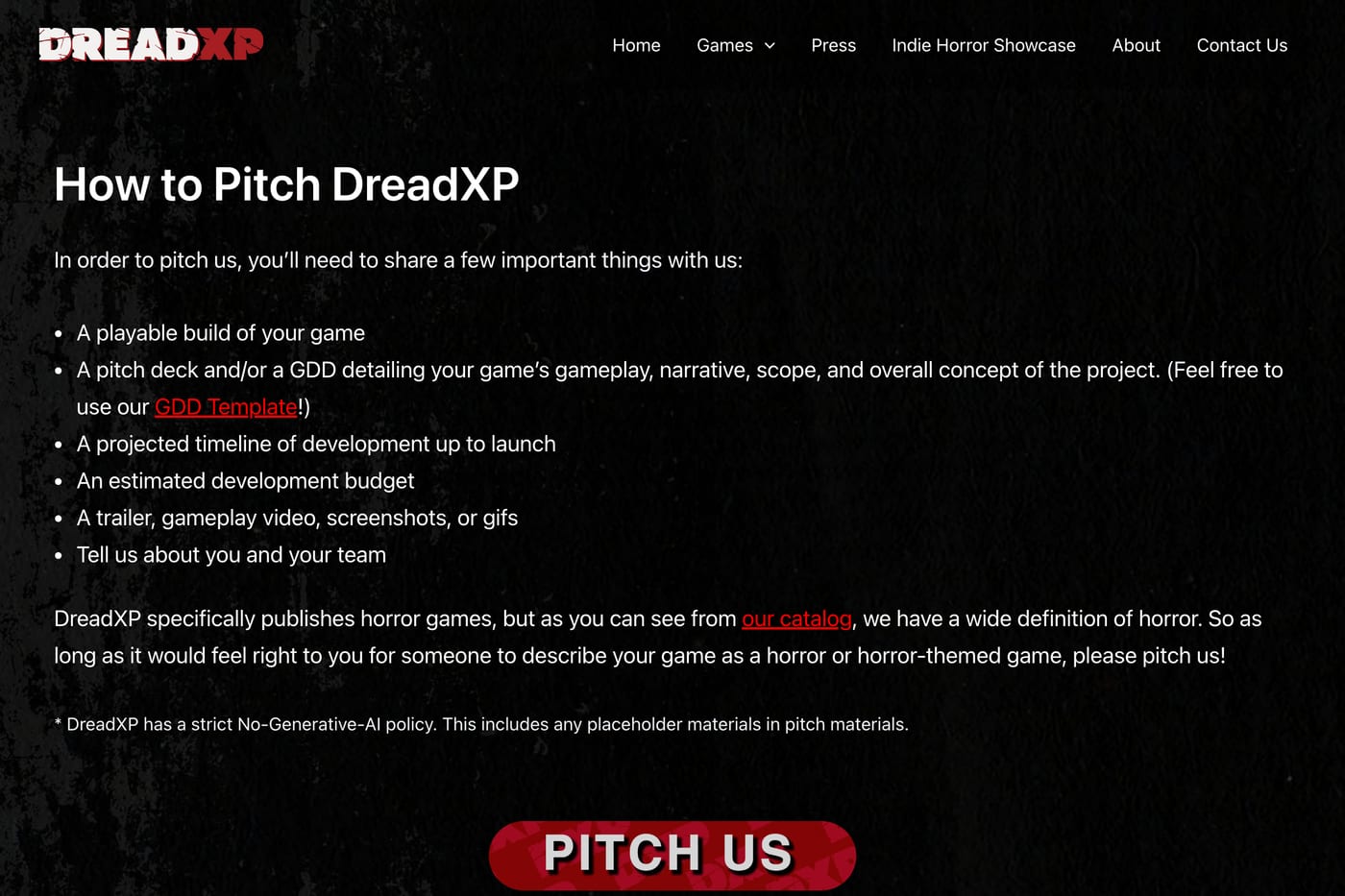
| DreadXP | Horror only, defined broadly. Strict no generative AI policy, including placeholder assets | Email pitches@dreadxp.com: build, deck or GDD, timeline, budget, video, team info | The Mortuary Assistant |
| Fellow Traveller | Story-rich games with narrative at the core, any platform | Email developers@fellowtraveller.games: team, short overview, links, build, what you need | Titanium Court |
| Fireshine Games | No stated genre | Pitch contact form | Shadows of Doubt |
| Paradox Interactive | "Smart games designed for smart gamers". Wants a game, not an idea | Email newgames@paradoxinteractive.com | Cities: Skylines |
| Raw Fury | No stated genre. Pitch guide explains what to send | Asana form: PC build, deck, launch window, budget, video | The Séance of Blake Manor |
| Serenity Forge | Games that "strongly express their creator's values". Strong on console ports and physical editions | Notion pitch form linked from the page | Doki Doki Literature Club Plus! |
| Shiro Unlimited (Shiro Games label) | PC-first, systems-driven games, often grown in Early Access | Form: pitch, budget, financing needed, deck, video, Steam page | Ale Abbey |
| Super Rare Games | Adventure, puzzle, shooters and platformers, digital and physical | Contact via their developers page. Physical editions: publishmygame@superraregames.com | Kill Knight |
| Team17 | "Genre and platform agnostic" | Online form with file upload | DREDGE |
| Thunderful | Any genre, platform or mechanic | Five-step online form | REPLACED |
| tinyBuild | No stated genre | Email pitches@tinybuild.com: short pitch, GIF under 2 MB, unlisted trailer, bullet list of needs, build link | Graveyard Keeper 2 |
| Whitethorn Games | Relaxing, low-stress, accessible games. Any stage of development | Email hello@whitethorngames.com: demo, video, budget and timeline, overview, tech details, team | Botany Manor |
Two patterns stand out. First, almost every publisher that lists requirements asks for a playable build and a budget, not just a concept. Paradox says it wants "a game (not a game idea)". Second, the genre-focused labels (DreadXP, Fellow Traveller, Whitethorn, Daedalic, Shiro) tell you exactly what they sign. If your game is outside that lane, the pitch is wasted.
For what goes into the deck itself, see our guide to writing a game pitch deck for publishers. If you are still deciding whether you need a publisher at all, read publisher vs self-publishing first.
How to choose the right publisher
1. Start with genre fit, then check the catalog
The focus column is the publisher's stated preference. The catalog is the proof. Open their games page and look at the last 10 releases. If you make a cozy farming game, Whitethorn's catalog (Botany Manor, Wytchwood) tells you more than any pitch guide. If you make a systems-heavy strategy game, Shiro says it builds on "PC/Steam first" and favors games developed over a long period, such as in Early Access.
A publisher that has never shipped your genre has no audience for it yet, no press contacts who cover it, and no data on what your game should sell for.
2. Find out what they actually do
"Publishing" can mean money, marketing, porting, QA, localization, or all of these. Ask for a specific list and compare it with what you are missing. Shiro lists financing, marketing, distribution, business development, porting, playtesting and QA/LQA. Raw Fury says it budgets marketing, service and porting separately from your development budget. Serenity Forge's strength is console ports and physical editions.
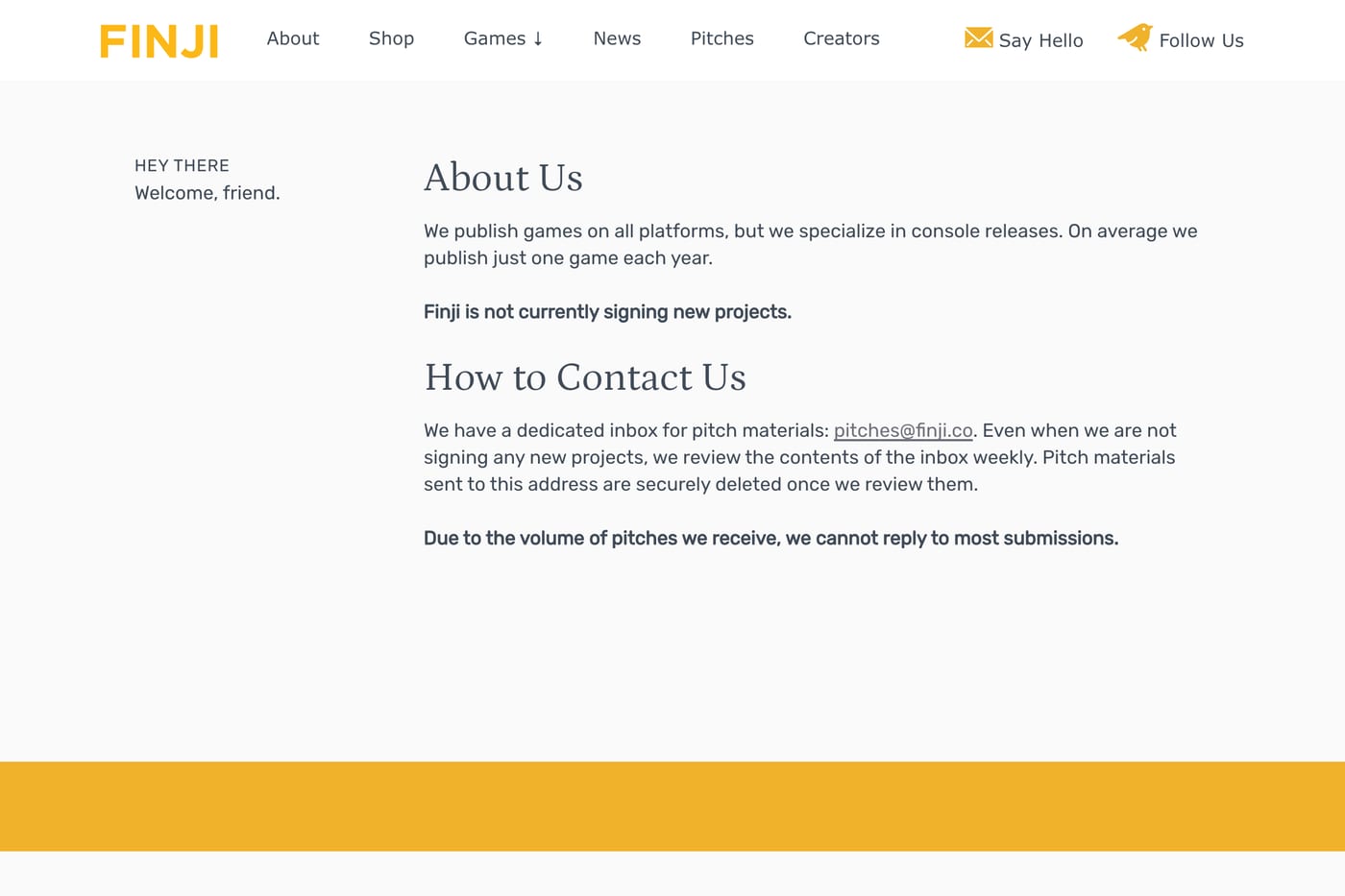
Ask how many games they release per year and who on their team will work on yours. Finji, for example, states it ships about one game per year and specializes in console releases. A small slate means more attention per game. A large slate is fine only if they show you the people and plan behind your launch.
Ask for the marketing plan in concrete terms: trailer timing, festival slots, press outreach, and how they will reach players on short-form video. If the answer is vague, assume the work will land on you. Our guide on how to market a game lists what a full plan should cover.
3. Get references from their developers
Talk to two or three studios the publisher has shipped with, including at least one whose game did not sell well. Akupara's own guide to publisher red flags tells developers to talk to other developers and check references. GameDiscoverCo's look at Raw Fury's contract treats whether a publisher's developers are happy with the deals they signed as a key test.
Good questions for references:
- Were royalty statements on time and easy to read?
- Did the publisher deliver what was promised before signing?
- Who was your day-to-day contact, and did that person stay?
- What happened after launch when sales dropped?
- Would you sign with them again?
Red flags in publisher deals
Most of these come from Akupara's February 2026 red flags guide, notes from a GDC talk by games lawyer Tim Repa-Davies on How To Market A Game, and an interview with Hooded Horse co-founder Tim Bender in Game Developer.
- Recoup that blocks your cash flow. Bender calls recoup terms "one horrible thing that exists within the industry" and flags clauses that deny developers "critical cash flow" after launch. Akupara lists 100% recoupment before you earn anything as a red flag, and also recoup that exceeds what the publisher actually spent through multipliers, fees or markups.
- IP transfer or rights to future games. Akupara warns against handing over IP ownership and against publishers optioning your future games. Repa-Davies flags license terms "that go on forever" and broad grants covering sequels, merchandise or soundtracks.
- Promises that are not in the contract. Repa-Davies explains that an entire-agreement clause can make promises from emails and calls worthless. If the publisher commits to marketing spend or console ports, it goes in the contract.
- No exit and no audit rights. You need a way to get rights back if the publisher underperforms or closes, and the right to check its numbers.
- Pressure to sign fast. Akupara lists "speed over diligence" as a partnership red flag. A good partner expects you to hire a lawyer who knows games publishing.
- Signing lots of games, supporting few. Akupara flags publishers that sign many games but actively support few. Check how the publisher's older releases are doing: patches, sales, and whether their social channels still mention them.
A recoup clause alone does not make a publisher bad. Bender says as much. The question is whether the full deal (advance, recoup terms, revenue split, services) is worth more than what you could do alone.
How to send the pitch
- Shortlist 5 to 10 publishers whose catalog matches your genre.
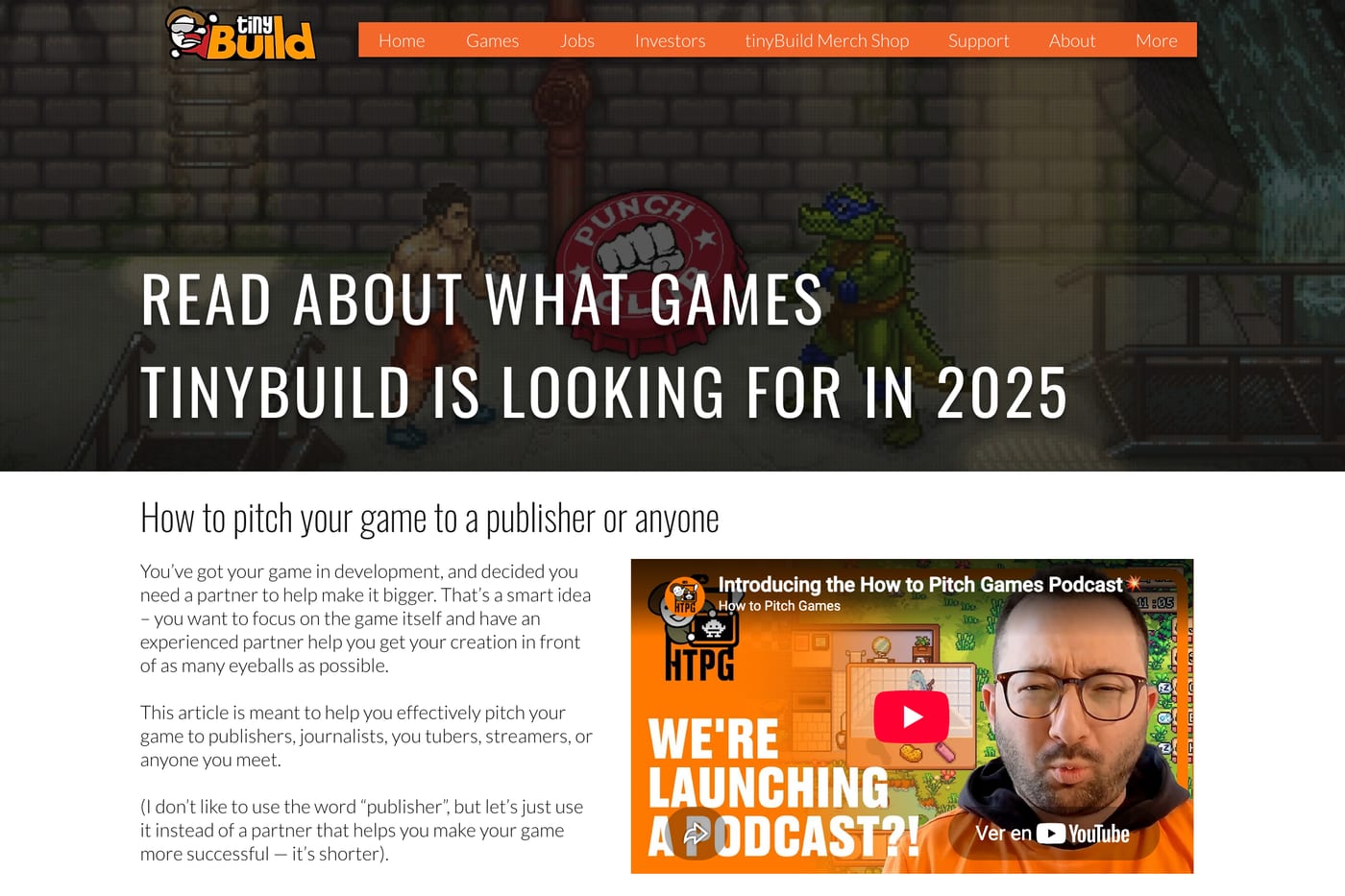
- Read each publisher's submission page and follow its format exactly. tinyBuild wants a GIF in the email body. Raw Fury wants only your development budget and estimates marketing and service costs itself. Dear Villagers wants a production plan.
- Prepare a trailer and a short build that shows your core loop in the first few minutes. Raw Fury notes it may only play your build once.
- Send through the official route only. Do not DM staff on social media unless the publisher invites it.
- Track who you pitched and when. Some publishers say they cannot reply to every pitch: Fellow Traveller says a lack of reply may mean the game is not a fit.
FAQ
Do indie game publishers accept unsolicited pitches?
Yes. Every publisher in the table above lists a public form or pitch email on its own site. Some, like Finji, still review pitches but say they are not signing new projects right now.
What do publishers want in a game pitch?
Most ask for a playable build, a pitch deck, a gameplay video and a budget. Raw Fury, Whitethorn, DreadXP and Akupara all list these on their submission pages.
How early should I pitch a publisher?
Whitethorn and Dear Villagers accept games at any stage, including early prototypes. Paradox wants a game, not an idea, and Big Fan Games is looking for releases in 2027 or later.
Can I pitch several publishers at once?
Yes. A pitch is not a commitment, and none of the pages we checked ask you to pitch them alone. Follow each publisher's format and keep track of who has your build.
What is a recoup clause?
It lets the publisher take back its investment from sales before you receive a share. Hooded Horse's co-founder has publicly argued that 100% recoup terms hurt developers, and Akupara lists them as a red flag.
Do I need a lawyer to sign a publishing deal?
Yes. Akupara says "Never sign anything without legal counsel", and the GameDiscoverCo article quotes advice to use a lawyer experienced with game publishing.
Sources: publisher submission pages linked in the table (Akupara, Raw Fury, tinyBuild, Whitethorn, Fellow Traveller and others); Finji pitches page; Devolver pitch portal; Akupara Games: Publisher Red Flags; How To Market A Game: What's wrong with your publishing contract?; Game Developer: Hooded Horse on recoup clauses; GameDiscoverCo: What makes for a good game publishing contract?; checked November 2026.
Get a wishlist forecast for your game
Send us your Steam page. We estimate views, creators and cost per wishlist before you spend anything.
Keep reading
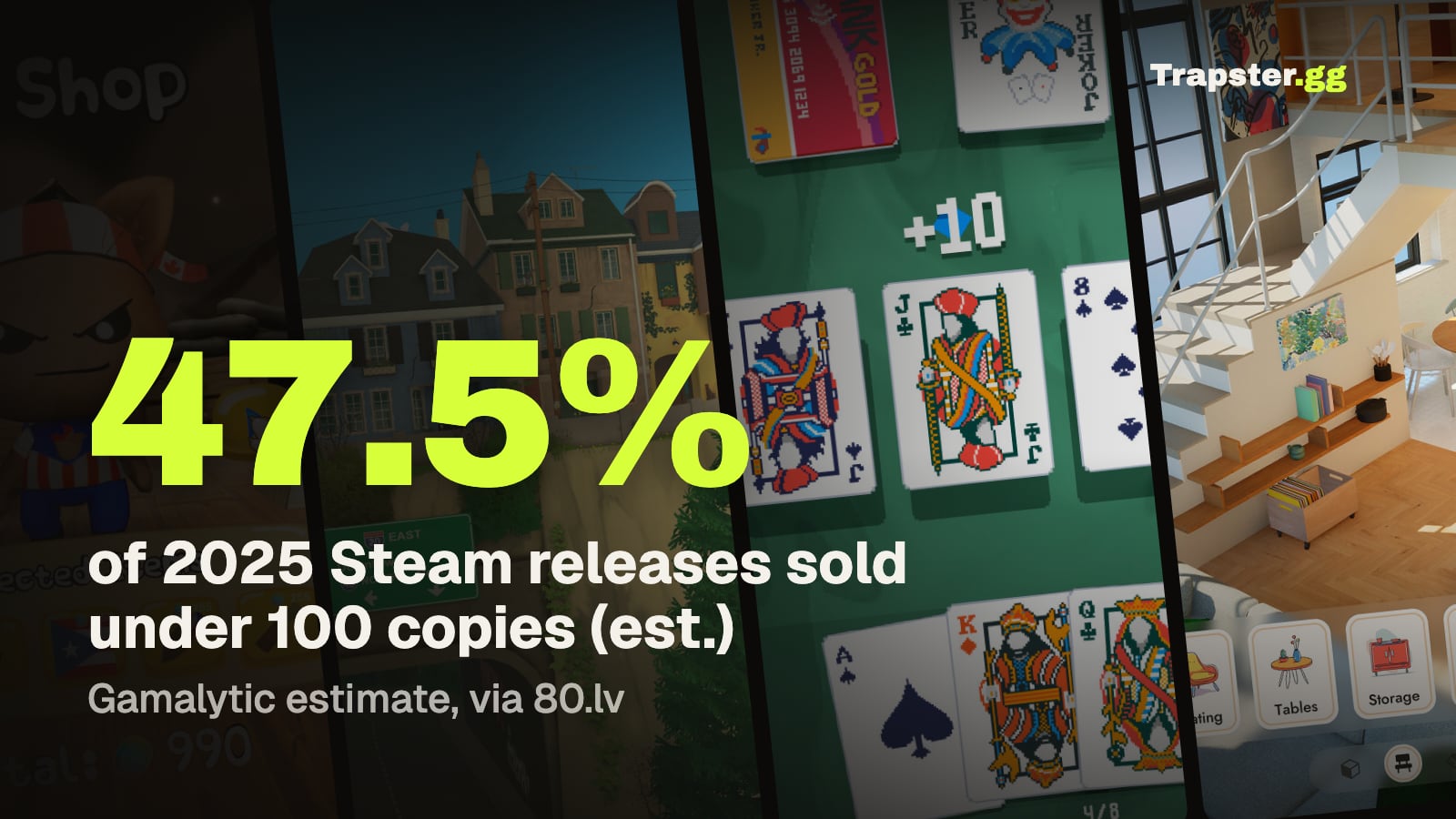
How Many Copies Do Indie Games Sell? Real Steam Numbers by Tier
Most Steam indie games sell under 1,000 copies. Real numbers by tier…
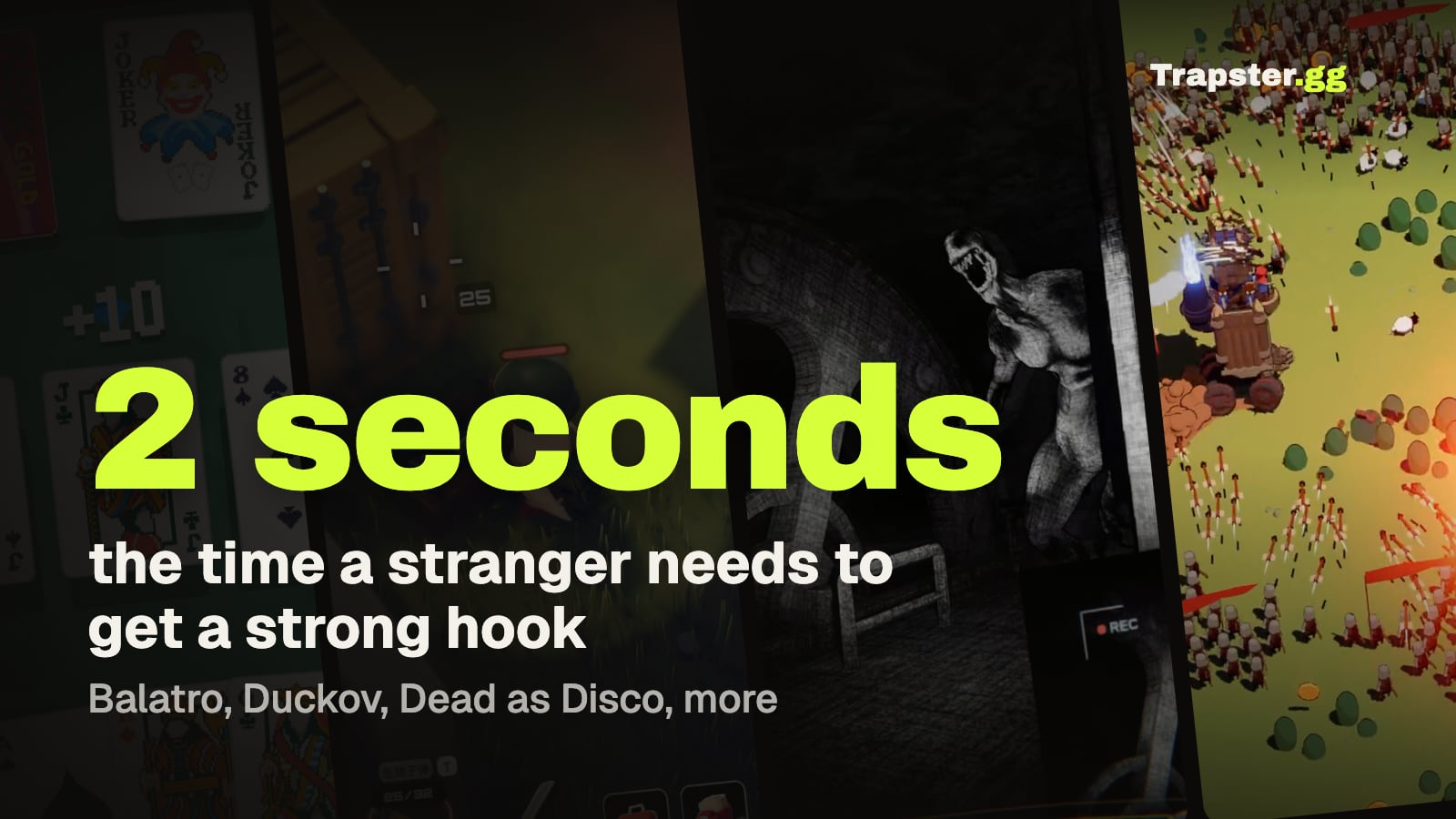
Game Marketing Hook: How to Find, Test and Show Yours
What a game marketing hook is, how to test one cheaply with…
How to Name Your Game: Searchable, Memorable and Legally Safe
How to name your game: pass the Steam, Google and trademark checks…