Game Pitch Deck: How to Pitch a Publisher
What publishers ask for on their own submission pages, a pitch deck structure, what deals look like, and how to find the right publisher.
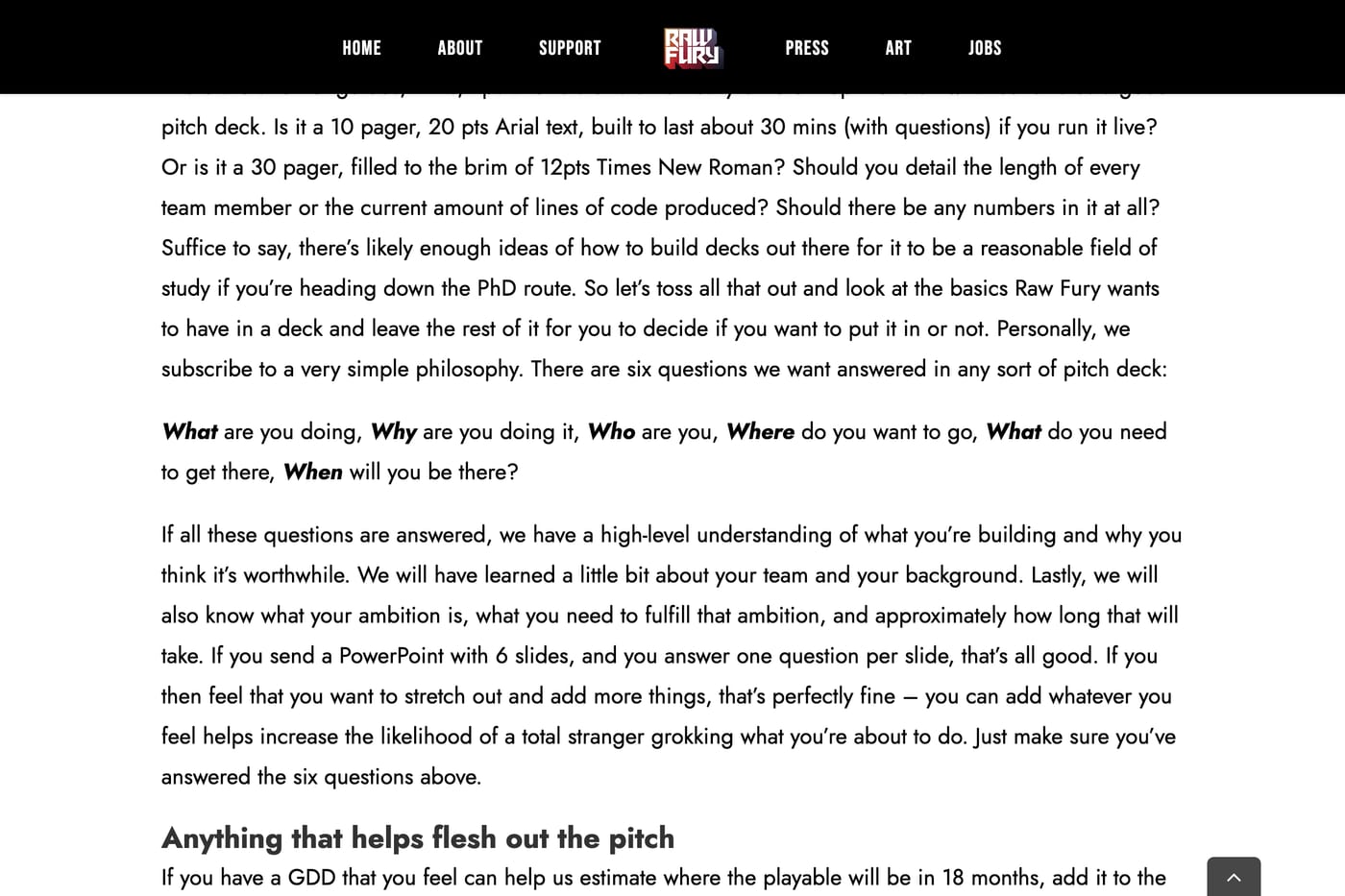
Short answer: publishers want to play your game, not read about it. Almost every publisher's submission page asks for the same core: a playable build, a gameplay video or GIF that shows the interesting part within seconds, a short deck that says what the game is and who it's for, and a budget built from your monthly costs. Raw Fury, for example, asks for a deck that answers six questions and a budget calculated as months left times monthly burn (Raw Fury). Expect to pitch many publishers: in 2021 Raw Fury said it receives over 1,500 pitches a year and signs under 1% (Game World Observer).
What publishers actually ask for
Here is what publishers say on their own submission pages:
| Publisher | What they ask for | Worth knowing |
|---|---|---|
| Raw Fury | Playable PC build, a deck answering what, why, who, where to, what you need and when, and a budget for one PC build | They may play the build only once. Their public developer resources include a deck template, a financial sheet and their publishing agreement |
| tinyBuild | A GIF under 2MB in the email, an unlisted trailer where the interesting part shows within 5 seconds, a list of what you need, an easy to play vertical slice | They ask for short emails, and want to know why you need funding and how you'd spend it |
| Whitethorn Games | In order of importance: demo, video or GIFs, screenshots, budget and timeline with monthly burn, elevator pitch, tech info, team | Cozy, low stress games, any stage of development |
| Akupara Games | A pitch deck and a playable build, plus a gameplay video | Premium games. Not kids, VR or AR |
| Kepler Interactive | In order: build or proof of concept, video, concept art, written text. A short deck, with systems detail in a separate design document | Generally can't assess a game without a build |
| Fellow Traveller | Who you are, a one or two paragraph pitch, platforms, current state, launch timing, links, what you need | Narrative focus. No reply usually means no fit |
| Chucklefish | Pitch doc, store and video links, a demo | Ideally signs at least a year before launch, often six months before. Asking for less money doesn't help |
| Dear Villagers | A two sentence pitch, five key features, team, release target, optional demo and budget | PC and consoles |
| Team17 | Submission form | Genre and platform agnostic |
| Thunderful | Five step form | Any genre or platform |
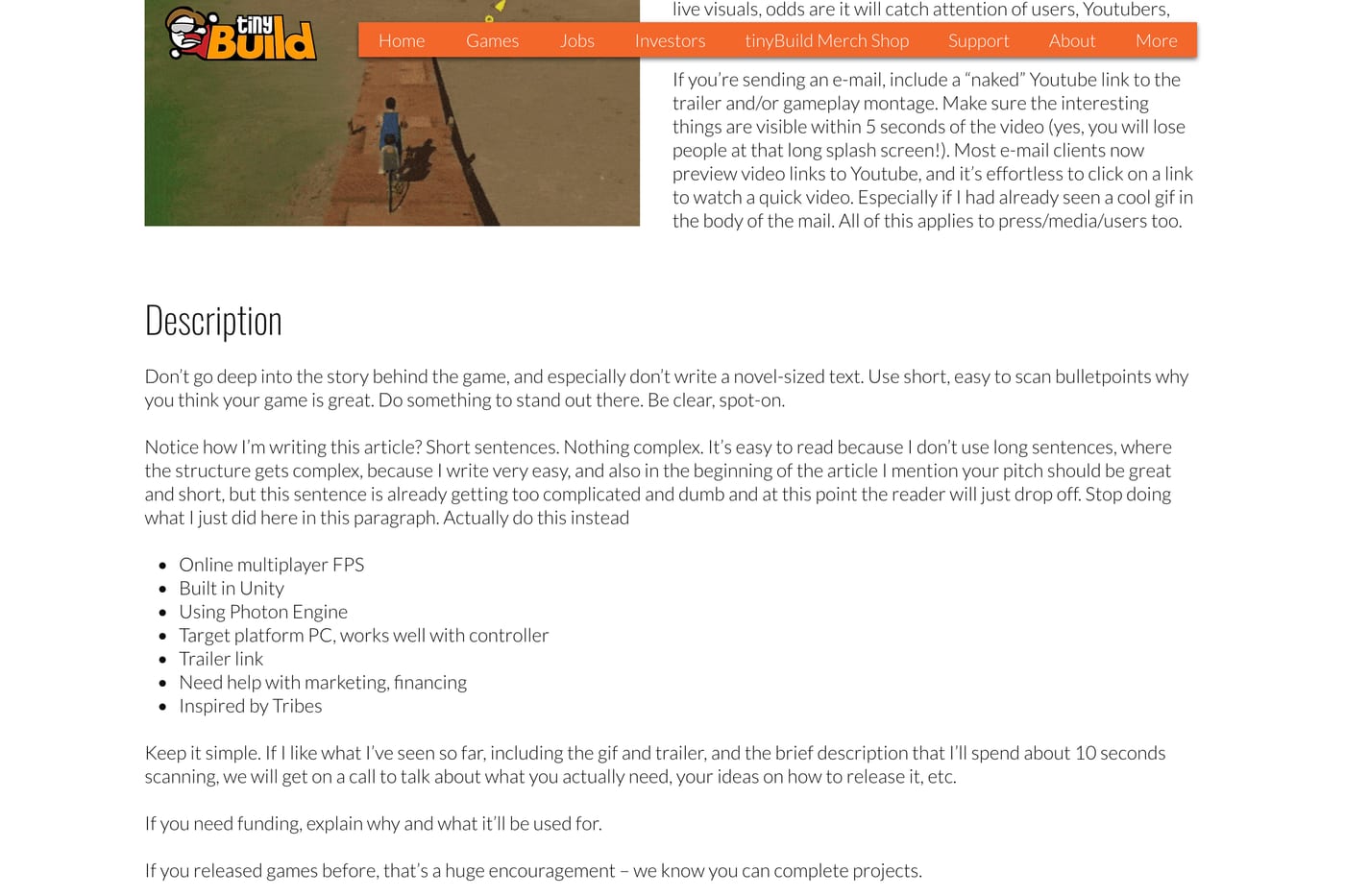
The pattern is clear: build first, video second, deck third. A beautiful deck without a build rarely gets far.
What to put in the pitch deck
Raw Fury's six questions make a good skeleton (Raw Fury). Ten slides or fewer:
- What: the game in one sentence, with a GIF. Genre, what the player does, what's different.
- Why: why this game, why now, why you.
- Who: who you are, the team behind the game. (Add a slide on the audience too: two or three comparable games with their Steam follower or review counts.)
- Where to: platforms, launch window, current state of development.
- What you need: money, marketing, porting, QA, localization. Be specific.
- When: milestones to launch.
- Budget: months remaining times monthly burn, as Raw Fury suggests, excluding marketing, ports and PR. Chucklefish advises building the number from a production plan rather than lowballing it.
- Team: who does what, and past games.
- Traction: wishlists, follower growth, demo players, festival selections, creator videos with views.
- Links: build, trailer, Steam page, press kit.
Keep design detail out of the deck. Kepler asks for systems in a separate document so the deck stays scannable. For an example, Chucklefish published a mock deck for Wargroove (example deck).
Traction is the strongest slide
A publisher is betting on whether players will want the game. Real numbers answer that better than any adjective: wishlists and how fast they grow, how many people played the demo, what a creator video did. If you've run creator campaigns, include the views and the wishlist jump in Steamworks. How to measure that cleanly is in how to measure wishlists from a creator campaign, and how to estimate where you're heading is in the Steam wishlist calculator.
The video and GIF matter more than the deck
tinyBuild wants the interesting part visible within 5 seconds. That's the same rule as a Steam trailer or a short video on TikTok: open on gameplay. How to cut it is in how to make a game trailer.

What a publishing deal usually looks like
The best public data is an analysis by lawyer Kellen Voyer of about 30 indie publishing agreements, summarised by GameDiscoverCo (GameDiscoverCo, 2020; GDC talk):
| Term | Finding |
|---|---|
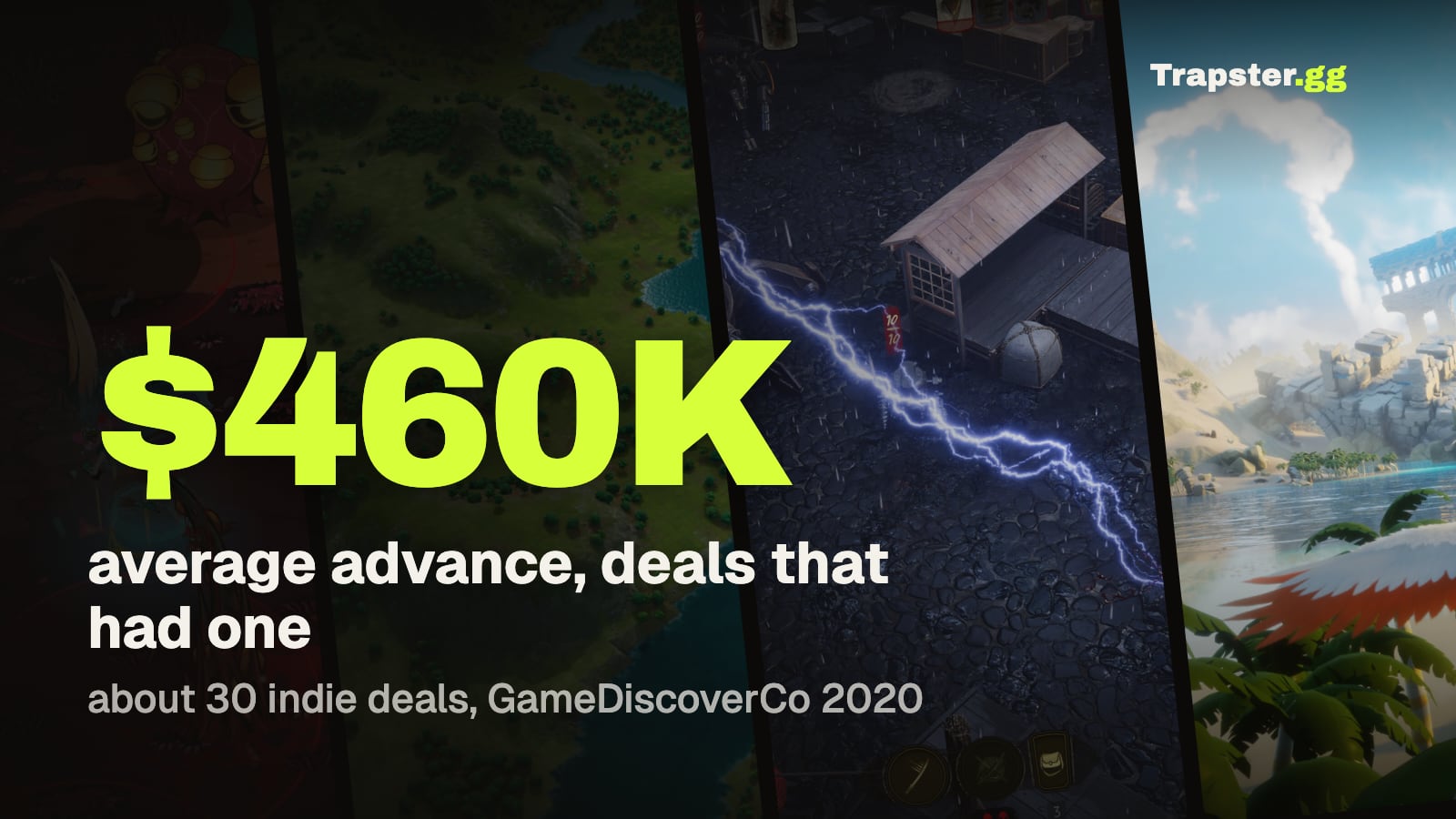
| Advance | Average $460,000 among deals with an advance, range $100,000 to $2 million |
| No advance | 18% of deals |
| Revenue split | Average 60/40 in the developer's favour. 71% to the developer without an advance, 55% with one |
| Recoup | 42% of deals recoup everything before the developer earns. 58% recoup while both sides share revenue |
Two public examples from GameDiscoverCo's analysis (GameDiscoverCo, 2020):
- Raw Fury recoups its funding plus 15% before revenue is split 50/50, with marketing and services coming out of net revenue first.
- Whitethorn takes 10% to 25% of gross on a two year term.
These are 2020 numbers, so treat them as a guide to how deals are shaped rather than current market rates.
Questions to ask before you sign
- Who owns the IP?
- What exactly is recouped, and at what rate?
- How much will they spend on marketing, and on what?
- How long is the term, and what happens if they stop supporting the game?
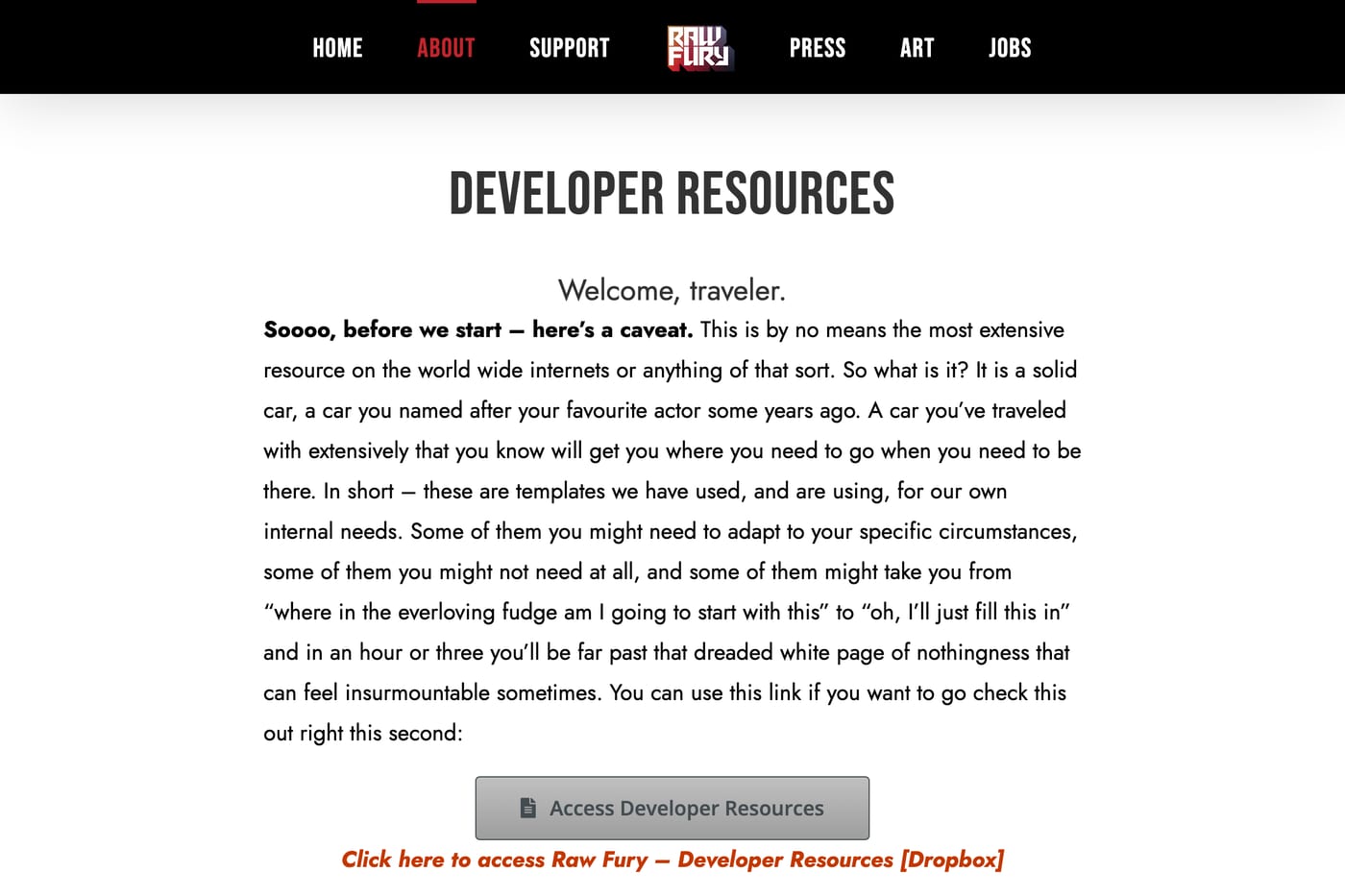
- Raw Fury publishes its agreement in nine languages on its developer resources page, a useful reference point for what fair terms look like (why they publish it).
How to find publishers
- Start with games like yours. Look up who published the five most similar games on Steam. They already know your audience.
- Start with our list. Indie game publishers accepting pitches has 20 publishers with open submission routes, checked on their own sites.
- Use a bigger list. The community maintained Unifiq indie publisher database lists over 100 publishers with budget bands and contacts. It dates from 2023, so check each entry.
- Meet them at events. Many publishers scout at GDC, gamescom, PAX and Nordic Game. Dates for 2027 are in indie game festivals 2027.
- Read each submission page. Every publisher wants something slightly different. Send exactly what they ask for.
Do you need a publisher at all?
A publisher brings money, marketing, porting and QA in exchange for a share of revenue. The full comparison is in publisher vs self-publishing. If what you mainly need is reach, you can buy that directly: a creator campaign on Trapster starts at $3,000 and is paid per view. Many studios self-publish on Steam and spend on marketing instead. The trade-offs are in game marketing agency or platform and how to market an indie game on a small budget.
FAQ
What should a game pitch deck include? What the game is, why it matters, who it's for, platforms and timing, what you need, a budget from monthly burn, the team and traction. Ten slides or fewer, with a GIF up front.
Do publishers need a playable build? Almost always. Raw Fury, Akupara, Kepler and Whitethorn all ask for a build or demo, and Kepler says it generally can't assess a game without one.
How much do indie game publishers pay? In a 2020 analysis of about 30 indie deals, the average advance among deals that had one was $460,000, with a range of $100,000 to $2 million, and 18% of deals had no advance.
What revenue split do publishers take? In the same analysis, the average split was 60/40 in the developer's favour: 71% to the developer without an advance and 55% with one.
How do I find a publisher for my indie game? Look at who published games like yours, use a publisher database, meet publishers at industry events, and follow each publisher's submission page exactly.
Sources: publisher submission pages for Raw Fury, tinyBuild, Whitethorn Games, Akupara Games, Kepler Interactive, Fellow Traveller, Chucklefish, Dear Villagers, Team17 and Thunderful; GameDiscoverCo on publishing agreements and good publishing deals; GDC Vault. Checked November 2026.
Get a wishlist forecast for your game
Send us your Steam page. We estimate views, creators and cost per wishlist before you spend anything.
Keep reading
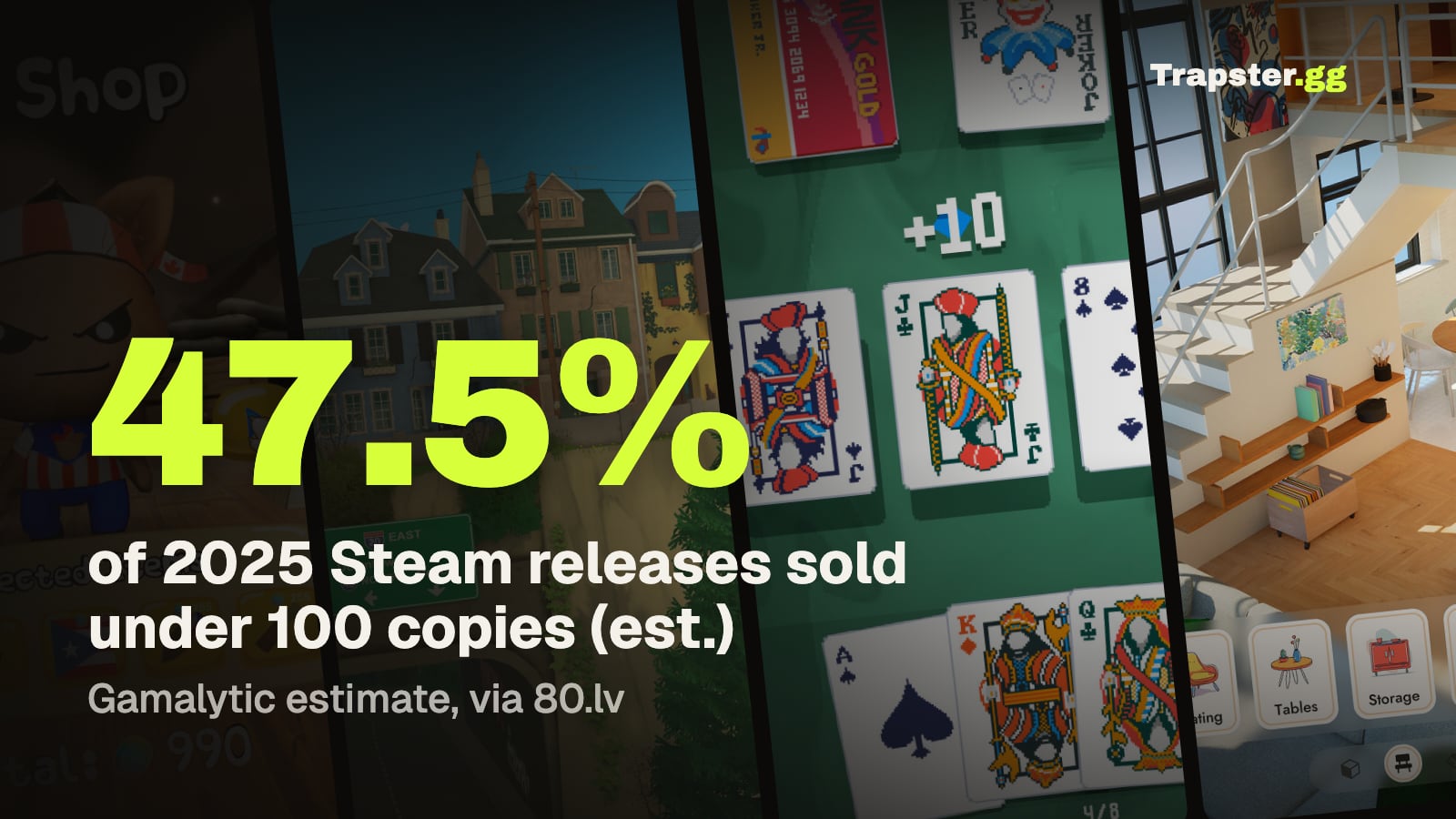
How Many Copies Do Indie Games Sell? Real Steam Numbers by Tier
Most Steam indie games sell under 1,000 copies. Real numbers by tier…
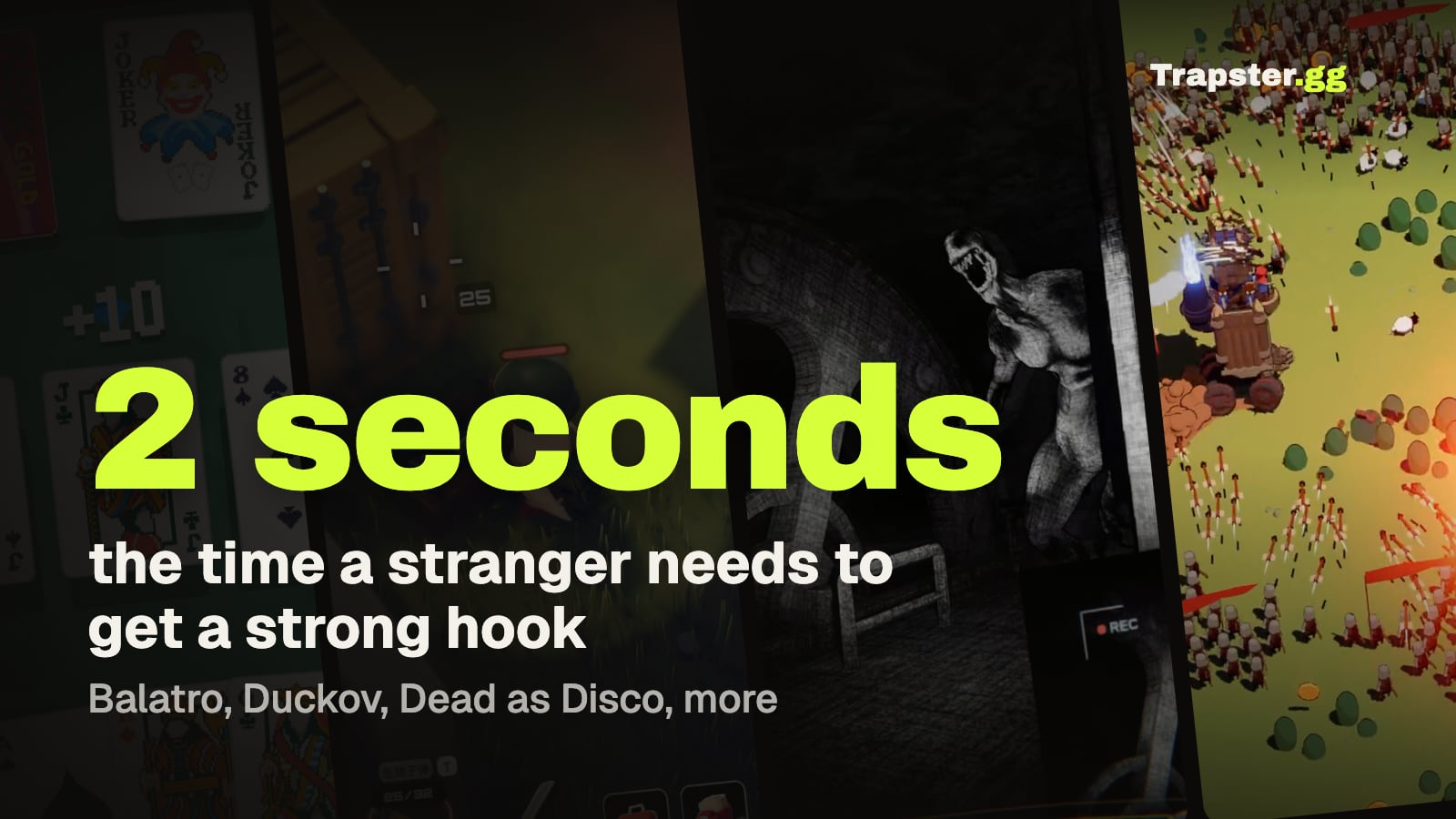
Game Marketing Hook: How to Find, Test and Show Yours
What a game marketing hook is, how to test one cheaply with…
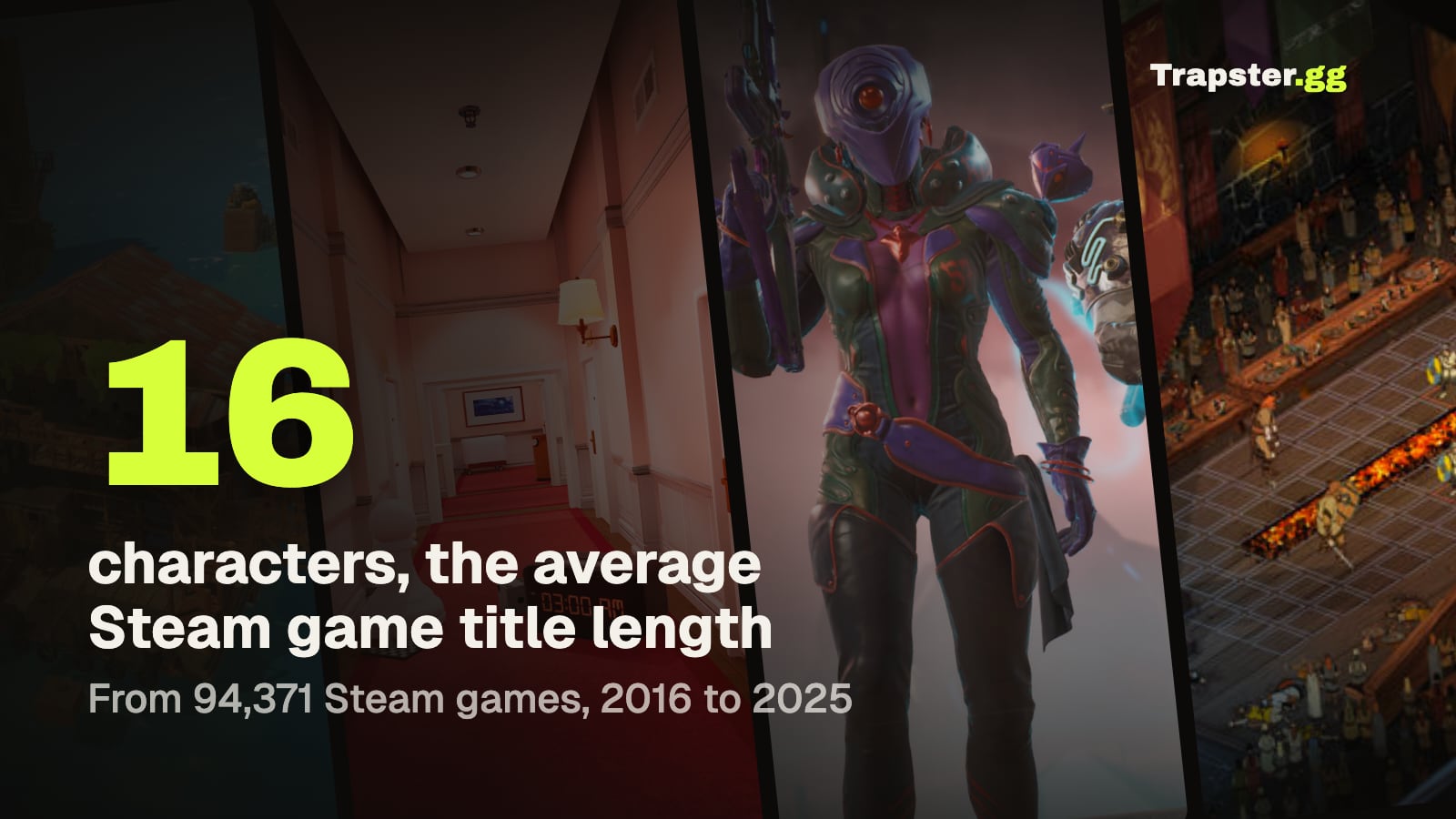
How to Name Your Game: Searchable, Memorable and Legally Safe
How to name your game: pass the Steam, Google and trademark checks…