Kickstarter for Video Games in 2026: Real Numbers and a Plan
Kickstarter for video games in 2026: 443 funded games raised $26M last year. Fees, all-or-nothing, the 30-day Steam key rule, pre-launch and a plan.
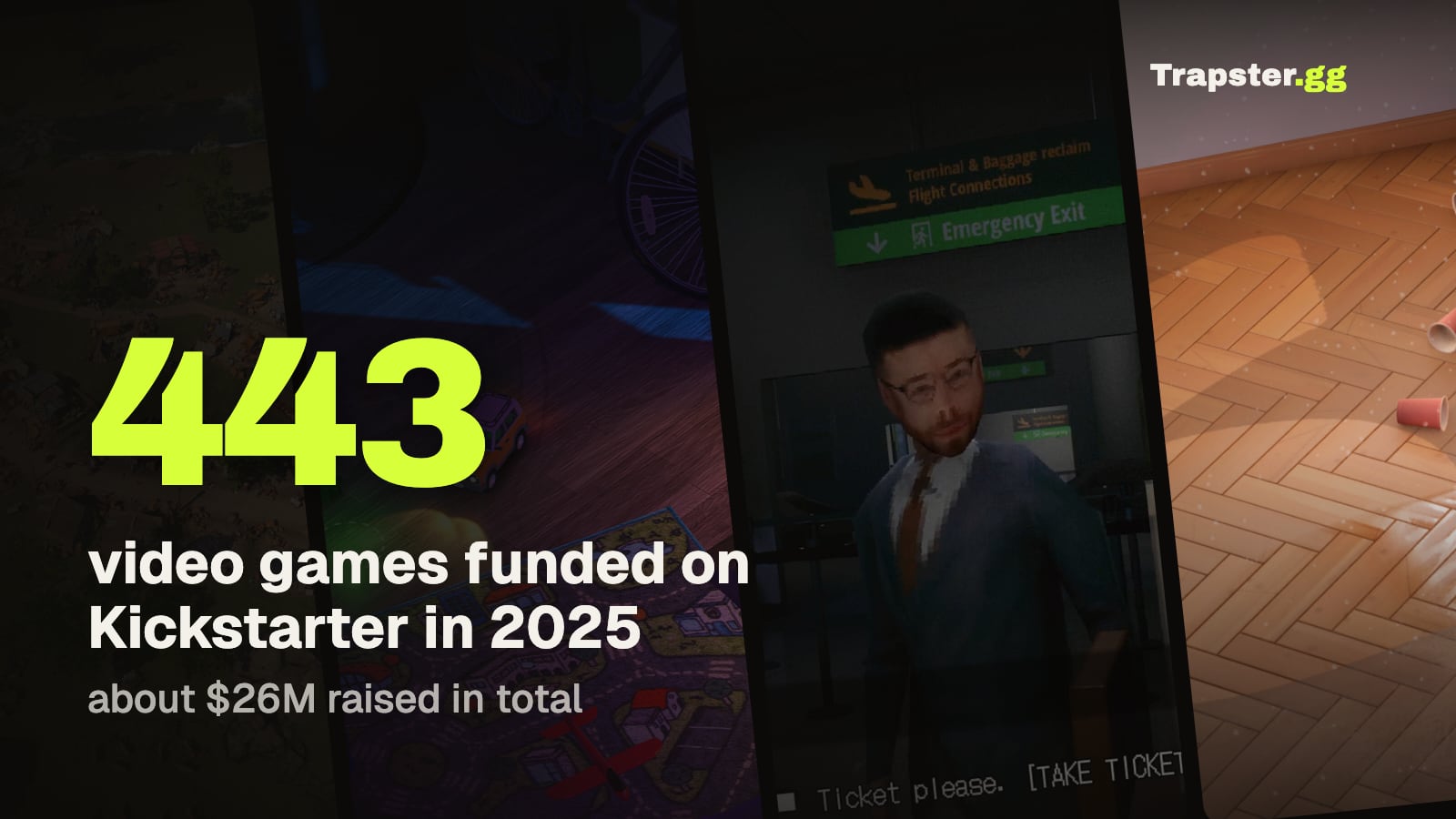
Short answer: Kickstarter is still the main crowdfunding platform for video games, but it is a small funding pool. Kickstarter reported 441 successful video game campaigns raising $26M in 2024, and ICO Partners' data for 2025 shows 443 successful campaigns and about $26M paid out, an average of roughly $58,000 per funded game. Funding is all or nothing, Kickstarter takes a 5% fee plus roughly 3 to 5% card processing, and campaigns can run 1 to 60 days. Treat a campaign as a marketing beat that needs an audience you already have, a Steam page and ideally a demo, not as a way to find an audience.
What the 2025 and 2026 numbers say
Kickstarter no longer publishes a live per-category stats table. Its old stats URL now redirects to the 2025 year in review post, which gives no video game totals. So the best current numbers come from Kickstarter's own blog posts and from Thomas Bidaux of ICO Partners, who analysed a 17 year Kickstarter dataset.
| Metric | Figure | Source |
|---|---|---|
| Successful video game campaigns, 2024 | 441 (up 9% on 2023) | Kickstarter |
| Pledged to successful video game campaigns, 2024 | $26M (up 28% on 2023) | Kickstarter |
| Successful video game campaigns, 2025 | 443 (ICO's data counts 463 for 2024, versus Kickstarter's own 441) | ICO Partners via GameDiscoverCo |
| Paid out to successful campaigns, 2025 | about $26M, average about $58,000 | GameDiscoverCo |
| Same average in 2016 | 407 campaigns, $16M, about $39,000 | GameDiscoverCo |
| Video games over $500,000 in 2025 | 11 | The Game Business |
| Q1 2026 | "strongest first quarter for video games on Kickstarter in 13 years" | Kickstarter, May 2026 |
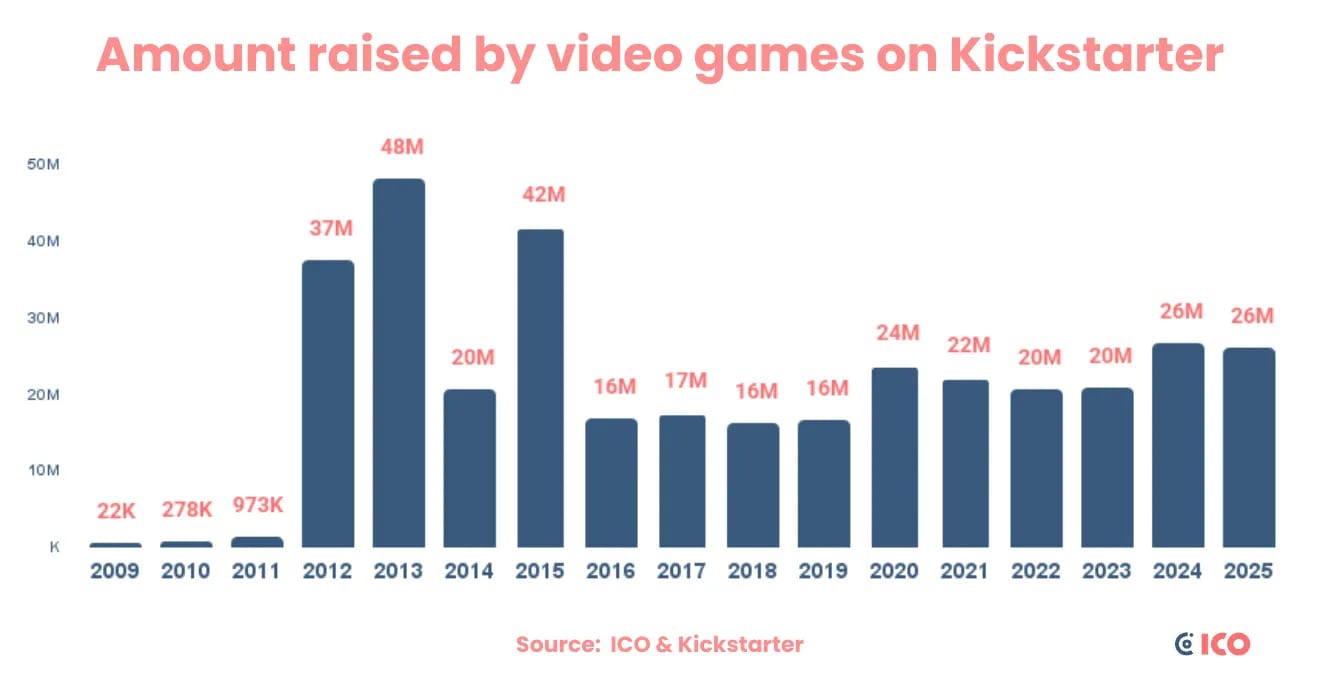
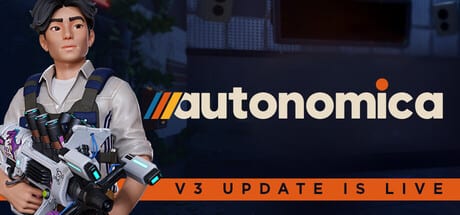
Two things to take from this. First, the money is concentrated. The 2025 list of games over $500,000 includes Elestrals Awakened at $1.4M and Autonomica at $1M, so a handful of projects pull the average well above what a typical small team raises. Second, there is no reliable public success rate for video games right now. GameDiscoverCo notes that failure rates were not available in the dataset. You will see percentages on third party blogs. None of them show their method, so do not plan around them.
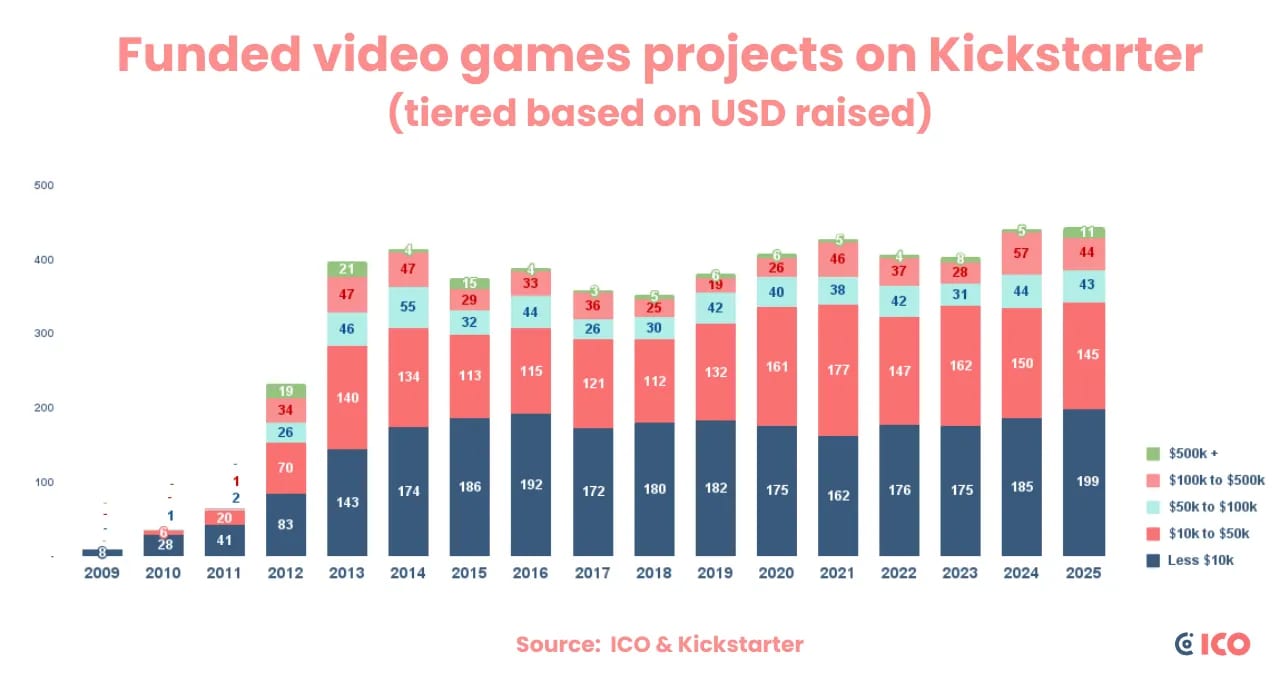
For scale, Bidaux put it bluntly in The Game Business: the 400 plus video games funded on Kickstarter each year equal about two weeks of Steam releases. Tabletop is a different market. Kickstarter reported an 80% success rate for tabletop games in 2024, and that number often gets quoted as if it applied to video games. It does not.
Fees, all or nothing and when you get paid
Kickstarter's model is simple and unforgiving:
- All or nothing. If you miss your goal, nobody is charged and you get nothing. Kickstarter's fee applies only if the project is successfully funded.
- Fees. 5% platform fee on funds collected, plus a Stripe processing fee of roughly 3 to 5% (Kickstarter help). Budget about 10% off the top, before failed payments, taxes, reward costs and Steam's own cut later.
- Payout timing. The payout is initiated 14 days after your deadline and can take another 3 to 14 business days to reach your bank.
- Locked settings. Once live, you cannot change the deadline or duration.
- Late pledges. Successful projects can keep taking pledges after the deadline. Kickstarter says late pledges are offered only to campaigns that ended successfully, payment is taken immediately, and they are paid out on a 7 day cycle starting 21 days after the deadline.
Because of all or nothing, set the goal at the minimum that lets you deliver what you promise. A lower goal you clear on day one beats an honest budget you miss by $3,000.
Campaign length and the Steam key rule
Kickstarter allows 1 to 60 days and recommends 30 days or less, saying campaigns over 60 days are rarely successful.
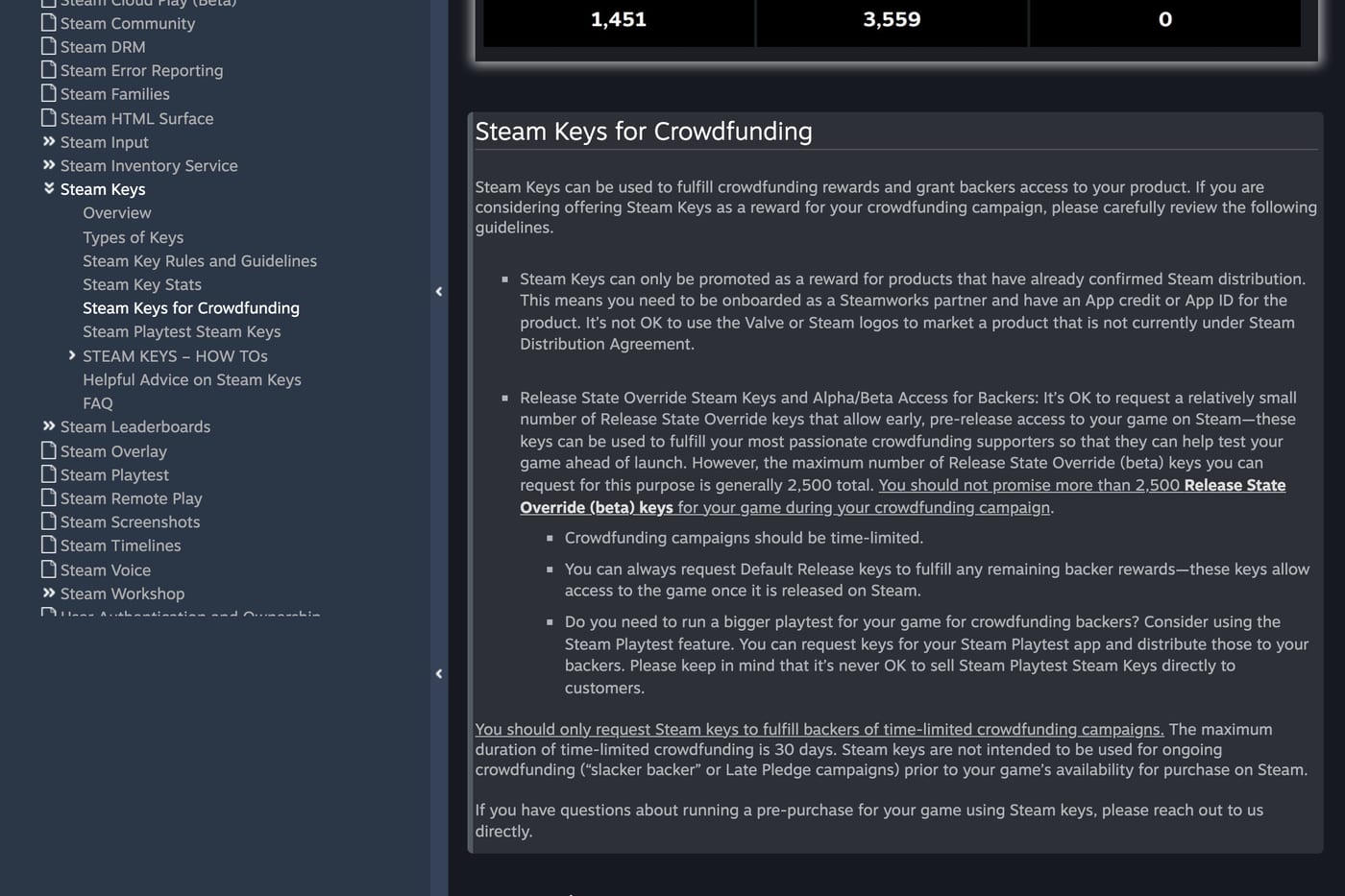
For a video game there is a second reason to stay at 30 days. Valve's Steam keys documentation says Steam keys can fulfil crowdfunding rewards, but you "should only request Steam keys to fulfill backers of time-limited crowdfunding campaigns" and "the maximum duration of time-limited crowdfunding is 30 days." The same page says keys can only be promoted as a reward for products that have already confirmed Steam distribution, and that Steam keys are not intended for ongoing crowdfunding. If you plan to deliver the game as a Steam key, keep the campaign at 30 days or less and have your Steam app set up before you promise keys. Our game key distribution guide covers the request side.
One more Steam detail backers rarely know: reviews from key activations are visible but do not count. Valve's reviews documentation says "only purchases (not key activation) made by the reviewing account are included in the review score." Your most loyal fans, the backers, will not move your Steam review score at launch. The same point comes up in The Game Business interview with Kickstarter's head of games Asher McClennahan and Thomas Bidaux, where Bidaux argues the visibility a campaign brings makes up for it.
The pre-launch page
Kickstarter's pre-launch page lets people click "Notify me on launch" before the campaign exists. Per the help center:
- Followers get an email when the project goes live.
- The follower count only shows publicly once 10 or more people opt in.
- You cannot message followers directly, but pre-launch updates notify them.
- First time creators need their project submitted and approved before they can turn the page on.
- Launch is manual. There is no scheduled launch.
Followers are the number to watch in the run up. Bidaux cited Autonomica, which launched with over 10,000 followers and finished with over 12,000 backers. In The Game Business, he recommends leaving at least three months between opening the Coming Soon page and launching, which makes the whole effort roughly four months of work for your team.
Most backers come from you, not from Kickstarter
McClennahan told The Game Business that Kickstarter brings about 30% of a campaign's backings: "For every seven backers that you bring to the platform, Kickstarter will naturally bring you three to four." Read that the other way round. If you bring nobody, the platform has nothing to multiply.
What worked in 2025, according to Bidaux's review in GameDiscoverCo:
- Crowdfunding later in development. Prelude Dark Pain raised $157k on a $47k goal, with much of the attention credited to content creators who had exclusive access to a demo.
- Existing communities. Teamcrafter (€85k) came from a team that already ran a Final Fantasy XIV crafting tool and moved that audience to its own game.
- Paid ads as a complement. Average pledges sometimes exceed $100 per backer, which makes ads measurable, but Bidaux stresses paid marketing can only complement community building.
Bidaux also flagged backer scepticism: the further a campaign runs from launch, the more the game may drift from what was promised, and some fans would rather wait for release.
How your Steam page and wishlists fit in
A Steam page and a Kickstarter campaign help each other, as long as you sequence them. The clearest documented case: Bidaux said The Witch Bakery launched its Kickstarter with 10,000 Steam wishlists and ended with 37,000. That is one project's report, not a benchmark, but it shows the campaign acting as a marketing moment for Steam as well as a fundraiser.

How to set it up:
- Have the Steam page live before the campaign. The key rule above already requires confirmed Steam distribution if you offer keys. Beyond that, every campaign visitor who will not pledge can still wishlist. See when to make a Steam page.
- Put the wishlist link on the campaign page and in every update. Many people who like the game will not prepay for a build that is a year away. A wishlist is the lower commitment ask.
- Ship a demo if you can. Prelude Dark Pain's overfunding was credited largely to creators who had exclusive demo access. A demo gives creators and press a reason to cover the campaign. Our Steam demo marketing guide explains timing.
- Do not expect backers to carry launch reviews. Key activations do not count toward the review score, so plan your launch week to reach paying Steam buyers too.
Be careful with claims that wishlists by themselves push your game up Steam's charts. Valve's wishlist documentation says wishlists "can be an important factor in determining where your game appears on Steam" and also that the store is personalized for each user. What is certain: everyone with your game on their wishlist gets an email or push notification at launch, and again for a discount of 20% or more. Our guide to getting more Steam wishlists covers the rest.
Alternatives to Kickstarter
| Option | Status in 2026 | Notes |
|---|---|---|
| Kickstarter | Active | Largest pool for video games. 5% plus 3 to 5% processing. 1 to 60 days, 30 or less if you give Steam keys. |
| BackerKit Crowdfunding | Active | Runs its own campaigns and a post campaign pledge manager. US card processing listed at 2.9% plus $0.30 domestic. |
| Fig | Closed | Fig, used by Pillars of Eternity II and Homeworld 3, was bought by Republic and the site went offline in late May 2023. |
| Steam pre-release keys and playtests | Active | Not crowdfunding. Valve says it is never OK to sell Release State Override keys, so do not sell early builds that way. |
| Steam Early Access | Active | Real sales on Steam instead of pledges, and purchases count toward your review score. |
Publishers and grants are the other route. If the budget you need is well above the roughly $58,000 average funded campaign, a publisher pitch is often the more realistic path, and a strong Kickstarter can later be evidence in that pitch.
A realistic four month plan
- Month 1: decide if you are ready. You need a Steam page, a trailer, a playable build or at least gameplay footage, and an existing audience (mailing list, Discord, social following). If you have none of these, build the audience first. Kickstarter will not create it.
- Month 1: set the goal and rewards. Price the goal at the minimum deliverable. Keep physical rewards out unless you have costed shipping. Digital tiers (the game, soundtrack, credits, beta access) are cheaper to fulfil.
- Months 1 to 4: run the pre-launch page. Push every channel to "Notify me on launch" and to your Steam wishlist. Post pre-launch updates so followers stay warm.
- Month 3: line up coverage. Send the demo to creators and press under a launch date. A press kit saves you time here. Short-form creator videos timed to the first 48 hours can drive both pledges and wishlists, which is the one point where a creator campaign earns its place.
- Launch week: run 30 days or less. Launch manually on a weekday when you can answer comments all day. Email your list the moment it goes live.
- During the campaign: one update every few days. Each update should show progress and include the Steam wishlist link.
- After funding: turn on late pledges and plan delivery. Request Steam keys only for the backers of this time-limited campaign. Valve says Steam keys are not intended for Late Pledge backers before your game is on sale on Steam (Steam keys documentation). Remember Valve's rule that Steam customers should not get a worse deal than key purchasers when you set your Steam price.
FAQ
What is the success rate for video games on Kickstarter?
Kickstarter does not currently publish a public success rate for video games, and ICO Partners' 2025 analysis did not include failure rates. What is known: 441 video games succeeded in 2024 and 443 in 2025.
How much does Kickstarter take from a game campaign?
A 5% platform fee on successful projects plus a payment processing fee of roughly 3 to 5%. If you miss your goal, you pay nothing.
How long should a video game Kickstarter run?
30 days or less. Kickstarter recommends it, and Valve's key rules limit Steam key fulfilment to time-limited crowdfunding of 30 days at most.
Can I give Kickstarter backers Steam keys?
Yes, if your game has confirmed Steam distribution and the campaign was time-limited to 30 days or less. Reviews from those keys show on Steam but do not count toward the review score.
Should I make a Steam page before my Kickstarter?
Yes. People who will not pledge can still wishlist, and one documented case grew from 10,000 to 37,000 wishlists across its campaign.
Is Fig still open for game crowdfunding?
No. Fig was acquired by Republic and the site went offline in May 2023. BackerKit Crowdfunding is the main active alternative to Kickstarter.
How many backers does Kickstarter bring on its own?
Kickstarter's head of games puts it at about 30% of backings. You need to bring the other 70%.
Sources: Kickstarter: 2024 big year for games, Kickstarter: Video Games Are Leveling Up, Kickstarter fees, Kickstarter project duration, Kickstarter pre-launch page, GameDiscoverCo: what worked for video game crowdfunding in 2025, The Game Business, Steamworks: Steam keys, Steamworks: user reviews, Steamworks: wishlists, BackerKit processing fees, Gamepressure on Fig; checked November 2026.
Get a wishlist forecast for your game
Send us your Steam page. We estimate views, creators and cost per wishlist before you spend anything.
Keep reading
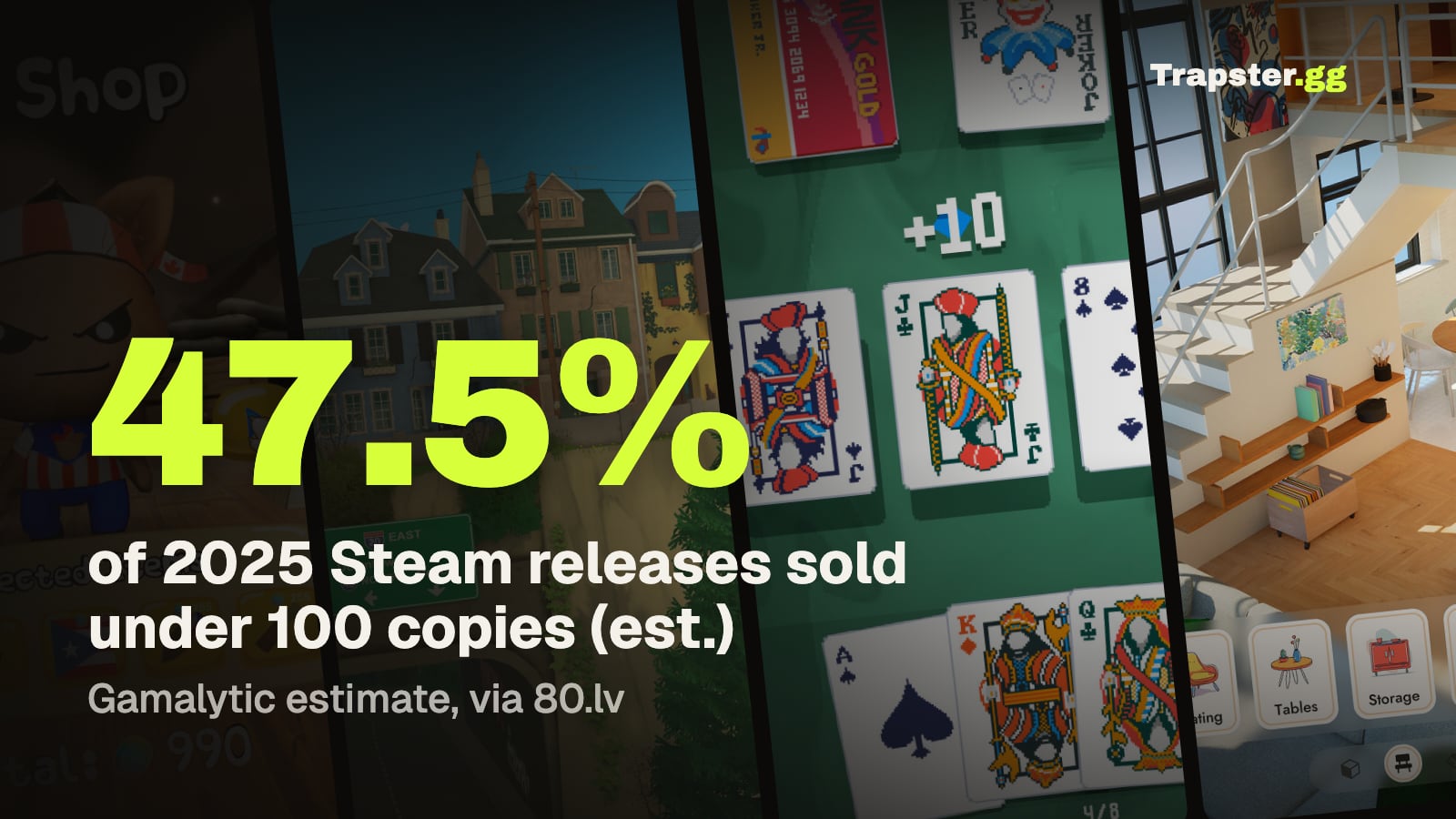
How Many Copies Do Indie Games Sell? Real Steam Numbers by Tier
Most Steam indie games sell under 1,000 copies. Real numbers by tier…
Game Marketing Hook: How to Find, Test and Show Yours
What a game marketing hook is, how to test one cheaply with…
How to Name Your Game: Searchable, Memorable and Legally Safe
How to name your game: pass the Steam, Google and trademark checks…