Steam Demo vs Prologue: Which One Should Your Indie Game Ship?
A Steam demo attaches to your game. A prologue is a separate free app with its own page and reviews. What Valve allows, pros and cons, real results.
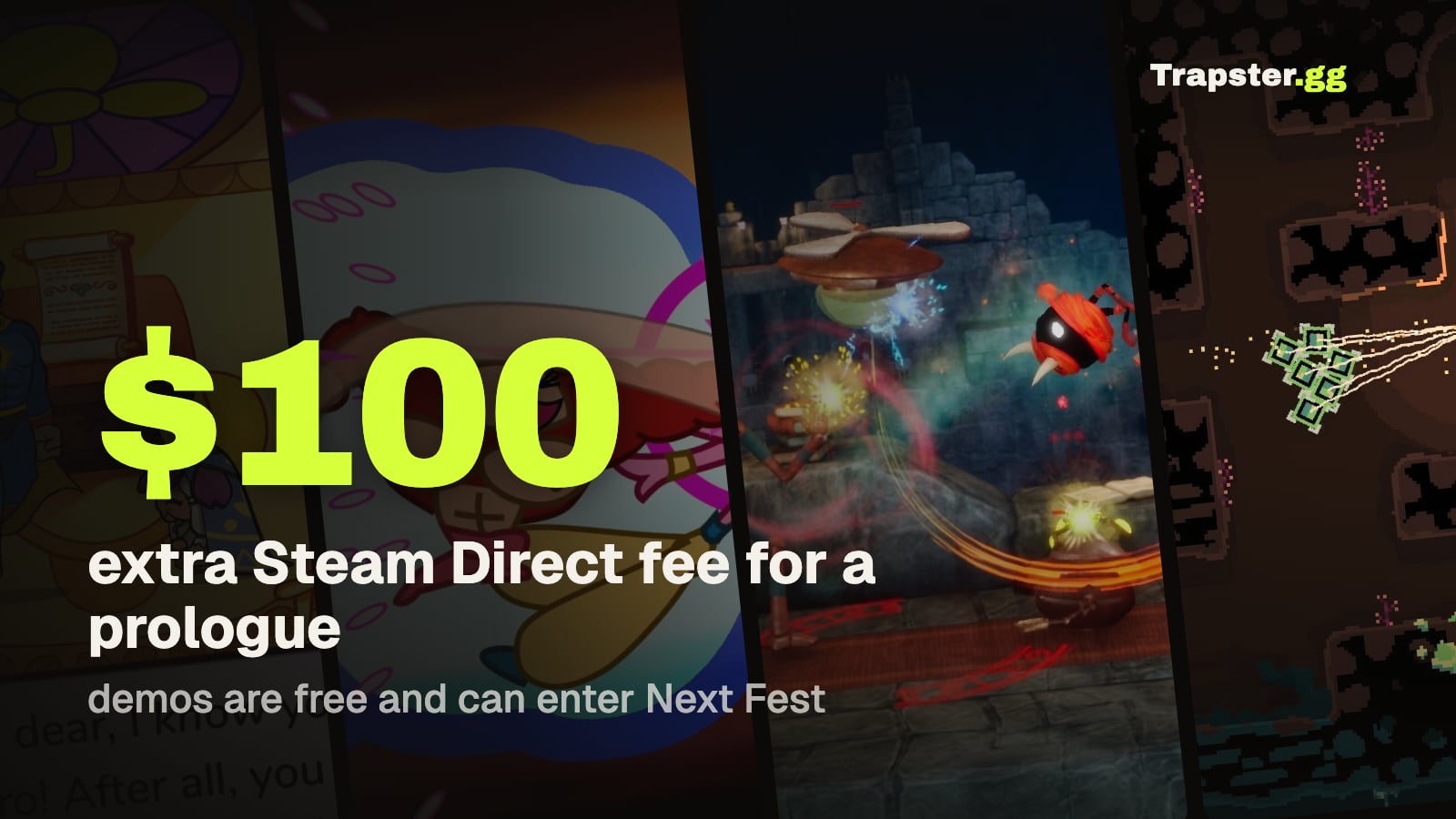
Short answer: A Steam demo is a separate app of type "demo" that Steam attaches to your base game, while a prologue is a free standalone game with its own App ID, store page, reviews and wishlists. Valve's demo documentation says a demo can now have its own optional store page with user reviews and can "appear anywhere in Steam that a free game could appear," which closed most of the gap that made prologues popular before the July 2024 demo update. The prologue still costs a separate $100 Steam Direct fee and is explicitly banned from Steam Next Fest. For most indie games in 2026, ship a demo first, and only consider a prologue if your game already has strong momentum and you have new content to give it.
What a Steam demo actually is
Valve treats a demo as its own app that belongs to your game. Per the Steamworks demo docs, you create it from the base game's "All associated packages, DLC, demos and tools" page, set the application type to "Demo," and enter the base game's App ID. It needs depots and builds like any app, and it goes through build review.
What players see:
- A "Download Demo" button on your base game's store page. You choose between a subtle sidebar link or a more prominent green box under "Associated Demos" in Special Settings.
- Optionally, a separate demo store page. Valve requires it to be "specific to the demo," with a demo trailer and at least five demo screenshots, and capsules that make clear it is a demo.
- If you turn on the demo store page, demo players can leave user reviews there. If you don't, the demo has no reviews.
- No community hub of its own. Demo players are pointed back to the full game from their library.
On visibility, Valve's wording is direct: demos "can appear anywhere in Steam that a free game could appear," including New & Trending, tag pages and genre pages. You also get one wishlist notification: Valve says it "may only be triggered once, within 14 days of the demo releasing to players for the first time."
On timing, Valve's default advice is cautious. The docs say "We generally recommend waiting until launch," and then add that "there are circumstances where putting a demo out prior to release is effective." In practice, most indies ship one before launch anyway, because Steam Next Fest only accepts unreleased games with a public demo.
What a prologue is
A prologue is not a Steam feature. It is a marketing pattern: you register a second, free game (for example "Your Game: Prologue"), give it its own store page, and use it to send players to the main game's page. On Steam's back end it is a normal game, not a demo. You can see this in Steam's own store data, where Ship Graveyard Simulator: Prologue and Epiphany City: Prologue are listed as type "game," while the Dome Keeper Demo is listed as type "demo" with Dome Keeper as its full game.
That one difference drives everything else:
- It costs a new app fee. Valve charges "$100 USD (or equivalent) fee for each new app," recoupable only after the product reaches $1,000 in adjusted gross revenue (Steamworks app fee). A free prologue earns nothing, so treat the $100 as spent.
- It gets its own reviews, followers and wishlists, separate from your main game.
- It gets its own coming soon page and release, so it can try to appear in upcoming and new release lists on its own.
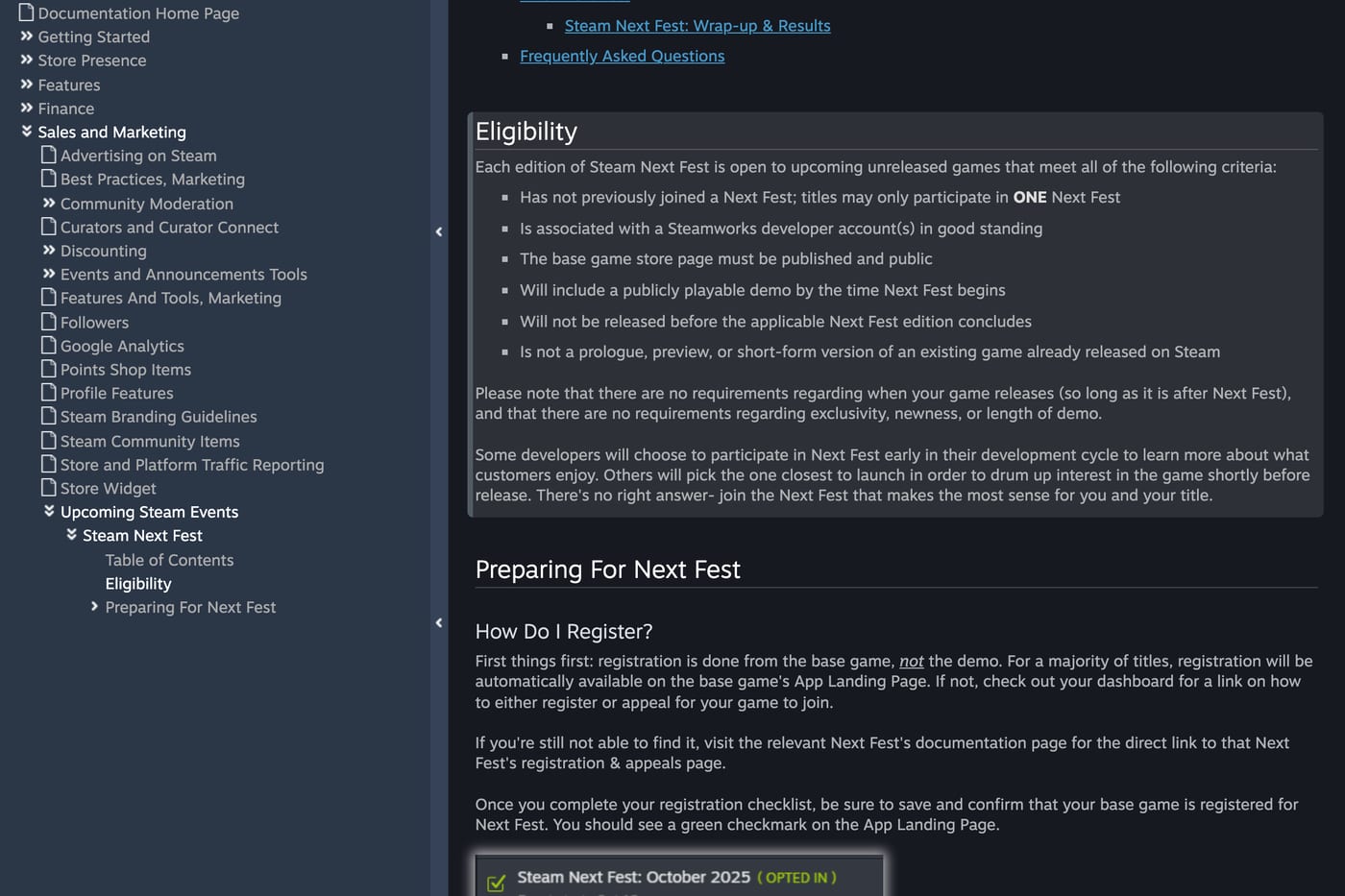
- It is shut out of Next Fest. The Next Fest rules exclude anything that is "a prologue, preview, or short-form version," and the FAQ adds: "Prologues, Chapter Ones, and other short-form previews of another title are also not allowed in Steam Next Fest. Please sign up with your base game." (Next Fest docs)
Chris Zukowski of How To Market A Game described it in 2020 as a free, separate package that ends on a cliffhanger to drive wishlists (HTMAG, 2020), and later named it "the Prologue trick" (HTMAG, 2023).
Demo vs prologue vs playtest at a glance
| Steam demo | Free prologue | Steam Playtest | |
|---|---|---|---|
| App type | Demo, attached to base game | Standalone free game | Separate App ID linked to base game |
| Extra Steam Direct fee | None, created from base game's packages page | $100, effectively not recouped | None, created from base game |
| Own store page | Optional (since July 2024) | Yes, always | No, sign up button on main page |
| User reviews | Only if demo page is on | Yes, always public | Playtesters "cannot review your actual game" |
| Wishlist email to base game wishlisters | Once, within 14 days of first release | No built in trigger for the base game | Not a demo release, no email |
| Next Fest | Required | Not allowed | Allowed, but Valve advises against running one during the fest |
| Main risk | Weak demo hurts first impressions | Splits audience, public reviews, extra builds | Few players unless you drive sign ups |
Sources: Steamworks demo docs, Steam Playtest docs, Next Fest docs, HTMAG on the 2024 demo update.
Why prologues existed, and what changed in July 2024
Before mid 2024, a demo lived only on the base game's page. A prologue was the only way to get a free, reviewable product with its own page that could chart. A June 2024 Game*Spark article explained the boom exactly this way: demos had no store page of their own, a prologue registered as a separate product did, and many developers thought the $100 was worth it. The same piece noted player complaints on Reddit that Steam lets you filter out demos in search but not prologues, so prologues cluttered the free games lists.
Then Valve shipped the demo update in July 2024. Zukowski summarized the effect as "a button you can push that says 'more visibility'" (HTMAG, July 2024). His key points, which match the current docs:
- A demo can have its own page that launches like a coming soon page.
- Demo reviews can be turned on or off.
- You pick the exact send time of the demo notification, within two weeks of the first playable date.
- A demo that crosses an undisclosed threshold can sit on New & Trending next to full releases.
- Demos are "not subject to Discovery Queue featuring."
- Playtests and betas do not count as a demo release and do not trigger the email.

In August 2024 Zukowski updated his prologue guide with a warning that the trick is "probably going away soon" because of these demo changes. We have not found a Valve statement banning prologues, so they still exist. They just lost their main advantage.
Pros and cons of a Steam demo
Pros
- One audience. Wishlists, followers and reviews all point at your real game.
- The wishlist notification goes to people who already wishlisted the base game, and per Zukowski also to followers of your developer and publisher page.
- It is your ticket into Next Fest and most curated festivals.
- Valve keeps your demo's discovery tied to the full game: the demo page links back, and the library shows a link to the full game.
Cons
- You get one demo notification per launch window. If you waste it on an early, buggy build, it is gone.
- If you turn on demo reviews, a rough build earns a public score.
- Valve does not support matchmaking between demo and full game players, which matters for multiplayer games.
For the step by step on building and launching one, see our guide on how to market a Steam demo.
Pros and cons of a free prologue
Pros
- A second shot at new release visibility. A prologue releases as a free game, so it can try for the same lists any free release can, separate from your demo and your launch.
- Its own page can run its own events and updates.
- It can be a different slice than your demo. Zukowski's advice was that a prologue has to differ from the demo: "You must give them something novel," otherwise players have no reason to grab it.
Cons
- Audience split. Players may wishlist or follow the prologue instead of the main game. Zukowski flags this "prologue confusion" and recommends a store page and title screen that point hard at the main game.
- Public, permanent reviews on a separate product.
- Three builds to maintain if you also run a demo for Next Fest and the full game.
- It cannot enter Next Fest, and it will not fix a game with no visibility. Zukowski's 2023 guide suggested the trick mainly for games already earning roughly 40 to 100+ wishlists a day, with a target of around 7,000 wishlists on the prologue's coming soon page before release.
- Lower quality wishlists. More on this below.
Real examples: prologues
Backbone (EggNut). Zukowski reported in 2020 that the roughly 1.5 hour prologue had about 150,000 downloads, about 95,000 wishlists for the unreleased full game and 2,444 reviews, with the developer saying Steam recommendations still brought 300 to 500 downloads and wishlists a day (HTMAG, 2020). These are numbers shared by the developer.
Soulstone Survivors. Zukowski estimated about 130,000 wishlists came from its prologue before launch, more than the game earned from Steam Next Fest, where it was featured (HTMAG, 2023).
Fly Punch Boom (Jollypunch Games). The prologue Fly Punch Boom: First Impact! had 445 reviews, rated Very Positive, by January 2021, and the developers reported 20,000+ unique players and thousands of full game wishlists in its first week. The full game had 62 reviews after its May 2020 launch, which Simon Carless estimated at roughly 2,000 to 3,000 copies (GameDiscoverCo, 2021).
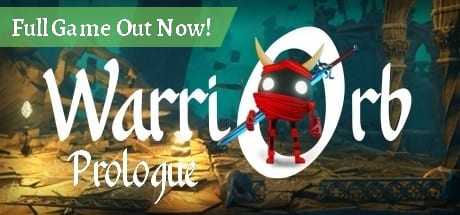
WarriOrb. The developers reported on r/gamedev that WarriOrb: Prologue was claimed by about 80,000 people, and the full game had over 16,000 wishlists and a Popular Upcoming slot, yet the full game sold 357 copies in its first 3 days, 178 of them from wishlists (GameDiscoverCo, 2020). Carless suspected demo related wishlists can be "significantly worse-quality."
Epiphany City. Developer David Elliot reported the main game gained 866 net wishlists in a month after Epiphany City: Prologue launched, with daily wishlists rising from about 1 to 3 to about 10 to 30. He also noted that 10,302 people added the prologue to their library but only 1,455 started it (GameDiscoverCo, 2021).
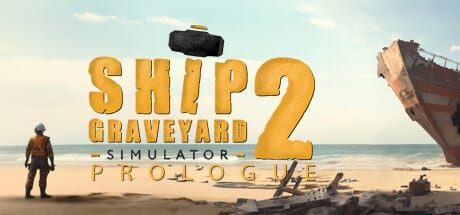
Ship Graveyard Simulator. Its prologue passed 100,000 players in under a week, per a Steam news post Carless cited (GameDiscoverCo, 2021). The developer later released Ship Graveyard Simulator 2: Prologue in April 2023, which suggests the team saw value in the first one.
Rubber Bandits (Flashbulb Games). A regular demo at two Steam festivals did poorly for wishlists, while a Christmas themed prologue produced a large wishlist spike helped by YouTube coverage (GameDiscoverCo, 2021).
Dreamscaper vs Train Station Renovation. Carless found Dreamscaper's prologue went viral with almost 2,000 reviews but had a weak prologue to full game ratio, likely because it gave away 4 to 6 hours of content. Train Station Renovation and Summer in Mara did better on that ratio by giving away less. In his words, Train Station Renovation "genuinely feels like a teaser" (GameDiscoverCo, 2021).
The pattern: prologues can produce big download and wishlist numbers, but conversion depends on giving away a short slice, not a free game.
Real examples: demos
Dome Keeper (Bippinbits). Before its demo launched in February 2022 alongside the Games of Germany festival, the game had 1,174 wishlists and 137 followers. The demo earned about 40,000 wishlists in its first month as YouTubers like Retromation and Splattercat picked it up, and the game launched with over 180,000 wishlists (HTMAG, 2022). Median demo playtime was 1 hour 30 minutes, against about 25 minutes for a typical indie demo.
CleanFall. The first case Zukowski tracked after the July 2024 update. With about 1,800 wishlists and 173 followers, the developer launched the demo on a Friday, reached New & Trending by Saturday, and grew to about 6,000 wishlists with over 6 million impressions. A YouTuber with 166,000 subscribers played it at launch too, so the cause is not clean (HTMAG, 2024).
Peglin and Soulstone Survivors. In the same article, Zukowski shows Peglin's followers flat for a year until a demo and a PAX feature, and Soulstone Survivors' traffic flat until its demo, after which it never fell back to zero.
Where Steam Playtest fits
Playtest is the third option, and it solves a different problem. Valve built it so developers could test "without stressing out about Steam keys, user reviews, or wishlists" and control when a test starts and stops (Steam Playtest docs). Key facts:
- It is a separate App ID, but "The Playtest will not have its own store page." Players join from a button on your main page.
- Sign up is limited by default, so you grant access in batches. You can switch to open sign up.
- Playtime, wishlists, reviews and refunds stay separate, and playtest players "cannot review your actual game."
- Valve says it replaces old workarounds like "offering a demo that was really just an Open Beta."
Use a playtest when the build is not ready to be judged in public. Use a demo when it is. Zukowski's 2024 advice was to run a playtest with strangers before the public demo launch and fix bugs first, because the demo notification only fires once. Our Steam Playtest guide covers setup and recruiting.
How to decide
- Start with a playtest if the build still has major bugs, UX problems or difficulty spikes. Nothing public, no reviews, no notification spent.
- Ship a demo when strangers can play it without hand holding. Turn on the demo store page if you want reviews and a standalone presence, and time the launch so the wishlist email lands with your festival or creator coverage.
- Enter Next Fest with that demo. It is the only option Valve accepts.
- Consider a prologue only if all of these are true: your game already gets steady daily wishlists, you have a separate slice of content that is not your demo, you can keep a third build stable, and you accept that its reviews will be public forever. Name it clearly, for example "Your Game: Prologue." Zukowski noted that 20 Minutes Till Dawn's prologue, titled "10 Minutes Till Down," confused players.
- Measure the right thing. Track wishlists on the main game and, later, wishlist conversion. Library adds and prologue downloads are vanity numbers, as Epiphany City's 10,302 adds versus 1,455 starts showed.
One more practical point: in most of the cases above, the demo or prologue was not working alone. Dome Keeper's 40,000 wishlists came with a wave of YouTube coverage, and CleanFall's launch overlapped with a YouTuber playing it. If you plan that, our breakdown of creator views to Steam wishlists gives realistic ratios.
FAQ
What is the difference between a Steam demo and a prologue?
A demo is a demo type app attached to your base game, with an optional store page. A prologue is a separate free game with its own App ID, store page, reviews and wishlists, and it costs another $100 app fee.
Can a Steam demo have reviews?
Yes, since July 2024. If you enable a separate demo store page, players can leave reviews there. Without a demo store page, the demo has no reviews.
Can a prologue be in Steam Next Fest?
No. Valve's Next Fest rules say prologues, "Chapter Ones" and other short form previews are not allowed. You enter with your base game and its attached demo.
Should I release a free prologue on Steam in 2026?
Usually not as your first move. Most of the visibility benefits now come with a demo store page. A prologue makes sense only if your game already has momentum and you have separate content to give it.
Does a prologue's wishlist count toward the main game?
No. A prologue is its own product, so its wishlists, followers and reviews are separate. Your call to action has to push players to wishlist the main game.
Does a Steam demo send an email to wishlisters?
Yes, once. Valve allows one wishlist notification within 14 days of the demo's first release. Playtests and betas do not trigger it.
Is Steam Playtest better than a demo?
It does a different job. A playtest has no store page and no public reviews of your game, so it suits unfinished builds. A demo is public and is what you need for Next Fest.
Sources: Steamworks demo documentation, Steam Playtest documentation, Steam Next Fest documentation, Steam Direct app fee, How To Market A Game: Steam's 2024 demo update, How To Market A Game: the Prologue trick, How To Market A Game: Dome Keeper launch, GameDiscoverCo: Steam prologues, do they really help?, GameDiscoverCo: revisiting the prologue, GameDiscoverCo: when wishlists don't convert, Game*Spark on prologues; checked November 2026.
Get a wishlist forecast for your game
Send us your Steam page. We estimate views, creators and cost per wishlist before you spend anything.
Keep reading
How Many Copies Do Indie Games Sell? Real Steam Numbers by Tier
Most Steam indie games sell under 1,000 copies. Real numbers by tier…
Game Marketing Hook: How to Find, Test and Show Yours
What a game marketing hook is, how to test one cheaply with…
How to Name Your Game: Searchable, Memorable and Legally Safe
How to name your game: pass the Steam, Google and trademark checks…