How Steam's Algorithm Decides Who Sees Your Game
What Valve says drives Steam visibility: sales, playtime, tags and languages, and what it says does not count: traffic, conversion and most wishlists.
Short answer: Steam's algorithm shows your game to more people when people buy and play it. Valve calls that "a strong signal" (Steamworks visibility docs), and most surfaces follow from it: Top Sellers ranks by revenue, New & Trending picks games that are doing well, and Valve's recommender learns from what players actually play. Just as useful is what Valve says doesn't count: store page traffic, conversion rate, review score as long as it stays Mixed or above, and wishlists apart from a few exceptions like Popular Upcoming. You can't pay for placement.
What Valve says counts, and what doesn't
| Signal | Effect on visibility | Source |
|---|---|---|
| Sales and playtime | The main signal: "Are people buying and playing your game?" | Visibility docs |
| Language support | Steam is more likely to show your game to players who speak a supported language | Visibility docs |
| Top 20 tags | Decide which tag pages, More Like This and recommendations you can appear in | Tags docs |
| Wishlists | Not a factor in algorithmic visibility, "with a few exceptions like the Popular Upcoming tab". They do put your game in upcoming lists and featured spots for the players who wishlisted it | Visibility docs, wishlist docs |
| Store page traffic | Not a factor by itself, though the sales it brings are | Visibility docs |
| Conversion rate | Not a factor | Visibility docs |
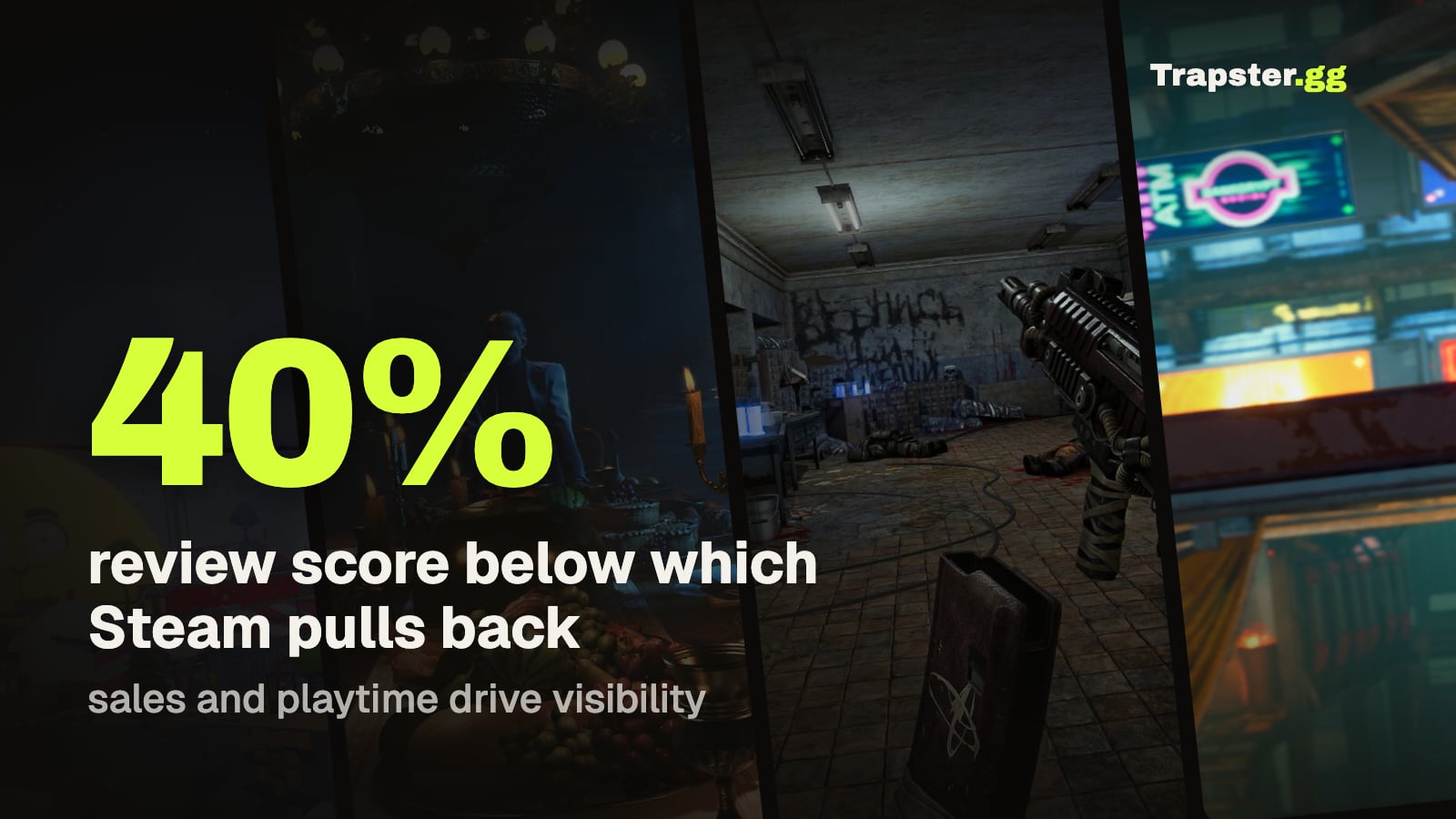
| Review score | Not a factor at 40% or above. Below 40%, less likely to be featured | Visibility docs |
| Paying Valve | Not possible. Valve's answer is "Nope" | Visibility docs |
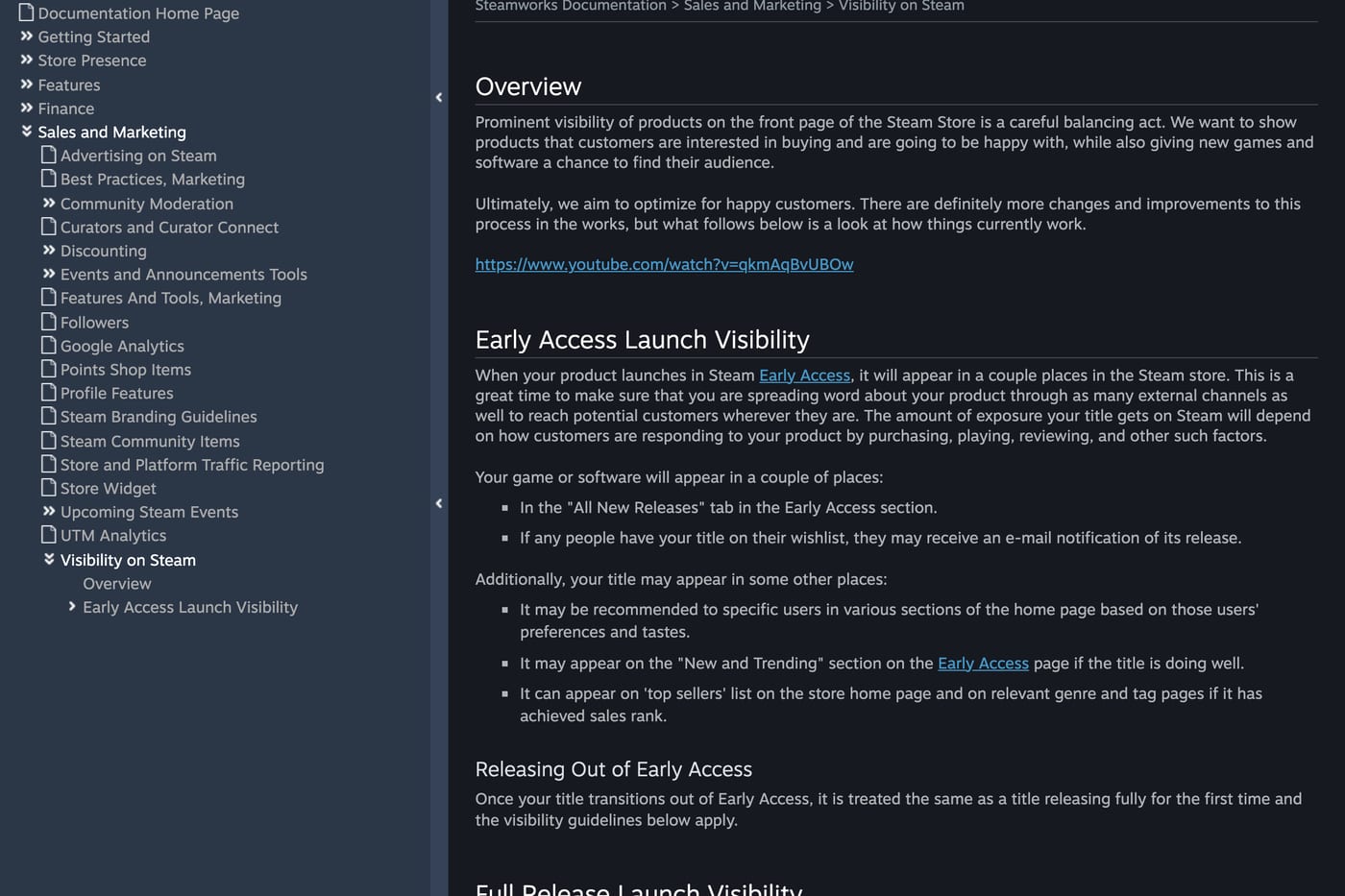
That table is the core of Steam marketing. Steam doesn't reward you for collecting traffic. It rewards you for turning traffic into players. Everything you do outside Steam, creator videos, ads, festivals, works by producing sales and playtime that Steam's systems then multiply.
Surface by surface
Launch: New Releases and New & Trending
When you release, the game enters the New Releases queue and the All New Releases list, and Steam emails everyone who wishlisted it. The New Releases queue is built from fresh releases, "prioritizing the titles that have the least amount of views since release." If the game is doing well, it can show up in New & Trending, but it may be bumped off quickly when many popular games release at the same time (visibility docs).
Leaving Early Access counts as a full release and gets launch visibility again. More in Steam Early Access.
Top Sellers
Top Sellers ranks games by total revenue, including DLC and in-game purchases. The same method drives the home page tab and the genre and tag pages, and Steam builds country specific lists for its biggest markets (Valve, 2022). Weekly charts show the top 100 by revenue, and the monthly Top Releases list ranks each month's new games by their first two weeks of revenue (Valve, 2025).
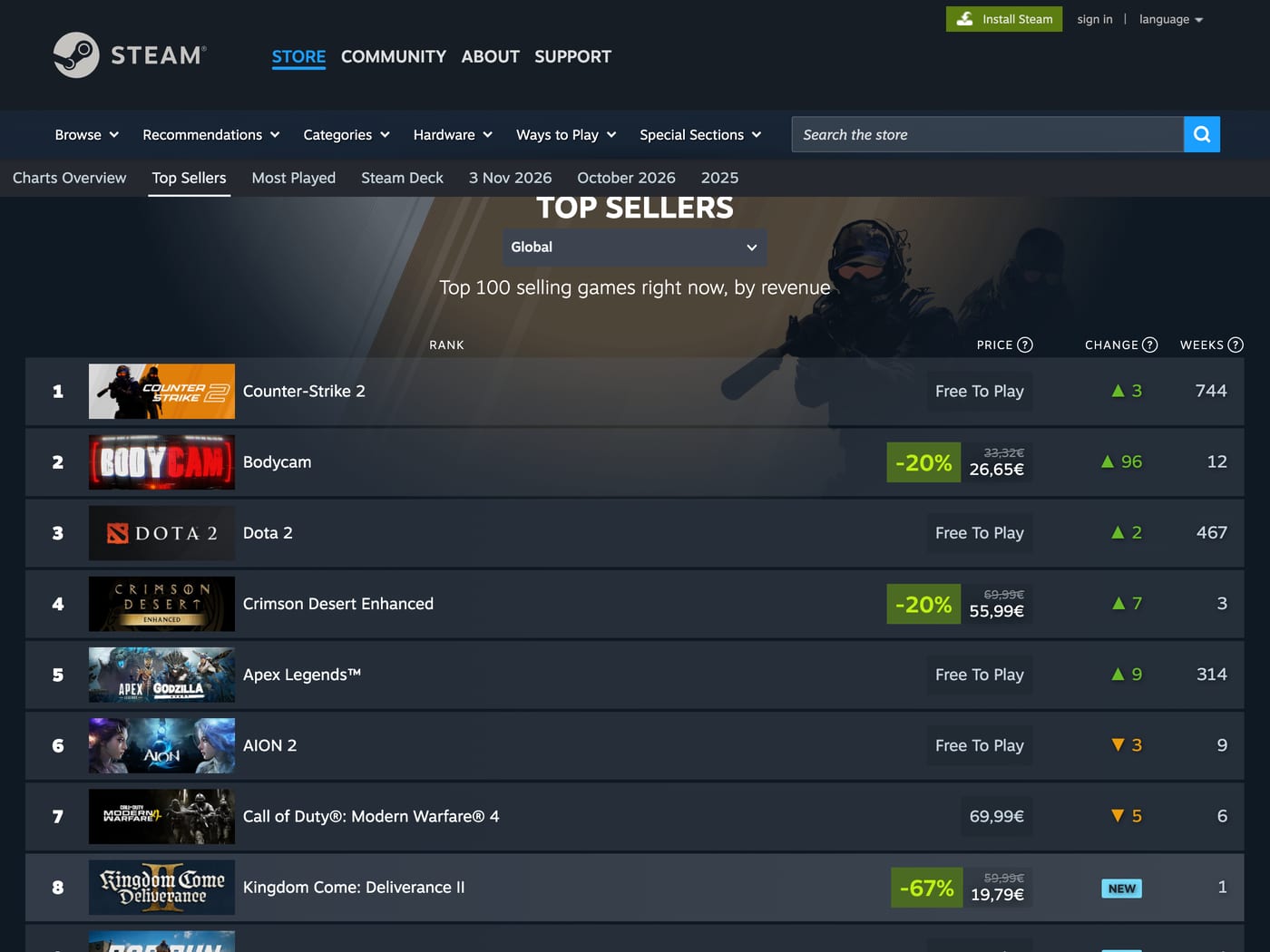
For an indie game this means a regional or tag level Top Sellers list is far more reachable than the global one. A concentrated launch week, where sales land in the same days, matters more than the same sales spread over a month.
Popular Upcoming and upcoming lists
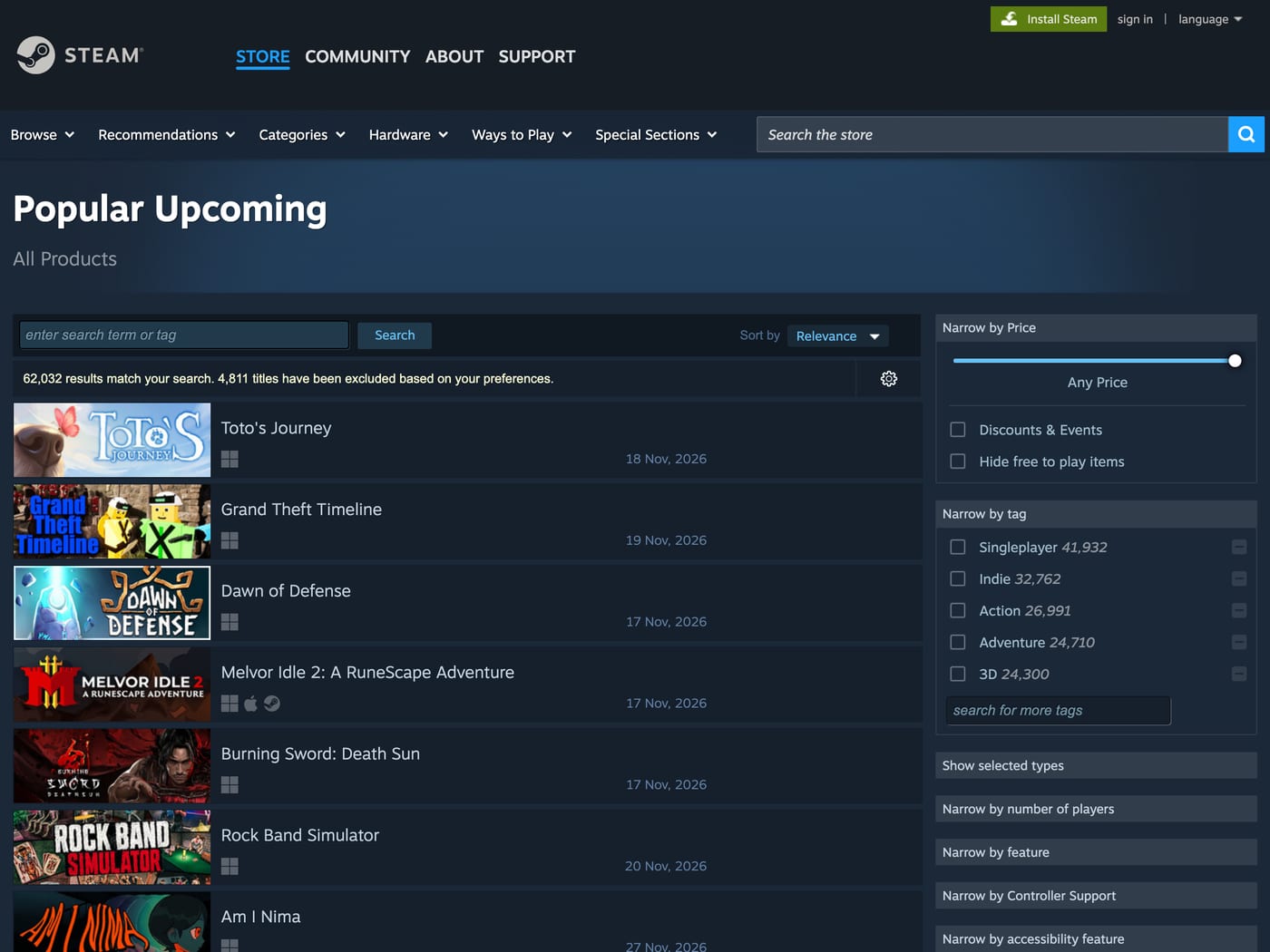
The clearest place where wishlists count. Valve's wishlist docs also say wishlists "can be an important factor in determining where your game appears on Steam", for example in upcoming lists and featured sections shown to players who wishlisted it (wishlist docs). Popular Upcoming uses wishlists, pre-purchases and a developer's or publisher's past titles. Valve monitors it against manipulation, and when asked whether friends wishlisting a game can push it up, its answer was "Yes but probably no" (Valve, 2018).
Personal Calendar
Since June 2026 the store front page has a personal calendar of new and upcoming releases. It finds players with play habits similar to each player and shows the upcoming games those players have wishlisted, so wishlists from the right players matter here. Your game needs a visible Coming Soon page with a specific release date to appear. The full rules are in Steam Personal Calendar.
The home page and the recommender
The main capsule on the home page is "driven by what players spend time and money on, rather than Valve curation" and is different for every player (visibility docs).
One of Steam's recommendation systems is Valve's Interactive Recommender, a neural network trained on players' playtime history. Valve calls it one discovery element among many, added to existing systems rather than replacing them (Valve, 2019). Three details matter:
- It doesn't use tags or review scores. Valve: "reviews or tags alone simply cannot affect results."
- It needs players. It can't recommend a game with no players yet, but picks up new releases after a few days of data.
- Playtime is normalised per game, so short games aren't penalised.
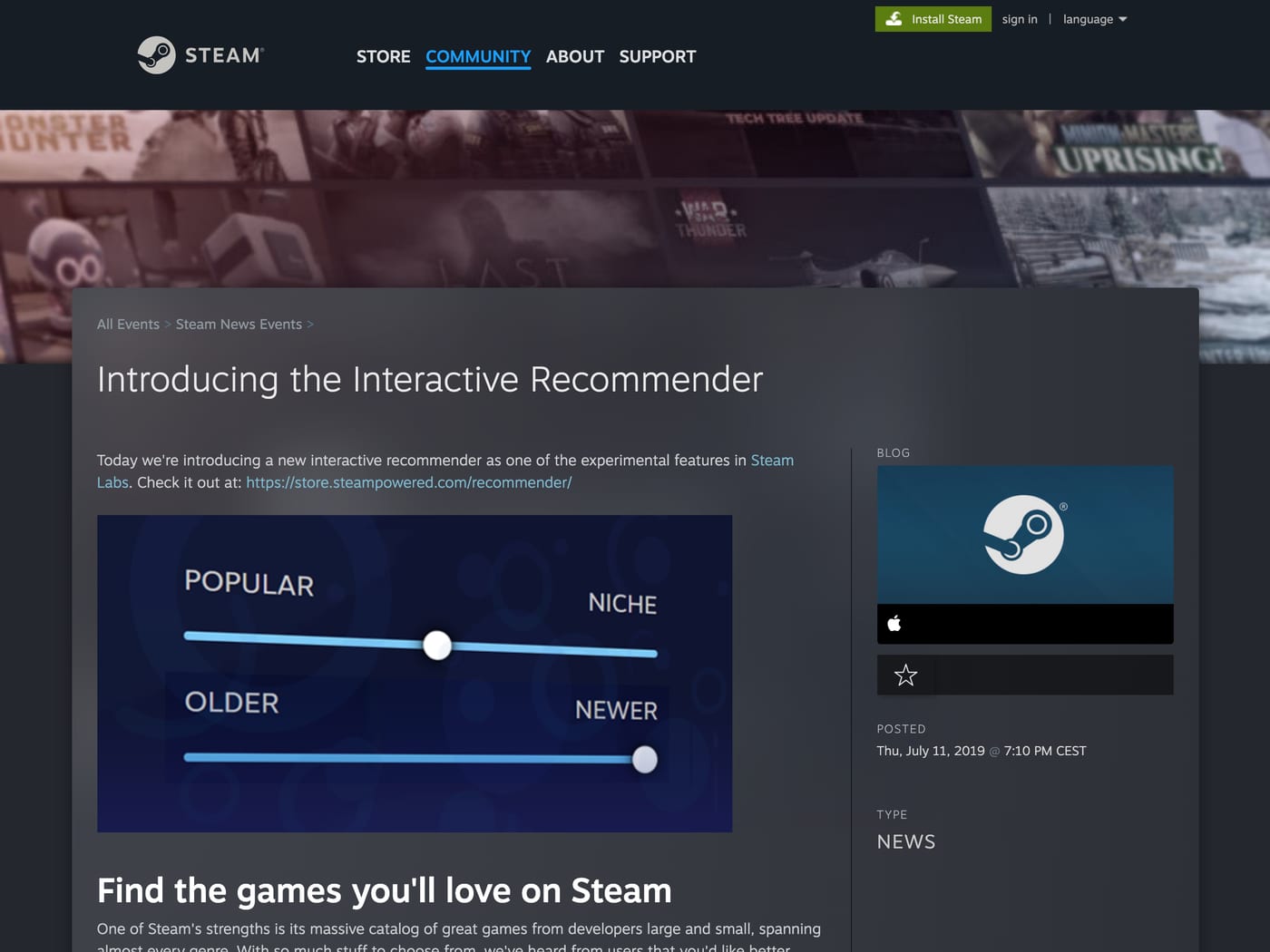
Valve's own advice for this model: "make a game that people enjoy playing." In 2020 Valve started using it in home page recommendations, and on game pages you may see "Players like you love this game" as the reason a game is shown (Valve, 2020).
Tag pages, More Like This and search
Your top 20 tags decide which tag pages you can appear on and which games More Like This puts you next to. For recommendations, overlap between tags matters more than their order, and some of Steam's recommendation algorithms weigh rare tags more than common ones like "Action" (tags docs). Tag and genre hubs are personalised by each player's history, friends, followed developers and wishlist (Valve, 2022). Getting tags right is covered in Steam tags explained.
Discovery Queue
Valve's documentation says only that a game might appear in the Discovery Queue. Valve has said the recommender "can't fill the role played by the Discovery Queue in surfacing brand new content", which suggests the queue gives newer games more room, but there is no published formula (Valve, 2019). What we do know: a trailer there may get less than 10 seconds of attention (trailer docs).
Recently Updated
After launch, update visibility rounds put the game in front of people who own it or wishlisted it. Every game starts with five rounds, up to 30 days or 1 million impressions each, and Valve may grant more to games that sell well. See Steam update visibility rounds.
Reviews: a floor, not a ladder
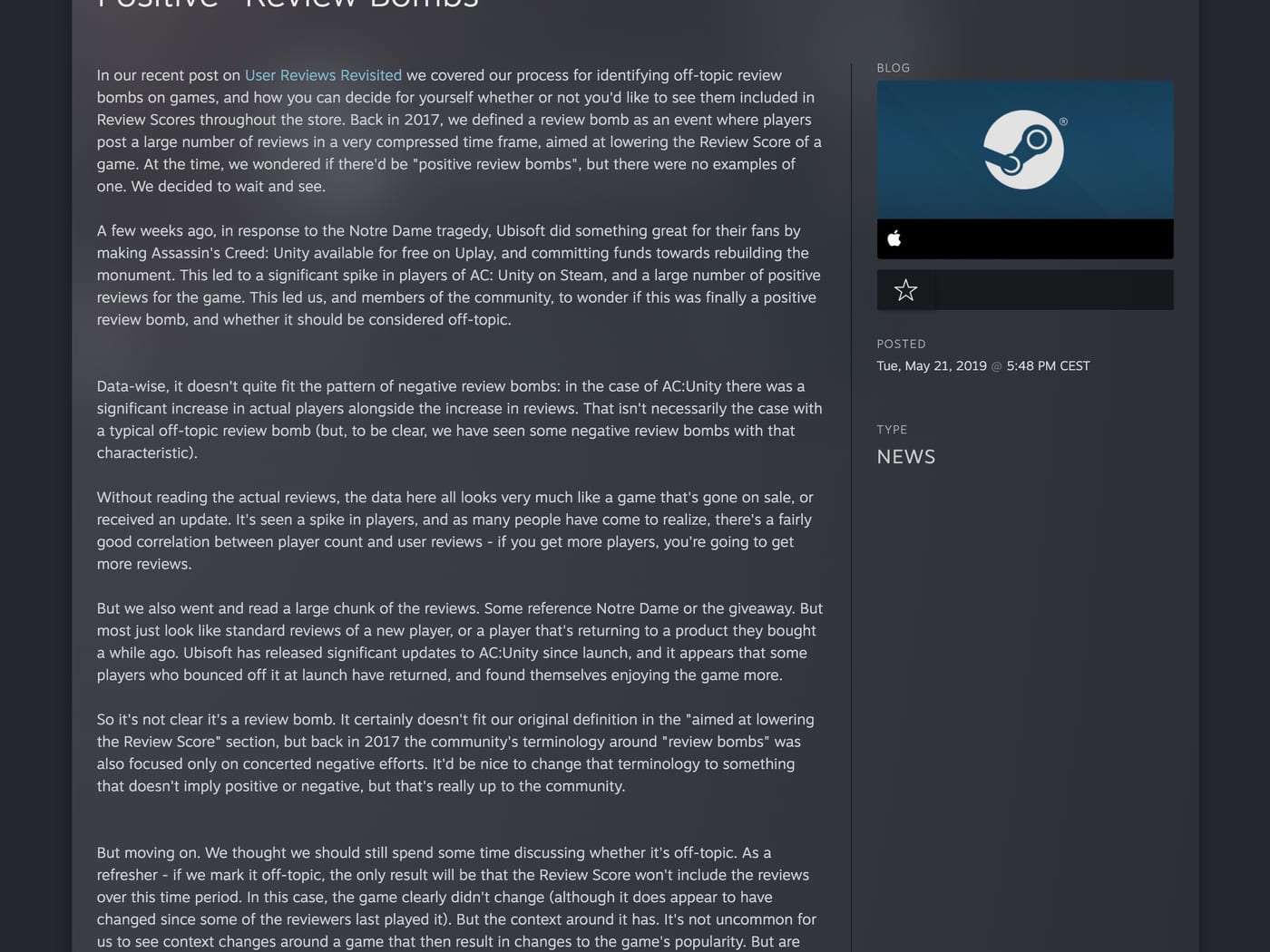
Valve gives games a small visibility boost by review bucket. That boost is "essentially the same" for every bucket from Mixed upward, and drops sharply below 40%: a Mixed game gets "over 500% more boost" than a Mostly Negative one (Valve, 2019). So moving from 80% to 90% positive doesn't help the algorithm, though it does help players decide to buy. Falling below 40% hurts a lot. More in how to get more Steam reviews.
What this means for your marketing
- Wishlists matter most for the launch email. Valve says they're not a factor in algorithmic visibility apart from a few exceptions like Popular Upcoming. Their big value is the email Steam sends at launch and on discounts, which fills launch week with buyers.
- Concentrate launch sales. New & Trending and Top Sellers react to sales happening now. Put creator videos, the wishlist email and your own posts in the same days. The plan is in how to market your Steam launch week.
- Players beat traffic. Since page visits and conversion rate aren't factors, a campaign is measured by sales and playtime, not clicks.
- Get tags and languages right. They're the two inputs you control directly.
- Keep reviews above 40%. Below it, Steam pulls back.
Where to see it
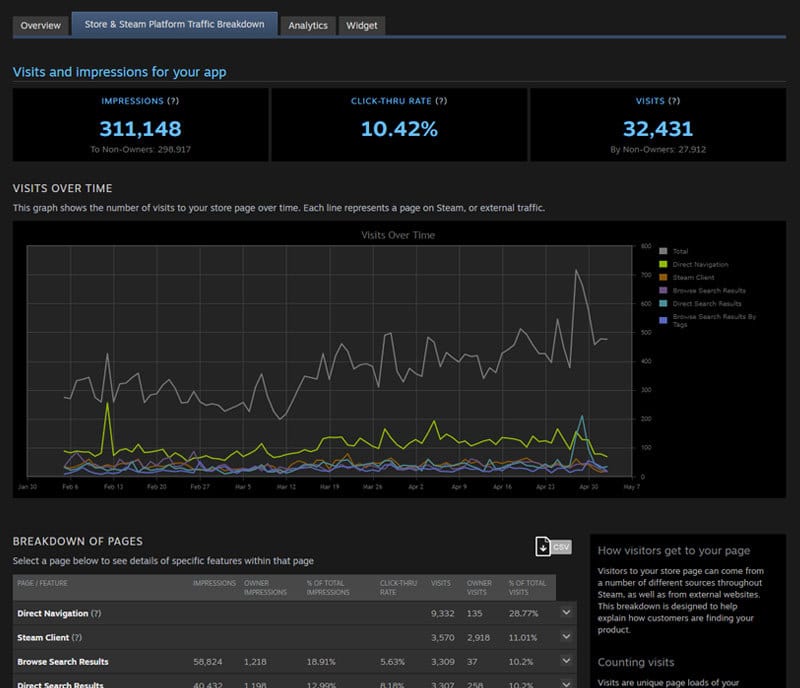
Steamworks has a traffic breakdown that shows impressions and visits by placement, region and source. Impressions count when your capsule is on screen, visits are unique page loads, and the click-through rate is visits divided by impressions (traffic reporting). Combine it with daily wishlists and sales, as described in how to see how many wishlists a game has on Steam.
FAQ
How does the Steam algorithm work? Valve says the main signal is whether people buy and play your game. Sales drive Top Sellers and New & Trending, and playtime drives personal recommendations. Tags and supported languages decide who you're shown to.
Do wishlists help the Steam algorithm? Only a little. Valve says they're not a factor in algorithmic visibility, with a few exceptions like Popular Upcoming and the Personal Calendar, and they place your game in upcoming lists for the players who wishlisted it. Their main value is the email Steam sends wishlisters at launch and on discounts.
How does Steam Top Sellers work? It ranks games by total revenue, including DLC and in-game purchases, with country specific lists for the biggest markets.
Do Steam reviews affect visibility? Only at the bottom. Above 40% positive, the score isn't a factor. Below it, the game is less likely to be featured.
Can you pay Steam for visibility? No. Valve says you can't pay to be shown to more customers.
How long does launch visibility last on Steam? Valve doesn't publish a fixed length. It says update visibility rounds can start once launch visibility has ended, and Early Access games must wait two weeks.
Sources: Steamworks documentation on visibility, tags, trailers and traffic reporting; Valve announcements on Popular Upcoming (2018), the Interactive Recommender (2019) and (2020), review score boosts (2019), charts (2022), hubs (2022) and monthly Top Releases (2025). Checked November 2026.
Get a wishlist forecast for your game
Send us your Steam page. We estimate views, creators and cost per wishlist before you spend anything.
Keep reading
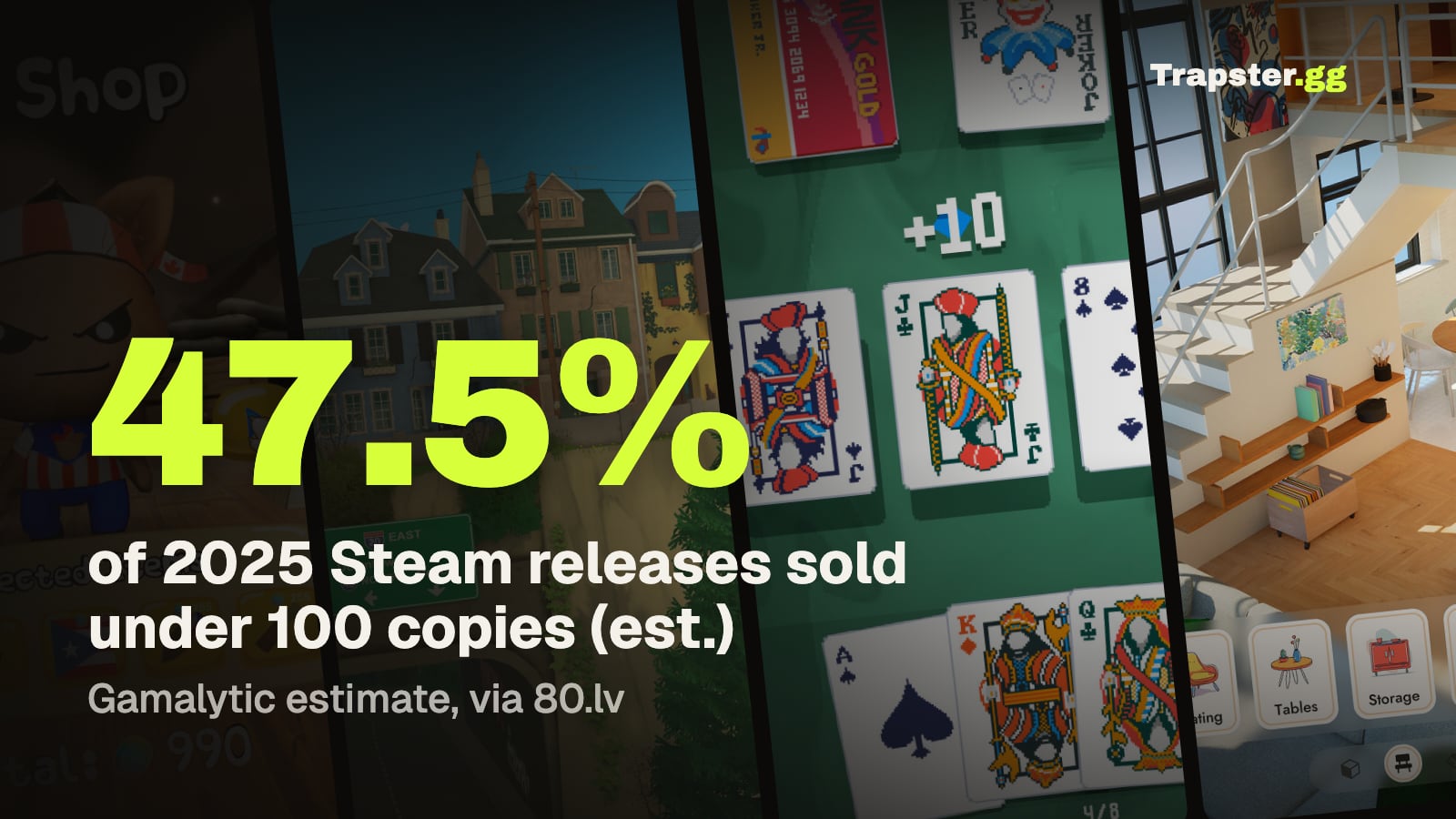
How Many Copies Do Indie Games Sell? Real Steam Numbers by Tier
Most Steam indie games sell under 1,000 copies. Real numbers by tier…
Game Marketing Hook: How to Find, Test and Show Yours
What a game marketing hook is, how to test one cheaply with…
How to Name Your Game: Searchable, Memorable and Legally Safe
How to name your game: pass the Steam, Google and trademark checks…