Steam Launch Checklist: From 12 Months Out to Launch Day
A Steam launch checklist with Valve's real timings: onboarding, store review, Coming Soon, the new build review checks and launch day steps.
Short answer: a Steam launch needs about a year of lead time for marketing and about two months for paperwork. Onboarding includes a tax check that can take up to 30 days and, for your first few games, a 21 day wait between paying the app fee and release. Store page review takes 3 to 5 business days, the Coming Soon page must be live at least two weeks before release, and build review currently takes up to 12 business days (Valve, November 2026). Below is the full checklist, from 12 months out to the hour you press Release.
12 months out: the store page and the wishlist engine
- Steamworks account set up. Company details, NDA and distribution agreement, $100 Steam Direct fee, bank details, tax interview and identity check (onboarding). The full process is in how to publish a game on Steam. The tax interview is verified by a third party and can take up to 30 days, so don't leave it for later.
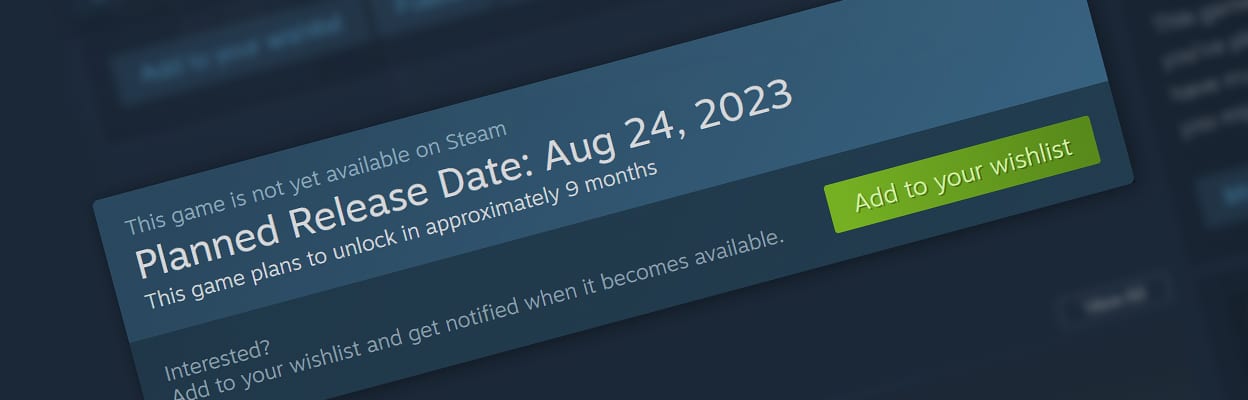
- Coming Soon page live. Valve's advice is to publish it "as soon as you are ready to start talking publicly about your game" (Coming Soon docs). How to judge that moment is in when to make a Steam page.
- Store page ready to convert: capsules, gameplay screenshots, a trailer that opens on gameplay, a clear short description and accurate tags. Use the Steam store page checklist and Steam tags explained.
- Release date set as a window. Steam lets you show an exact date, a month, a quarter, a year or just "Coming Soon", while keeping an exact internal date that Valve uses for reminders and Next Fest invites (release dates).
- Daily wishlist tracking. Check Steamworks every week and note what you posted. Here is where to find the numbers.
6 to 9 months out: find the hook
- Short clips every week on TikTok, YouTube Shorts and Instagram Reels, to learn which moments people watch. See how to make a devlog that gets wishlists.
- A first creator campaign to test hooks at scale and add wishlists. See how to find gaming influencers.
- Press kit and website ready: game press kit and indie game website.
- Festival plan. Pick your Next Fest edition and any showcases. Dates and deadlines are in indie game festivals 2027.
3 to 6 months out: the demo moment
- Demo or playtest. A demo is a separate app with its own build review. A Steam Playtest is a child app that doesn't touch your main game's reviews or wishlists (demos, playtest). How to choose is in Steam Playtest.
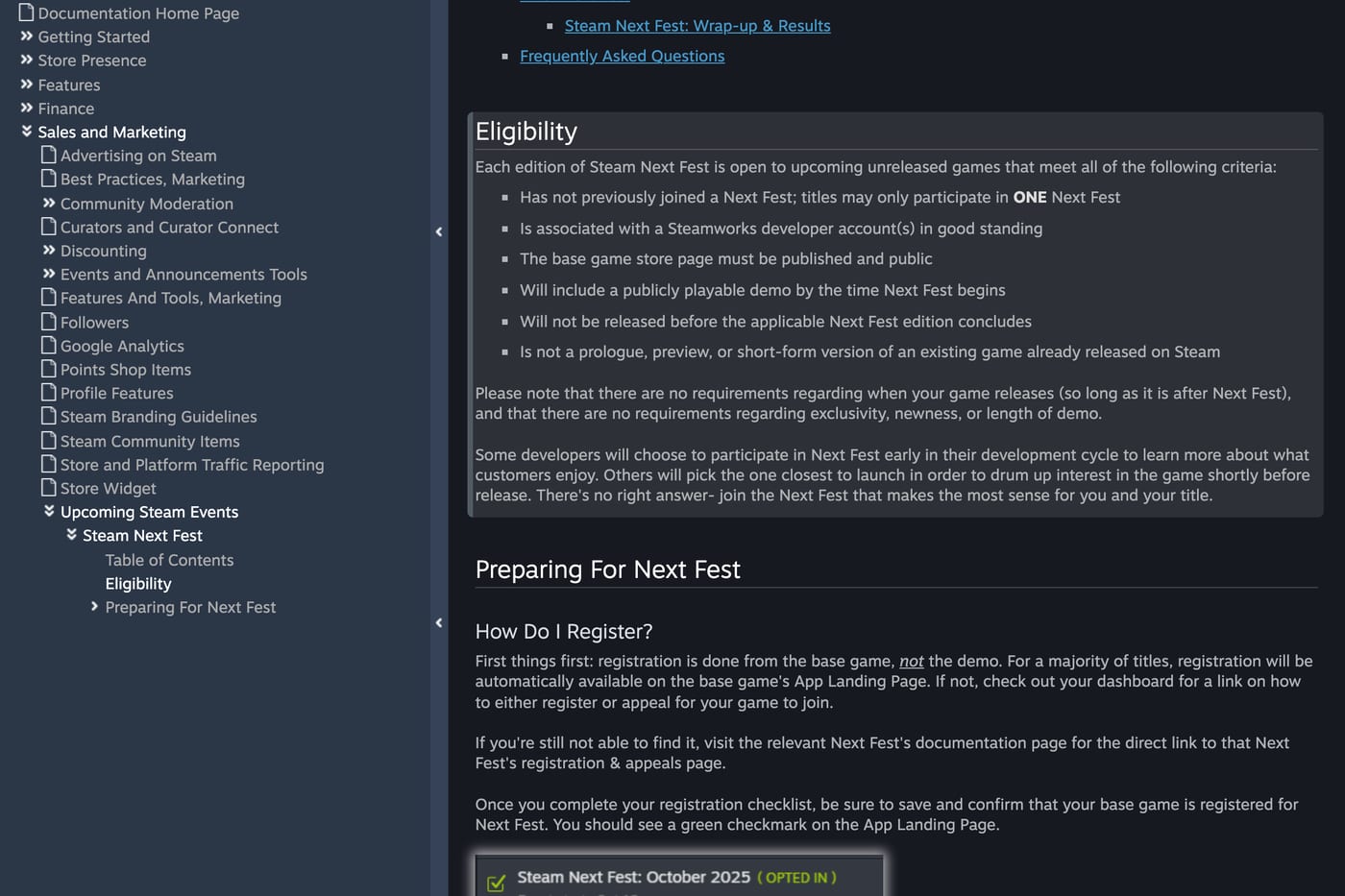
- Next Fest, if you're doing it. One Next Fest per game ever, a public demo by the start, and the game can't release before that fest ends (Next Fest docs). With build review at up to 12 business days, submit the demo well before Valve's three week deadline.
- A creator push in the same week as the demo or festival. See how to market a Steam demo.
8 weeks out: lock the date and the paperwork
- Pick the final date, avoiding weekends. Valve generally doesn't recommend weekend releases, partly because Steam support isn't available then. Check the 2027 sale calendar and avoid launching inside a big seasonal sale.
- Price set, including regional prices. See how to price your indie game and Steam regional pricing.
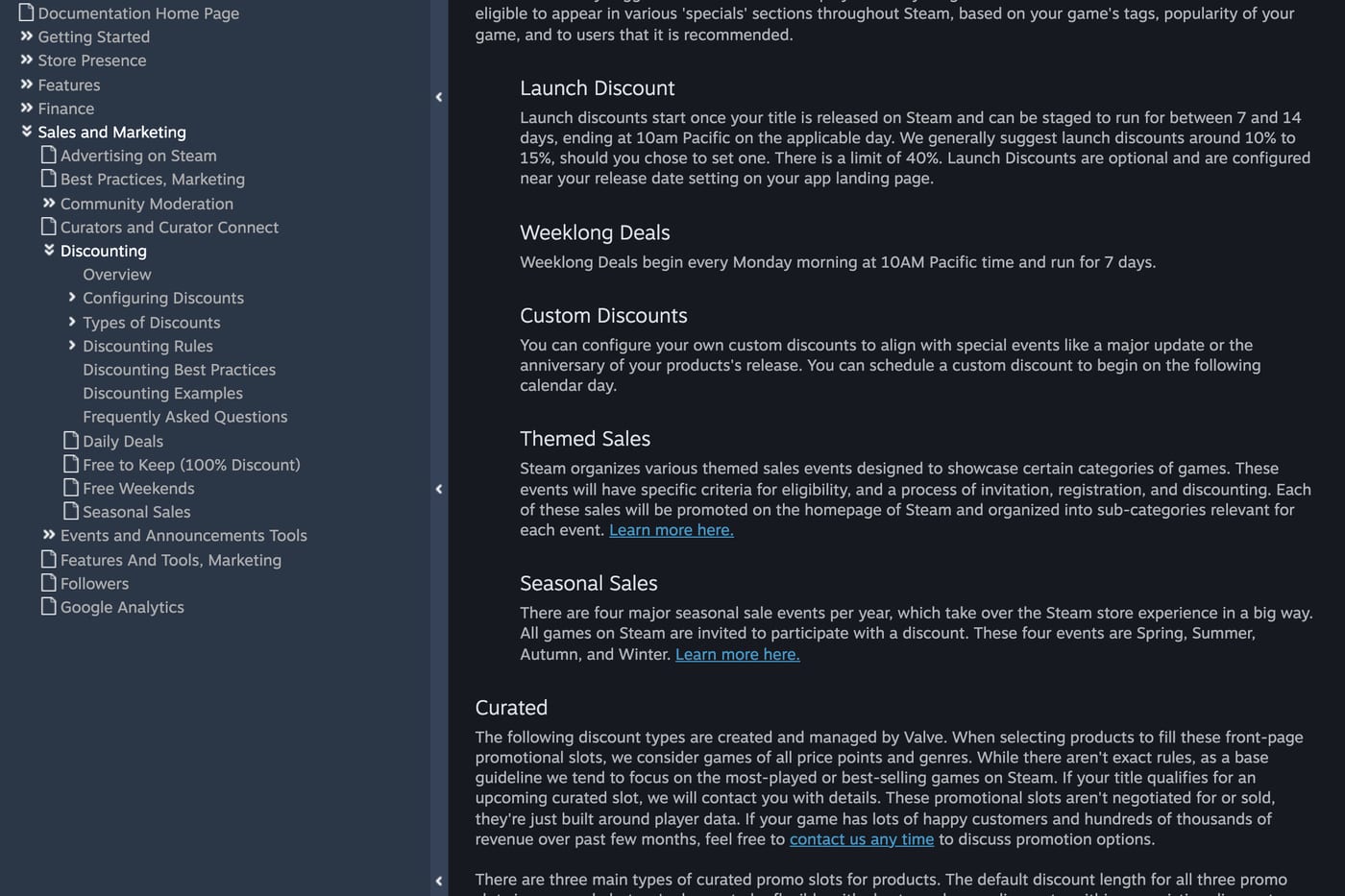
- Launch discount decided. 10% to 40%, running 7 to 14 days. Valve suggests around 10% to 15%. It can only be set up before release (discount docs).
- Book the release day creator campaign and send keys with an embargo time. See how to market your Steam launch week.
4 weeks out: builds and review
- Mostly final build on the default branch, submitted for review. You can only submit it after the store page has been submitted.
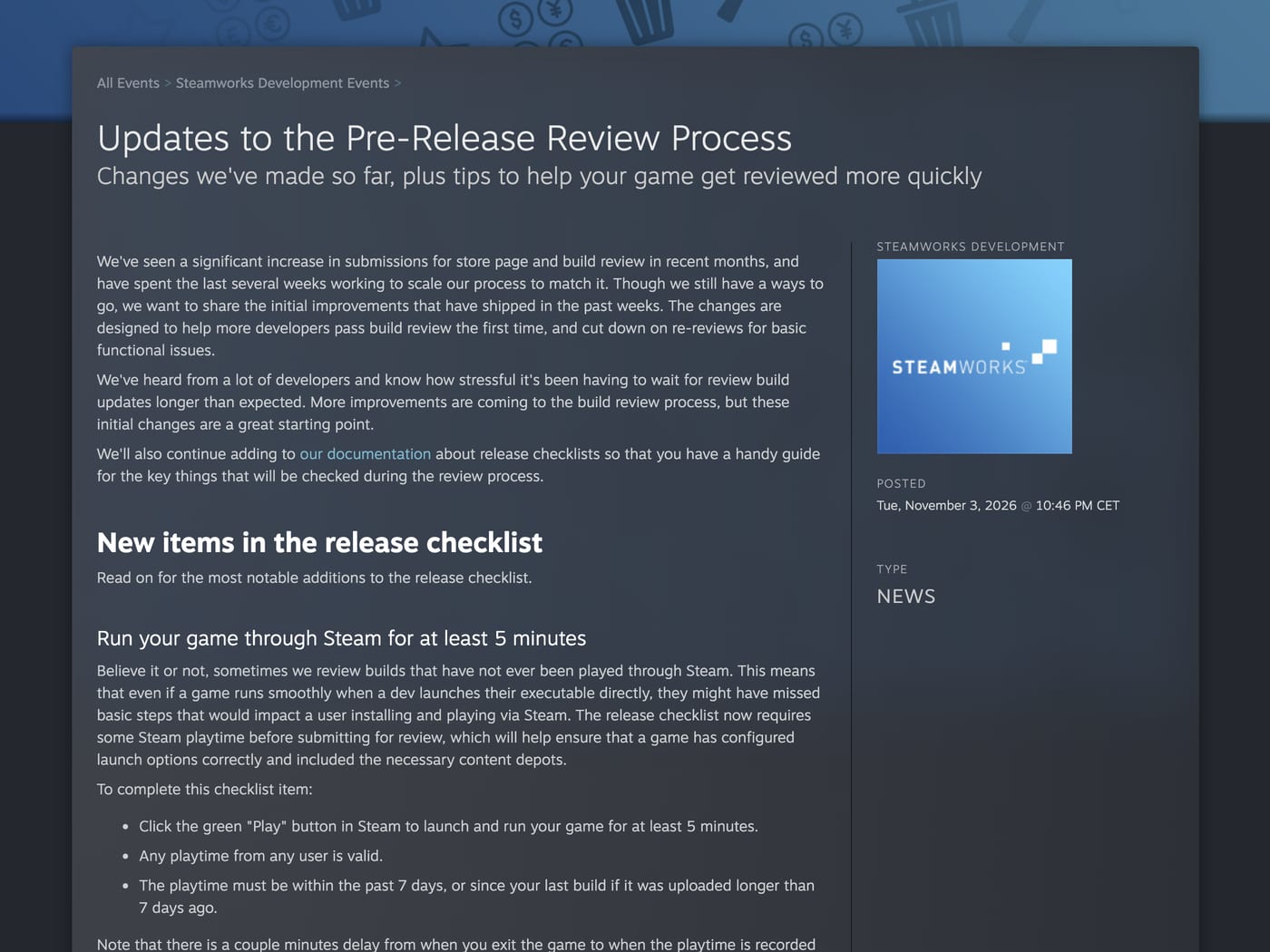
- Valve's new pre-release checks from November 2026 (announcement):
- play the game through Steam for at least 5 minutes in the last 7 days;
- declare redistributables (DirectX, VC++, .NET) or say you need none;
- complete achievement names and icons;
- if you list Steam Cloud, write at least one save to the cloud;
- at least 5 screenshots categorized as gameplay.
- Reminders at submission: Valve also asks you to confirm every listed language is in the build, and gives a field for reviewer credentials if multiplayer needs an account.
- Build review time: Valve's docs say 3 to 5 business days and plan for 7. In November 2026 it was taking up to 12 business days, much of it from re-reviews. Leave three weeks.
2 weeks out: the date locks
- Release date fixed. You can change it only until two weeks before. After that the game also shows more in upcoming lists (release dates). Delaying by more than 24 hours inside those two weeks also removes the game from the Personal Calendar until launch. Picking the day and month is covered in best time to release a game on Steam.
- Coming Soon page live for at least two weeks. It's required before you can release.
- Creators have keys and know the publishing time.
- Community and discussions ready: FAQ post, known issues, bug report channel. See Discord for game developers.
- Steam Deck review requested, if you want a rating at launch. See Steam Deck Verified.
Launch day
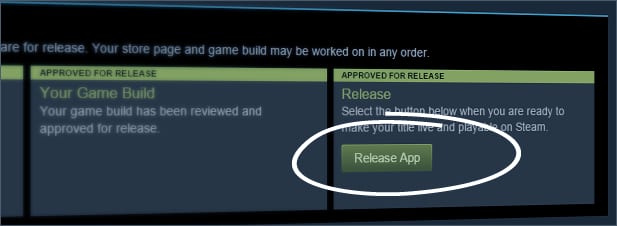
- Press Release yourself. Approved games don't release on their own. Click "Release App", then "Publish Now", then "Release Now" (releasing). Release starts your launch discount automatically.
- Steam emails your wishlisters. Everyone with the game wishlisted gets an email or push notification, which can take a few hours to send (wishlist docs).
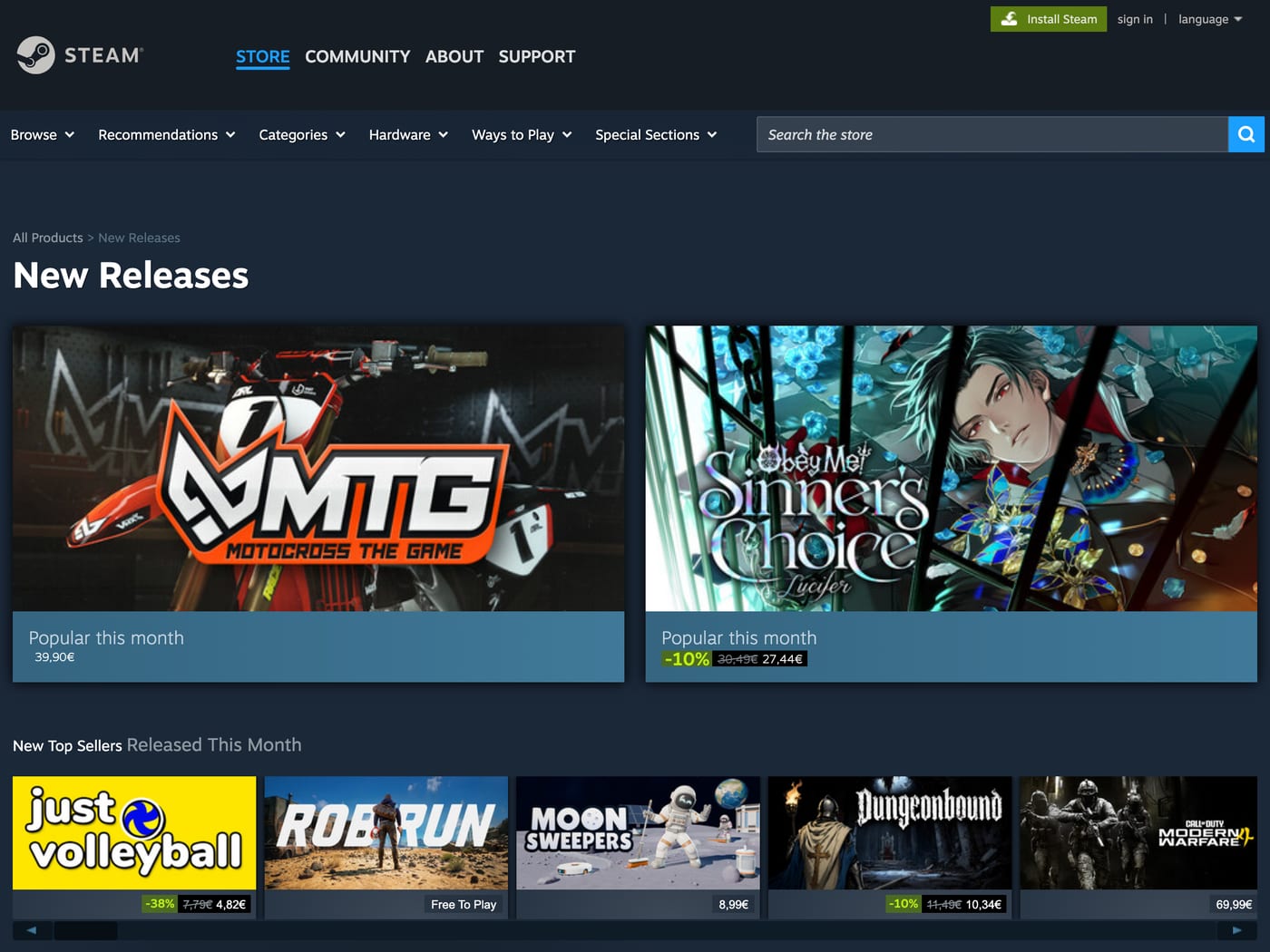
- Launch visibility starts. The game enters the New Releases queue, which favours titles with the fewest views since release, and can appear in New & Trending or Top Sellers if it sells (visibility docs). More in how Steam's algorithm decides who sees your game.
- Creator videos go live within the first hours.
- Answer every review and discussion in the first days. See how to get more Steam reviews.
The first 30 days
- No regular discount for 30 days after release. Plan your first sale for after that.
- First patch and an update announcement. An update visibility round can follow once launch visibility has ended (update visibility rounds).
- Read the numbers: wishlist conversion, refunds, reviews. What first week sales to expect is in Steam wishlist conversion rate.
FAQ
How long before launch should I make a Steam page? As soon as you're ready to talk publicly about the game, with art direction and core features settled. Valve sees no strong downside to a page being up for a long time, unless the game changes a lot in that period.
How long does Steam review take? Store page review typically takes 3 to 5 business days, so submit at least 7 business days ahead. Build review was taking up to 12 business days in November 2026.
How long must the Coming Soon page be live? At least two weeks before release.
Is there a waiting period after paying the Steam Direct fee? Yes, for your first few games: 21 days between paying the app fee and being able to release.
Does a Steam game release automatically on the date? No. You press the Release button yourself, and the launch discount starts at that moment.
Can I change my release date? Until two weeks before the date. After that it's locked.
Sources: Steamworks documentation on onboarding, Coming Soon, release dates, review process, releasing, discounts, wishlists, visibility, demos, playtest and Next Fest; Valve's November 2026 review update. Checked November 2026.
Get a wishlist forecast for your game
Send us your Steam page. We estimate views, creators and cost per wishlist before you spend anything.
Keep reading
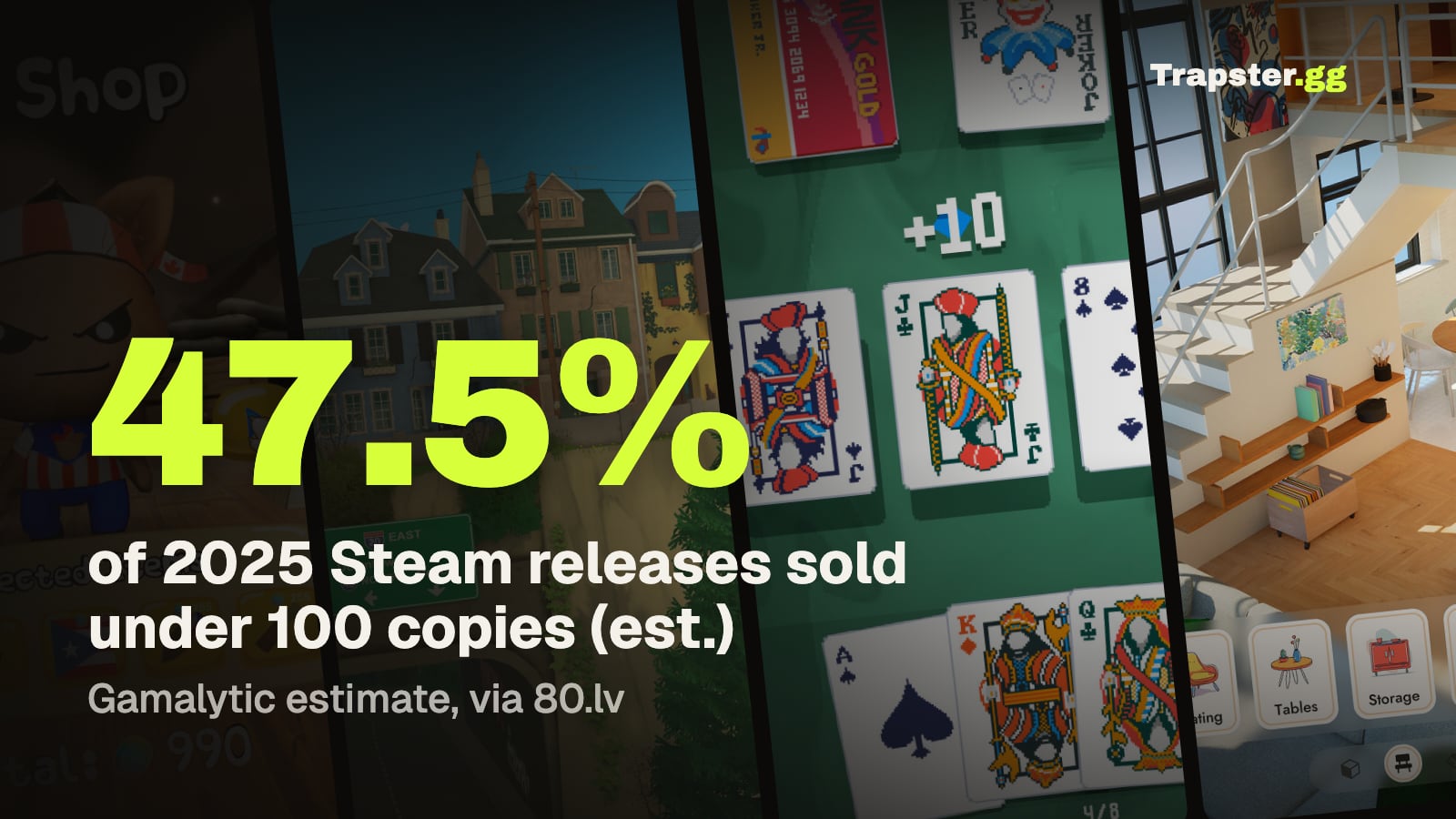
How Many Copies Do Indie Games Sell? Real Steam Numbers by Tier
Most Steam indie games sell under 1,000 copies. Real numbers by tier…
Game Marketing Hook: How to Find, Test and Show Yours
What a game marketing hook is, how to test one cheaply with…
How to Name Your Game: Searchable, Memorable and Legally Safe
How to name your game: pass the Steam, Google and trademark checks…